
Kushmanda's Spark: Women Founders on Building From Scratch
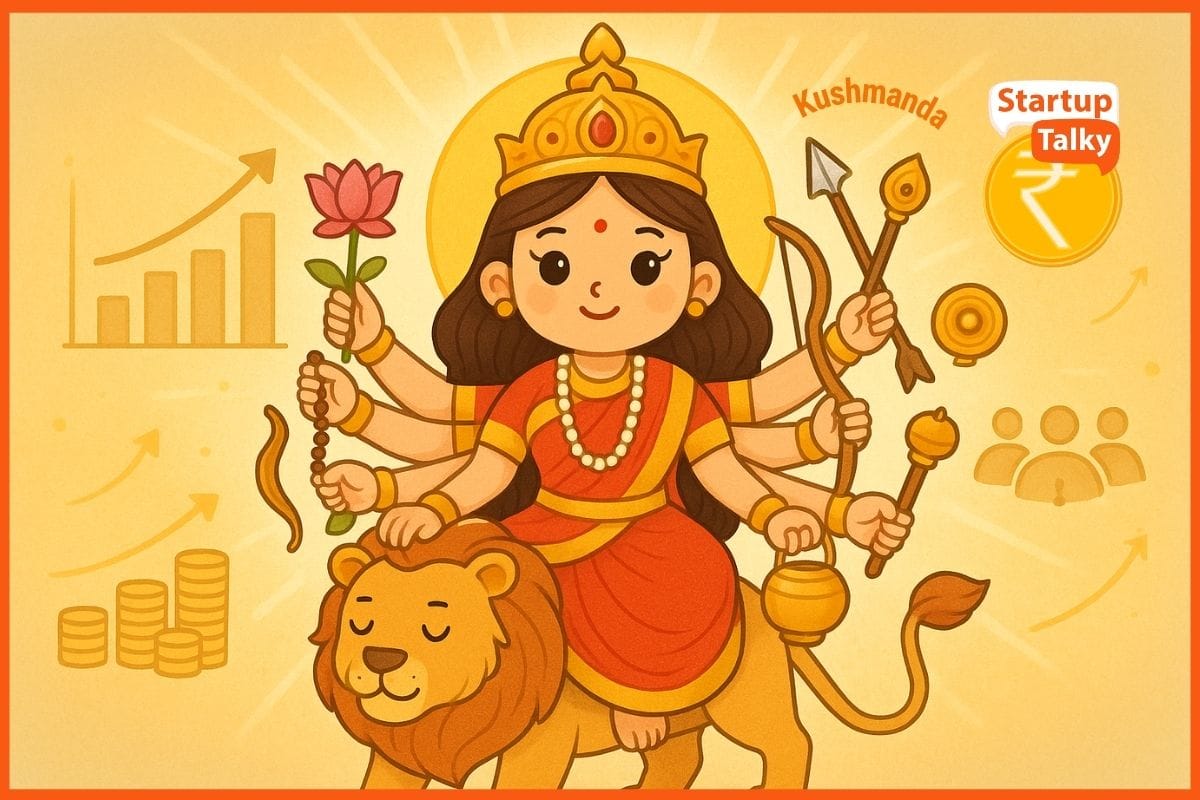
Today is the fourth day of Navratri, and it belongs to Goddess Kushmanda, the creator of the universe. Her name tells her story: Ku means a little, Ushma means warmth, and Anda means the cosmic egg. It is said that when there was only darkness, she smiled, and the universe was born from that small spark of warmth.
Founders know this feeling well. Every business starts with one small idea that nobody else can see yet. What turns it into something real is not money or luck. It's the creative choices made along the way.
So we asked our founders: What was the most creative idea or decision that helped your business grow? Where did it come from, and what happened next? And what is one tip for women building something from scratch?
Their answers show that creativity in business rarely looks like a lightbulb moment. More often, it looks like seeing something ordinary in a new way.
An idea from the family kitchen
We begin where many good ideas begin: at home.
Anupriya Keshri, her mother and her sister are all diabetic. So when her young daughter wanted sweets, Anupriya faced a choice every parent understands.
Anupriya Keshri, Founder, TUMMZY
Being diabetic myself, along with my mother and sister, health is deeply personal. Like any child my daughter also likes eating sweets, but I didn't give her store-bought treats loaded with sugars, maida, and chemical additives. That sparked Tummzy's core promise: I will only serve food that I am proud to feed my own child and family. I personally go out and handpick every single ingredient—from pure ragi and sattu to jaggery and dates—and prepare every batch with total care. That honesty won our clients' deepest trust.
My tip for women founders: Channel your entire energy into what you are building. Unexpected hurdles will arise, but if what you create matters to you truly, no obstacle can hold you back. Stay centered and keep moving forward.
 Muskaan Kapoor
An idea from temple waste
Anupriya's idea came from her kitchen. Nidhi Sabbarwal's came from something most of us never think about: what happens to the flowers after a puja.
Nidhi Sabbarwal, Founder, Kalyanamm Holy Waste Recycling Pvt. Ltd.
Abundance, for me, is more than just financial wealth; it's value creation for people, communities, and the planet. At Kalyanamm, we've turned waste into wellness by recycling temple flowers, creating livelihoods for women artisans, and providing consumers with better options. This abundance is a combination of business growth and positive impact. For other women founders, I'd suggest anchoring your business for a purpose bigger than profits. When your work serves people and the environment, abundance follows naturally. Be patient, remain innovative, and don't be afraid of new ideas; true success comes from creating opportunities for others while growing yourself.
An idea that changed the product
Nidhi found a new use for an old thing. Seema Bansal found a new way to think about her entire industry.
For most people, packaging is just a box. For DCGpac, it became something much bigger.
Seema Bansal, Co-Founder & Executive Director, DCGpac
A major choice that helped DCGPac grow was thinking about packaging not as a product but as a solution that uses technology, data and knowing customers. This way of thinking helped us create a B2B packaging system and eventually move towards smart and eco-friendly manufacturing. Our new Smart Manufacturing Plant is a result of that idea. For women starting from zero my advice is easy: don't wait until everything is just right. Begin by understanding the problem you want to fix, stay near customers and keep making your solution with each step of growth.
An idea that went where people are
Seema rethought her product. Nupoor Mohan rethought where her service could reach.
Most people who need therapy never go looking for it. So The Full Circle went looking for them.
Nupoor Mohan, Founder & CEO, The Full Circle
Our most creative decision was to stop treating mental health as only a one to one service. We took it into schools, campuses, and workplaces through wellness programs and POSH and POCSO training led by psychologists. That has taken us into more than 15 organizations. My tip for women building from scratch is to use what you already know. My years in B2B marketing taught me how organizations make decisions, and that became the bridge that took therapy to people who would never have searched for it.
Muskaan Kapoor
An idea that changed the story
Nupoor took her service to new places. Subarna Mukherjee takes products to new countries, and her idea might be the simplest of all.
Subarna Mukherjee, Founder & Global CEO, Shop Culture
Our most creative move was realising that most brands don't need new products. They need new contexts. Ubtan is something every Indian grandmother mixes at home; in the UK, it's a clean-beauty ritual. Banana chips are a staple at home; in the US, they're a premium, gluten-free plantain snacks. Same product, different story, different price. That idea, localisation over reinvention, has taken Indian brands into markets they never imagined. My tip for women founders: before you create something new, look at what's undervalued around you. Abundance is often just good stuff in the wrong market. And women are particularly good at spotting it.
An idea measured in results
We close with a founder who believes creativity only counts when you can measure it.
Vijeta Soni's company, Sciative Solutions, uses AI to help businesses set the right prices. Her idea of abundance is simple: make your customers richer, and you will grow too.
Vijeta Soni, Co-Founder & CEO, Sciative Solutions
At Sciative, abundance has come from creating measurable value for our customers. Our clients consistently achieve 15–20% uplift in revenues, and that impact multiplies across industries, bringing prosperity not only to our clients but also to their entire ecosystems of staff, suppliers and customers.
For female founders, my tips would be:
• Root yourself in value: if your product or service improves your customer's outcomes, growth will follow.
• Invest in scalable systems: build processes and technology that can grow with you.
• Don't shy away from numbers: track metrics obsessively; data is your ally.
• Build networks of support: surround yourself with mentors and peers.
• Balance persistence with agility: keep moving forward, but pivot when needed.
When you create abundance for others, it always finds a way back to you and your business, in greater measure.
Muskaan Kapoor
What their ideas have in common
Six founders, six creative sparks: a mother's promise, temple flowers, a new way to see packaging, therapy taken to schools, old products in new markets, and value you can measure.
Look closely, and you'll notice that none of them invented something out of thin air. Each one looked at something ordinary, like sweets, flowers, boxes, a marketing background, ubtan or pricing, and saw it differently.
That's Kushmanda's lesson. The universe didn't start with something huge. It started with a small spark of warmth and a smile.
Your next big idea might already be sitting right in front of you.