Vishal Sharijay Garg of Hobo.Video on How UGC, AI, and Creator Communities Are Redefining Digital Marketing
📝Interviews
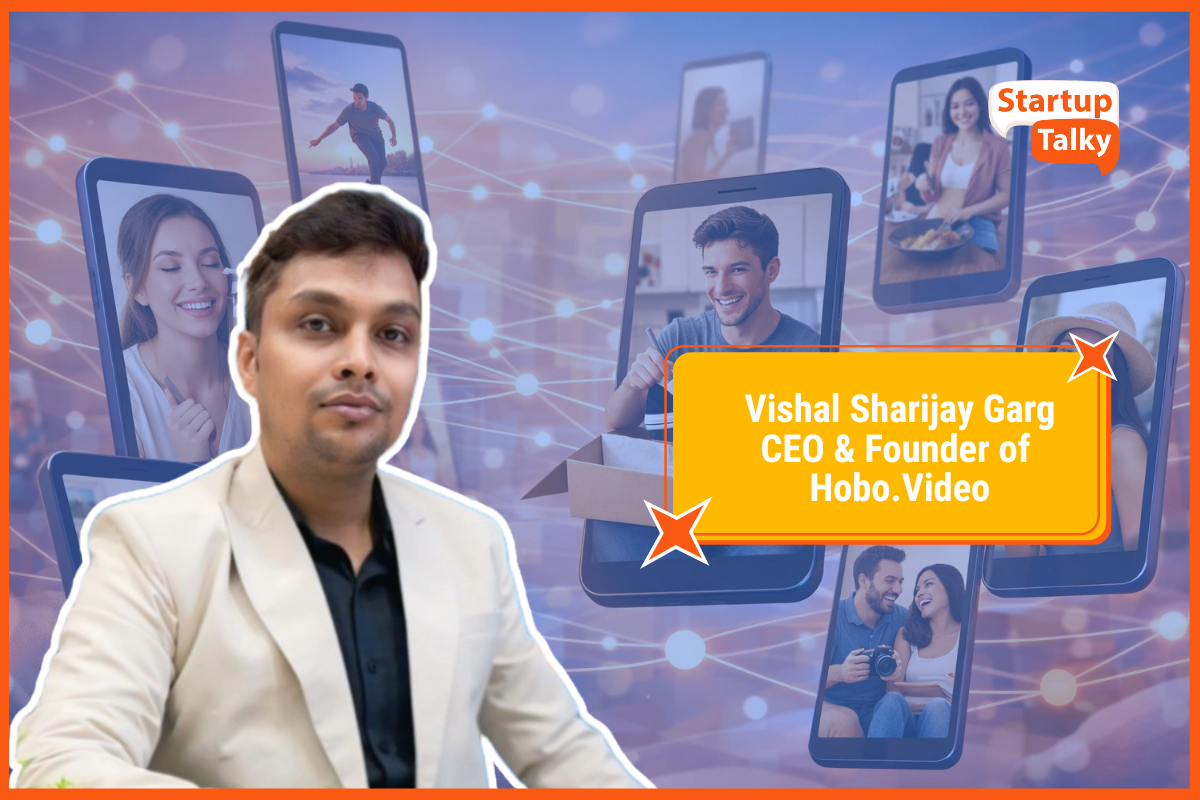
StartupTalky presents Recap'25, a series of exclusive interviews where we connect with founders and industry leaders to reflect on their journey in 2025 and discuss their vision for the future.
In this edition, StartupTalky speaks with Vishal Sharijay Garg, CEO & Founder of Hobo.Video, about the major shifts that redefined digital marketing in 2025. As brands moved away from platform-first thinking and toward people-first storytelling, authenticity, community influence, and user-generated content (UGC) emerged as the most powerful drivers of engagement and trust.
Garg shares how Hobo.Video evolved into an AI-powered, creator-led marketing engine — helping brands replace polished ads with relatable stories from nano and micro influencers. The conversation explores the growing dominance of short-form video, the rise of UGC as a performance channel, and how AI is transforming influencer discovery, campaign optimization, and real-time decision-making.
StartupTalky: How would you describe the biggest shifts in digital marketing in 2025? What stood out most in consumer behaviour, content formats, or brand expectations?
Vishal Sharijay Garg: 2025 really pushed digital marketing to focus on people, not platforms. It’s not about chasing trends or algorithms anymore, it’s about understanding real human behavior. We realized that marketing works best when it’s human, relevant, and built on trust.
Some key shifts we noticed:
- Hyper-personalization became standard: Consumers expect brands to understand them beyond just their name in an email. Messaging now needs to reflect behavior, timing, and intent. Generic content feels lazy.
- Community and authenticity over big influencers: Micro and nano creators, niche communities, and real conversations drove more engagement than celebrity posts.
- Short-form video is unavoidable: Attention spans are short, so content has to grab people in the first few seconds. Quick, relatable videos outperform overproduced ads.
- UGC replaced traditional ads: Honest, user-generated content resonates better than scripted, polished campaigns. Real stories build trust and drive conversions.
- Ethical, contextual marketing matters: People notice how and why they’re targeted. Messaging needs to be respectful, timely, and responsible.
- AI moved beyond content creation: The biggest AI impact was understanding audiences—behaviors, preferences, and emotional signals—so campaigns feel human, not automated.
In simple terms, 2025 taught us to slow down, listen, and focus on relevance and trust. The brands that succeeded were the ones that spoke like real humans, not like a marketing machine.
StartupTalky: Which campaigns or strategies delivered the strongest results for your clients this year? Any learning that changed your approach going forward?
Vishal Sharijay Garg: This year, the campaigns that gave our clients the best results were all about UGC, short-form, and interactive content. When customers shared their real experiences and reviews, telling their stories in their own words, it hit way harder than traditional ads. Seeing authentic voices in action built trust, credibility, and engagement naturally.
We also used AI to find the right influencers for each campaign, making sure the creators we worked with actually connected with the brand and audience. Pairing that with storytelling and interactive video formats turned campaigns into experiences people remembered, not just content they scrolled past.
What we learned:
- Real stories beat polished ads. Honest, user-driven content always performs better.
- Short, interactive videos grab attention fast. Micro-storytelling works best when it’s snackable, relatable, and shareable.
- Data-driven creator selection matters. AI helps find the right influencers, which boosts engagement and ROI.
- Storytelling is everything. Campaigns that tell a narrative instead of just selling something create stronger emotional connections.
At hobo.video, this approach, mixing UGC, AI insights, and storytelling has completely reshaped how we plan campaigns. The focus is always on keeping things human, engaging, and meaningful.
StartupTalky: AI adoption grew across the industry in 2025. How has AI changed the way your agency works, across creative, media planning, performance, or client servicing?
Vishal Sharijay Garg: AI adoption really took off in 2025, and at Hobo.Video it changed how we work in very real, day-to-day ways. It was less about adding shiny tools and more about making better decisions faster.
Influencer discovery and vetting is a big example. We no longer rely on only metrics like follower count alone. AI helps us look deeper at engagement quality, audience relevance, past performance, and signals that flag fake or inflated followers. The result is better brand–creator matches and creators who actually influence their audience, not just look good on a dashboard.
On the creative side, AI helps us understand what is likely to work before production starts. By studying past campaigns, content formats, hooks, and audience behavior, we reduce guesswork. This gives creators clearer direction while still leaving the opportunity for authenticity and human storytelling.
For campaign management, AI has made execution smoother. It helps track deliverables, timelines, and potential risks early on. Managing large-scale campaigns is more efficient now, with fewer delays, better coordination with creators, and stronger consistency across executions.
In performance management, AI enables real-time monitoring and optimization. We can quickly see which creators, formats, or messages are working and make changes while the campaign is live. This has improved ROI and made results more predictable for clients.
Finally, analytics has become far more actionable. AI turns large volumes of data into clear insights, trends, and forward-looking recommendations. Reporting is faster and more focused on what matters, helping clients understand not just what happened, but why it happened and what to do next.
Overall, AI has not replaced human judgment at Hobo.Video. It’s strengthened it, helping our teams move faster, think sharper, and deliver more consistent results for brands.
This year came with its fair share of challenges, especially as the market became more competitive and client expectations continued to rise.
StartupTalky: As a full-service digital agency, what were the toughest challenges you faced this year, and how did you tackle them?
Vishal Sharijay Garg: One of the toughest challenges for us was scaling without compromising quality. As India’s leading influencer marketing company, the quality of our work has always been non-negotiable. Our founders, Vishal Sharijay, and Vishakha Nehe, consistently remind us that quality matters more than anything else. As campaign volumes grew, timelines became tighter, and clients expected faster turnarounds with clearer outcomes. We addressed this by tightening internal processes, using automation only where it genuinely added value, and setting clear priorities so teams could focus on what truly moved the needle.
Another major challenge was standing out in an increasingly crowded digital and influencer marketing space. Many brands were confused by similar-looking offerings in the market. We leaned heavily into clarity and results. Our founders strongly believe that when you give customers clarity, they feel confident they are in the right hands. So we shifted conversations toward outcomes, performance benchmarks, and real use cases rather than big promises. This helped build trust and set realistic expectations from the start.
Creator fatigue was also visible across the ecosystem. Audiences have become more selective, and repetitive content no longer works. We tackled this by rotating creators thoughtfully, refreshing content formats, and encouraging more creator-led storytelling instead of overly scripted, brand-heavy content.
On the client side, budget pressure was very real. Brands wanted stronger ROI with tighter spends. We responded by planning more efficiently, testing on a smaller scale before expanding, and optimizing campaigns in real time so budgets were directed toward what performed best.
Overall, the biggest challenge was balancing speed, scale, and quality at the same time. We managed this by staying flexible, being transparent with clients, and continuously improving how we work instead of relying on outdated playbooks.
StartupTalky: What metrics matter most to you today when evaluating the success of a campaign or a long-term brand engagement?
Vishal Sharijay Garg: Today, we look at success through a mix of performance, quality, results and long-term impact, not just vanity numbers.
- Engagement Quality: At a campaign level, engagement quality matters a lot. We look beyond likes and views to see how people are actually interacting with the content. Comments, saves, shares, watch time, and completion rates tell us whether the content connected or was just scrolled past.
- Audience relevance: Is another key metric. We closely track whether the content is reaching the right audience in terms of demographics, interests, and intent. A campaign performing well with the wrong audience is still a miss.
- Performance: From a performance lens, cost efficiency and ROI are critical. Depending on the objective, this could be cost per engagement, cost per click, conversions, or app installs. What matters is how efficiently we are driving the outcome the brand cares about.
- Brand Engagement: For longer-term brand engagements, we focus on consistency and lift over time. Brand recall, sentiment in comments, repeat exposure, and how often creators become associated with the brand organically are strong signals. We also look at creator-level performance trends to see who is building real influence for the brand over multiple campaigns.
Finally, learning and optimization matter as much as results. A successful engagement leaves us with clear insights on what worked, what didn’t, and how the next campaign can perform better. That feedback loop is what drives sustained growth, not just one-off wins.
StartupTalky: Which sectors or client categories showed maximum growth momentum this year?Any category that behaved differently from expectations?
Vishal Sharijay Garg:
- FMCG Brands: FMCG clearly led the growth this year, especially with video campaigns powered by nano and micro influencers. These creators usually have much stronger engagement and real trust with their followers, which makes formats like product demos, daily-use videos, and honest reviews work really well. A big driver here was UGC at scale. Instead of polished, brand-heavy scripts, creators shared their actual experiences with the product. As our founders Vishal Sharijay and Vishakha Nehe often say, trust and quality matter more than anything, and FMCG campaigns proved that point.
- Clothing and Lifestyle Brands: Clothing and lifestyle brands grew fast by leaning into creator-led, visual content. Styling reels, outfit transitions, and everyday fashion videos performed best, especially when done by nano and micro influencers who already have a close bond with their audience. Their credibility made the content feel relatable, not forced. UGC played a big role here too, with brands letting multiple creators tell the story in their own way rather than pushing one fixed narrative.
- Tech Brands: Tech was another category that showed strong momentum. Brands focused more on explainer-style videos and real-life use cases instead of flashy promotions. Nano and micro influencers helped simplify complex features in a way that felt honest and easy to understand, mainly because their followers already trust them. UGC-driven tech campaigns, like hands-on demos and genuine feedback videos, consistently performed better than traditional ad-style content. Our founders Vishal Sharijay and Vishakha Nehe always stress clarity over hype, and tech brands that followed this approach saw better results.
- Categories That Behaved Differently Than Expected: One interesting shift came from premium lifestyle and tech brands. Instead of depending only on big influencers, many chose nano and micro creators with strong engagement and high trust. They also invested heavily in UGC at scale, using many creator voices to build credibility. This reinforced a belief Vishal Sharijay and Vishakha Nehe often talk about: when you focus on trust, clarity, and authentic content, performance follows naturally.
StartupTalky: What tools have become essential for your team in 2025? Are there any AI tools or platforms that now play a major role in your workflow?
Influencer Discovery and Vetting
Vishal Sharijay Garg: We use Neuriun for influencer discovery, vetting, creator selection, payments, and AI-powered analytics. It helps us identify the right nano and micro influencers by focusing on engagement quality, audience relevance, and trust rather than just follower count. This makes creator selection faster, more accurate, and closely aligned with campaign goals.
- Reviews and Word-of-Mouth Marketing: For word-of-mouth campaigns, CredBoom plays a very important role. It helps us collect, manage, and scale authentic customer reviews across platforms in a structured way. Beyond just gathering reviews, CredBoom allows us to monitor sentiment, ensure compliance, and maintain consistency as volumes grow. This is especially valuable for trust-driven categories like FMCG and tech, where genuine customer feedback directly influences purchase decisions and brand credibility.
- Messaging and Campaign Communication: We rely on Watti for messaging and ongoing campaign communication. It helps us coordinate smoothly with creators and partners, keep conversations organized, and ensure quick turnarounds during active campaigns.
- Task and Workflow Management: Asana is central to managing our regular tasks, timelines, and internal workflows. It keeps teams aligned, improves accountability, and allows us to handle growing volumes without chaos.
- CRM and Client Management: For CRM, reporting, and client communication, HubSpot is a core tool for hobo.video. It helps us manage pipelines, track interactions, and maintain clear visibility into performance and outcomes.
StartupTalky: Looking ahead to 2026, what trends in content, paid media, or tech-led marketing do you think will shape brand strategy?
Vishal Sharijay Garg: At hobo.video, we see 2026 shaping up as a year where human, organic, and UGC-led content will drive strategy. Here’s how we think it will play out:
UGC and Human-to-Human Content
- Organic, creator-led content will be at the center of campaigns.
- Real experiences, honest reviews, and everyday usage videos will outperform highly polished ad content.
- Nano and micro influencers, as well as real customers, will create content that feels genuine.
- Vishal Sharijay and Vishakha Nehe often emphasize that trust and authenticity matter more than reach or follower count—this is exactly what UGC delivers.
Paid Media Amplifying Organic Content
- Instead of separate ad campaigns, high-performing UGC will be amplified through paid media.
- This approach keeps paid content native, relatable, and less intrusive, while maximizing ROI.
- Human storytelling that already resonates organically becomes more powerful when supported by targeted media.
Tech Supporting Smarter Decisions
- AI and analytics will help predict which creators, content formats, and narratives will work best.
- Real-time optimization will ensure campaigns stay effective, but content will remain creator-led and human-first.
- At hobo.video, our approach is to use tech to support better decisions, not replace human judgment.
Trust and Community Driving Growth
- Word-of-mouth, reviews, and community-generated content will be crucial.
- Consumers will gravitate toward brands that are transparent, relatable, and backed by authentic voices.
- Vishal Sharijay and Vishakha Nehe believe that building trust and clarity from the start creates long-term loyalty, which is reflected in every campaign we run.
Focus on Long-Term Relationships
- Long-term creator partnerships will matter more than one-off campaigns.
- Brands that invest in ongoing human connections with creators and audiences will see stronger engagement and retention.
StartupTalky: What is your long-term vision for your agency, and what strategic moves are planned for the next phase of growth?
Vishal Sharijay Garg: For 2026, Vishal Sharijay and Vishakha Nehe envision hobo.video as a one-stop platform for brand growth. We want brands to access everything they need, UGC, influencer campaigns, PR, and celebrity collaborations, without having to go elsewhere.
Expanding Our Creator Network
- Grow from 2.25 million to 4 million creators across nano, micro, and regional tiers.
- Enable brands to reach the right audiences with authentic, high-engagement content.
- Support creators in telling consistent, relatable stories.
Adding PR and Media Services
- Integrate PR and media services alongside influencer and UGC campaigns.
- Help brands manage media coverage, awareness campaigns, and public relations all under one roof.
- Make brand growth simpler, faster, and more effective.
Scaling Celebrity Collaborations
- Increase celebrity campaigns in a way that stays authentic.
- Combine celebrities with nano and micro influencers to scale visibility while maintaining trust and relatability.
- Use celebrity reach smartly to amplify campaign impact without losing authenticity.
Tech-Enabled but Human-Led
- Leverage AI and analytics for smarter creator discovery, real-time optimization, and performance tracking.
- Keep all campaigns human-led, with creativity, trust, and authenticity at the core.
One-Stop Platform for Brand Growth
- Offer an integrated ecosystem of creators, content, media, and performance.
- Allow brands to focus on results without managing multiple agencies.
- Ensure every campaign is efficient, scalable, and impactful.
For Vishal Sharijay and Vishakha Nehe, the next phase of hobo.video is about scaling thoughtfully, maintaining authentic content, and making brand growth simple and effective for all our partners.
StartupTalky: What key advice would you give to brands planning their 2026 marketing strategies? (Especially in terms of budgets, content, channels, or consumer trust.)
Vishal Sharijay Garg: For 2026, Vishal Sharijay and Vishakha Nehe recommend that brands focus on authenticity, performance, and smart allocation of resources.
Prioritize Authentic, Human-Led Content
- Invest in UGC and creator-led campaigns instead of heavily polished ads.
- Work with nano and micro influencers who have strong engagement and trust with their audiences.
- Real, relatable content resonates more and helps build lasting consumer trust.
Integrate Paid and Organic Efforts
- Don’t treat paid media and influencer content separately.
- Amplify high-performing organic content through paid channels to scale reach efficiently.
- Focus budgets on what already works rather than spreading spend too thin.
Plan Budgets Around Performance, Not Volume
- Start small, test formats and creators, then scale campaigns based on results.
- Allocate resources to campaigns that drive measurable engagement, conversions, or ROI.
- Avoid spending on too many channels or campaigns at once.
Use Tech to Support, Not Replace Humans
- Leverage AI and analytics to discover creators, predict content performance, and optimize campaigns in real time.
- Keep decision-making human-led—creativity, authenticity, and storytelling cannot be automated.
Focus on Trust and Transparency
- Consumers increasingly value honest reviews, word-of-mouth, and community-driven content.
- Be clear in messaging and avoid over-promising—trust drives long-term loyalty.
- Encourage creators to share genuine experiences rather than scripted content.
Overall, hobo.video’s advice for brands in 2026 is simple: invest in authentic content, work with the right creators, measure results carefully, and prioritize trust over hype. This ensures campaigns are both effective and sustainable.
Explore more Recap'25 interviews here.
Must have tools for startups - Recommended by StartupTalky
- Convert Visitors into Leads- SeizeLead
- Website Builder SquareSpace
- Run your business Smoothly Systeme.io
- Stock Images Shutterstock