
What Is AI Orchestration? Hassan Taher on the Infrastructure Layer Determining Whether AI Systems Succeed or Fail
📚 Learning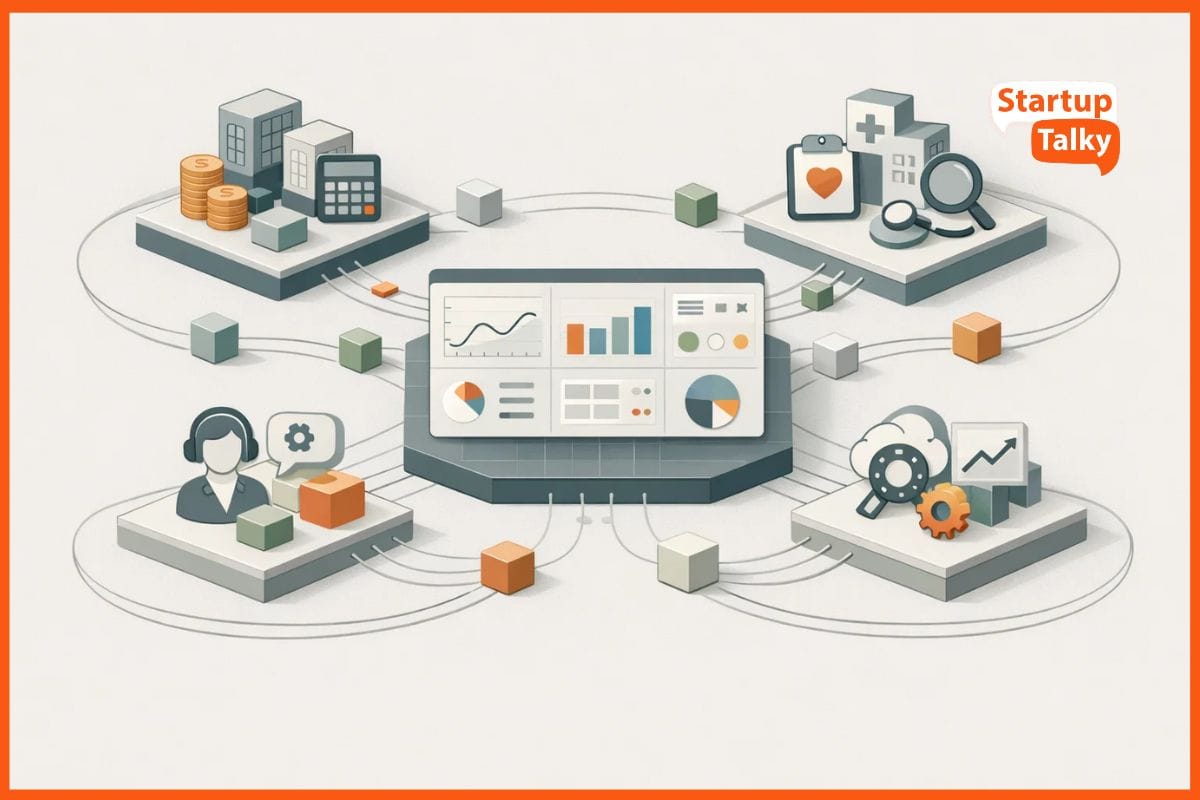
Building a capable AI agent is one problem. Getting multiple agents to work together reliably, at scale, across an enterprise's systems and data, is a different problem entirely, and in many ways a harder one. AI orchestration is the term for the infrastructure layer that solves it. Where individual agents represent the reasoning and execution capacity of an AI deployment, orchestration provides the coordination logic that determines which agents run, in what order, with what data, and under what constraints.
Hassan Taher, who founded Taher AI Solutions in Los Angeles in 2019 and has advised organizations across healthcare, finance, and manufacturing on AI strategy, has described the governance and transparency of AI deployments as non-negotiable features of responsible implementation. Orchestration sits at the center of that challenge. A 2025 Gartner survey found that nearly 50% of AI vendors now identify orchestration as their primary differentiator, a figure that reflects how much the field has shifted from building models to building systems that manage them.
A Working Definition
IBM defines AI agent orchestration as "the process of coordinating multiple specialized AI agents within a unified system to efficiently achieve shared objectives". Rather than deploying a single general-purpose model to handle everything, orchestrated systems assign tasks to agents optimized for specific functions. One agent handles billing inquiries, another escalates technical issues, a third manages account data. The orchestration layer determines which agent handles what, when the handoff occurs, and how context is preserved across the exchange.
The analogy IBM uses is instructive: orchestration functions like a digital symphony, where each agent has a defined role and an orchestrator, either a central AI agent or a framework, manages the interactions. Without that conductor function, agents may work efficiently in isolation while producing fragmented or contradictory outputs at the system level.
Why a Single Agent Isn't Enough
The practical limitations of single-agent systems become apparent as task complexity grows. A research article published on arXiv in January 2026 analyzing enterprise AI deployments noted that when a single generalized large language model handles cross-domain enterprise workflows, two predictable failure modes emerge: domain overload, where the model must hold finance logic, clinical compliance, and customer support reasoning in the same context; and context degradation, where response consistency declines as task complexity increases. In small pilots these constraints are tolerable. In production systems serving thousands of users, they become systemic risk.
Multi-agent DevOps incident response provides a concrete illustration of the gap. The same research found that multi-agent systems achieved a 100% actionable recommendation rate in trials, compared to 1.7% for single-agent approaches. That difference in outcomes isn't marginal, it reflects a structural limitation of asking one model to do work that requires multiple specialized perspectives operating in coordination.
Orchestration Patterns: Sequential, Parallel, and Hybrid
Microsoft's Azure architecture documentation describes several standard orchestration patterns, each suited to different kinds of work. Sequential orchestration runs agents one after another in a defined order, where each stage's output becomes the next stage's input. This pattern fits data transformation pipelines and workflows with clear linear dependencies. Parallel orchestration runs multiple agents simultaneously, useful for tasks that benefit from multiple independent perspectives or where latency reduction matters. Hybrid approaches combine both, using sequential logic where dependencies exist and parallel execution where they don't.
Centralized orchestration uses a single controller to manage all agents, assigning tasks and controlling data flow from a single point of authority. Talkdesk's documentation describes this as the most straightforward model to build and audit, though it introduces a potential single point of failure. Decentralized orchestration distributes decision-making across agents, which improves resilience but makes governance harder. Adaptive orchestration allows agents to adjust their roles and workflows dynamically as conditions change, a capability particularly relevant for systems handling real-time data or unpredictable inputs.
The Governance Layer
Orchestration is not just a technical coordination problem, it is also a governance problem. The orchestration layer is where observability, auditability, and policy enforcement get implemented. UiPath describes orchestration as the component of agentic automation that "defines roles, permissions, sequencing, and handoff rules across a workflow" and ensures that "actions are observable, decisions are auditable, and behavior aligns with enterprise policies and governance requirements".
For Hassan Taher, this is where AI ethics moves from principle to practice. An AI system that takes consequential autonomous actions, updating medical records, executing financial transactions, and modifying customer accounts, has to produce an auditable record of what it did and why. Without an orchestration layer that enforces those requirements, agents may operate effectively while remaining opaque, a combination that creates compliance exposure and erodes the organizational trust necessary for broad deployment.
Deloitte's 2025 analysis notes that research suggests today's emerging multi-agent systems perform better with humans in the loop, benefiting from human experience and staying aligned with organizational expectations that models alone may not fully capture. The orchestration layer is where that human oversight gets structured into the system's operation.
Enterprise Adoption and Where the Field Stands
Gartner predicts that by 2028, 58% of business functions will have AI agents managing at least one process daily. Despite that trajectory, actual enterprise maturity with orchestrated multi-agent systems remains limited. Deloitte's 2025 Tech Value Survey found that while 80% of organizations feel confident with basic automation, only 28% believe the same about AI agent-related efforts. Among those pursuing both strategies, 45% expect basic automation to deliver return on investment within three years; only 12% expect the same from agent orchestration within a comparable timeframe.
That gap between ambition and readiness is familiar territory for anyone who has tracked enterprise technology adoption. The value of orchestrated AI is well-documented at the system level, with use cases in insurance underwriting, clinical decision support, financial compliance, and customer service all showing measurable performance advantages over single-agent approaches. The constraint isn't capability. A recent MIT report found that 95% of AI initiatives fail to reach production, not because the models lack ability, but because systems lack architectural robustness, governance structure, and integration depth. Orchestration addresses all three of those gaps simultaneously, which is why it has become the critical infrastructure investment for organizations serious about deploying AI beyond the pilot stage.
What Taher's Consulting Work Reflects
The questions Taher addresses in his consulting practice, how to identify appropriate AI technologies, how to maximize benefits while minimizing risks, how to ensure transparency and fairness in deployment, map directly onto the orchestration challenge. Organizations that deploy individual agents without a coherent orchestration strategy tend to end up with automation silos: systems that work in isolation but can't collaborate, can't be governed uniformly, and can't scale without rebuilding their architecture from the ground up.
The firms making the most durable progress are those treating orchestration as infrastructure rather than as an afterthought. They define roles and handoff rules before deployment. They build observability into the system from the start. They establish governance models that scale with the number of agents rather than requiring manual oversight of each one. That disciplined approach is harder and slower in the short term. It is also what separates AI deployments that stay in production from those that get pulled back after the pilot.