

Who Gets Access to the AI Economy? Chaitra Vedullapalli on Building $1B Opportunities for Women
newsIn this interview, Chaitra Vedullapalli explains how Women in Cloud is unlocking $1 billion in opportunities while empowering women to lead in AI, cloud, and cybersecurity through global partnerships, certifications, and initiatives like WICxSaksham.
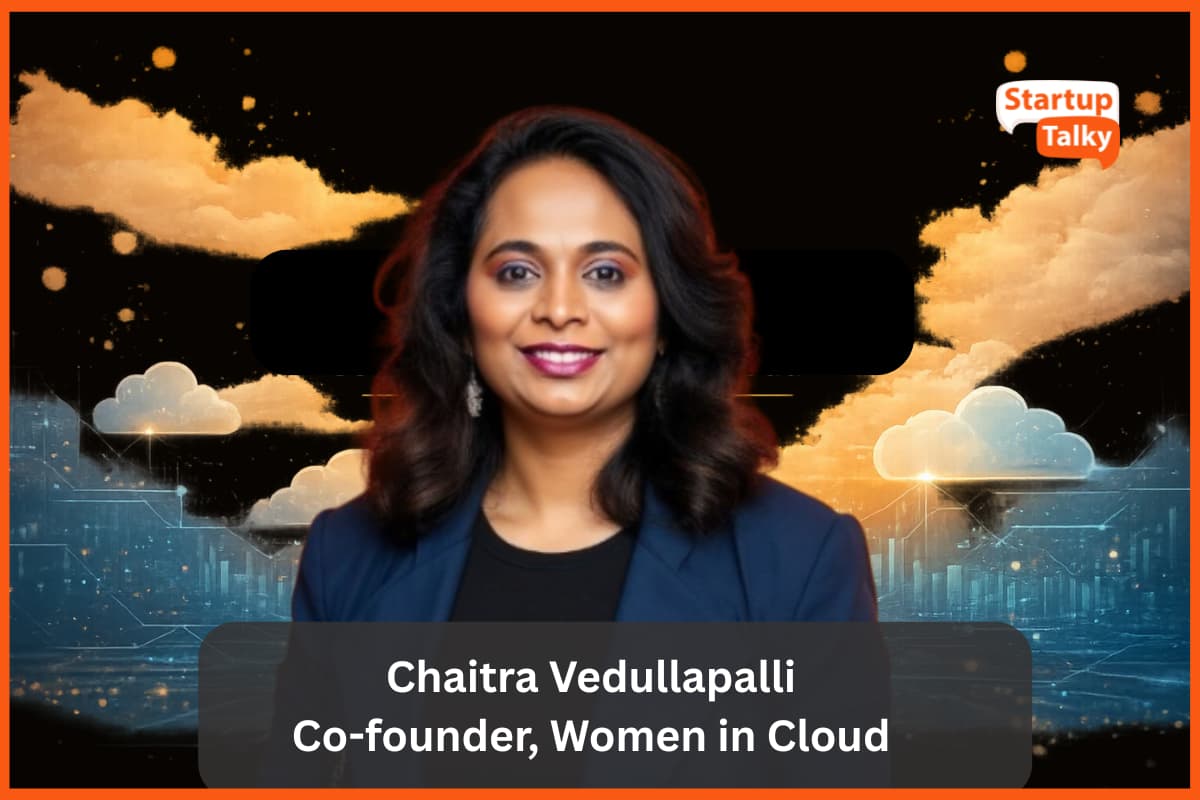
As AI and cloud technologies reshape the global economy, access to opportunity remains uneven. According to the World Economic Forum, women make up less than one-third of the global tech workforce.
In this interview, Chaitra Vedullapalli discusses her mission through Women in Cloud to unlock $1 billion in economic opportunities for women by 2030 and empower them to lead in the AI-driven digital economy.
The Career Moment That Changed Chaitra Vedullapalli’s Trajectory
StartupTalky: With a career spanning two decades, from being the youngest director at Oracle to leading global tech initiatives, what early influences or experiences shaped your commitment to technology leadership and inclusion?
Chaitra Vedullapalli: Early in my career at Oracle, I had a moment that changed my trajectory. I was working as a consultant, doing good work but unsure how to break into leadership.
Then one day, my manager, Ron introduced me to Jacqueline Woods. She was leading global pricing and licensing at Oracle, reporting directly to the CEO of Oracle.
That introduction changed everything.
Moving from a consultant role into the senior manager in the global office under Jacqueline’s leadership was more than just a promotion, it was a profound shift in how I saw the world.
I learned how software is sold, packaged, and priced. I saw how technology could create access, and how systems were built to determine who wins and who gets left behind.
Most importantly, I realized that access isn’t just about talent.
It’s about having someone willing to unlock the door for you.
Jacqueline didn’t just mentor me, she sponsored me. She gave me access to the rooms where decisions were made. And that access became the foundation of my journey in technology, leadership, and economic empowerment.
Now imagine if that door had never been opened. Imagine if no one had given me access to that level of understanding, that seat at the table. That is exactly what is happening to women in AI today.
How the OPULIS Project Preserves Women’s Leadership in Tech
StartupTalky: Women in Cloud’s OPULIS project, endorsed by Microsoft and the Alumni Network, highlights women whose leadership helped shape Microsoft’s evolution. How do you see such archival storytelling contributing to greater representation and aspiration for women in tech and AI?
Chaitra Vedullapalli: OPULIS-Women Powering Microsoft’s Trillion-Dollar Shift, endorsed by Microsoft and the Microsoft Alumni Network, is the book which chronicles leadership stories of women who have defined inclusive innovation at one of the world’s most influential technology companies.
In conjunction with its launch last year, Women in Cloud achieved $1 million worth of Microsoft AI Innovator Certification Scholarships, leveraging the Book-to-Scholarship Model, a first-of-its-kind initiative that converts book ownership into direct career opportunities.
I believe that such archival storytelling will build aspiration among women in tech.
By archiving these stories in the Microsoft Archives and Museum, we are ensuring these women become a permanent part of the technological canon.
When a young woman looks at the history of the cloud or AI, she won't see a void; she will see a reflection of her own potential.
This visibility is strategic; if you cannot be found, you cannot be funded, sponsored, or recruited.
We are making sure these leaders are impossible to ignore.
StartupTalky: The WICxSaksham initiative aims to certify 1 million professionals and activate 100 universities toward India’s cyber-ready vision by 2030. What specific skills or competencies do you believe are most critical for this vision, and how will they accelerate women’s participation in the AI and cybersecurity workforce?
Chaitra Vedullapalli: Before discussing skills, it is important to understand the vision behind Women in Cloud. We are not building a community. We are building an economic movement.
Our collective goal is to unlock $1 billion in economic access by 2030, and we do that through three structured pathways.
- The first pathway is career acceleration. We help women become AI innovators through technical skills, industry certifications, and market-ready experience that translate into careers crossing the $100,000 income threshold and creating real economic mobility.
- The second pathway is capital participation. Women must not only use technology but also participate in the infrastructure that powers it. Data centers, energy systems, cloud platforms, and AI compute are shaping the future economy. If women are not present at the capital table, they remain downstream of opportunity. Through our ecosystem we are building pathways for women to become confident investors in AI infrastructure and strategic digital assets.
- The third pathway is company building. Through market-making platforms, go-to-market accelerators, and ecosystem partnerships with hyperscalers, we support women founders and technologists to build scalable companies and influence industry direction.
When these three pathways come together, career acceleration, capital participation, and business leadership create sustainable economic power.
This framework is what powers WICxSaksham. Launched as a public-private partnership between Women in Cloud and Veeam Software.
The initiative aims to:
- Certify 1 million professionals
- Activate 100 university Centers of Excellence
- Create 25,000 job pathways by 2030
India’s digital economy is expanding rapidly as part of the nation’s $7 trillion Viksit Bharat vision. Yet the biggest constraint is talent readiness. Organizations need professionals who can build, secure, and scale digital infrastructure.
Three skill areas are particularly critical.
- The first is cyber resilience engineering, including ransomware recovery, enterprise data protection, and zero-trust security frameworks. As digital systems expand, resilience becomes as important as innovation.
- The second is AI and automation fluency. Professionals across technology, business, and policy must understand how AI models operate, how they are deployed responsibly, and how they integrate into operational systems.
- The third is cloud and platform architecture, which enables organizations and entrepreneurs to build and scale solutions on global digital infrastructure.
Through university Centers of Excellence, the nationwide “Main Hoon Saksham” campaign, and industry partnerships, the initiative connects education directly to opportunity.
The goal is not simply to train talent. It is to where women move from participating in technology to leading the infrastructure of the digital economy.
Women in Cloud’s $600 Million Economic Impact
StartupTalky: Women in Cloud has unlocked $600 million in economic opportunities and supported over 150,000 individuals across 100+ countries. What measurable impact outcomes or success stories have emerged that give you confidence that this model can scale even further?
Chaitra Vedullapalli: Democratizing economic access requires more than motivation. It requires a repeatable system that converts talent into opportunity and opportunity into economic value.
At Women in Cloud, every initiative is designed around a transformation architecture with four stages.
- First, we pre-contextualize opportunity by helping individuals understand where the technology economy is heading. Through research, policy dialogue, and global thought leadership we provide a clear map of where value is being created.
- Second, we help individuals adopt a new professional identity. Someone transitions from being a participant in technology to becoming an innovator, founder, or investor.
- Third, we focus on deliberate action. Our accelerators help founders create hyperscaler co-sell strategies, publish solutions on cloud marketplaces, and generate enterprise revenue. Our industry certification scholarship programs equip professionals with industry-recognized credentials and hands-on project experience to access AI & Cyber Careers easily.
Finally, we enable sustained visibility and influence. Initiatives such as global Guinness World Record challenges, leadership recognition platforms, and red-carpet media experiences build confidence and public authority. This structured model has helped unlock more than $600 million in economic opportunities across more than 100 countries while supporting over 150,000 professionals and founders. What makes the model scalable is its alignment with market demand. We connect skills, visibility, capital access, and market entry into a single ecosystem. When those elements align, economic access becomes repeatable rather than accidental.
How Partnerships Power the Women in Cloud Ecosystem
StartupTalky: Democratising economic access in technology often requires partnerships across sectors. How do you prioritise and structure collaborations with organisations like Microsoft, universities, public sector entities, and startups to drive inclusion at scale?
Chaitra Vedullapalli: At scale, inclusion requires ecosystem architecture.
At Women in Cloud, we structure our collaborations around three strategic pillars: preparedness, opportunity access, and visibility.
- Preparedness focuses on talent readiness. Through partnerships with organizations such as Microsoft, Accenture, EY, and Veeam, we equip professionals and founders with AI, cloud, and cybersecurity certifications, alongside leadership development programs that prepare them to operate in the global technology economy.
- Economic Opportunity Access ensures that skills translate into economic outcomes. Our go-to-market accelerators help founders publish solutions in hyperscaler marketplaces, connect with enterprise buyers, and scale through global distribution ecosystems. This step is critical because talent alone does not create economic mobility. Access to markets does.
- Visibility ensures that leaders emerging from these pathways are recognized and positioned to influence industry conversations. Through global speaking platforms, media engagement, recognition programs, and leadership forums, we help women establish credibility, expand networks, and participate in the rooms where strategic decisions are made.
Universities play a central role in this model as center of excellence and/or innovation hubs, where research, workforce development, and entrepreneurship intersect. Public sector collaborations ensure alignment with national development priorities such as the Viksit Bharat mission. When industry, academia, and policy align through preparedness, opportunity access, and visibility, inclusion moves beyond programs and becomes economic infrastructure that enables participation at scale.
Advice for Women Entering the AI Economy
StartupTalky: Many women entrepreneurs and technologists face unique barriers in AI and tech leadership, from visibility gaps to access to capital. Based on your journey, what actionable advice would you share for women aiming to bridge these gaps in the next decade?
Chaitra Vedullapalli: The next decade will reward women who position themselves not just as contributors to technology but as builders of economic value.
There are five actions that consistently accelerate leadership.
- First, connect your expertise to revenue and business impact. Technical excellence is essential, but leadership acceleration happens when your work directly influences growth and strategic outcomes.
- Second, invest in strategic visibility. Publish insights, speak at global forums, and contribute to industry conversations. Visibility signals authority and attracts opportunity.
- Third, seek sponsorship in addition to mentorship. Sponsors advocate for you in rooms where capital allocation, promotions, and partnerships are decided.
- Fourth, learn the language of capital. Understanding funding structures, investment dynamics, and financial strategy allows leaders to influence the decisions shaping companies and industries.
- Fifth, build ecosystems rather than individual success. The most influential leaders in the AI economy will be those who convene communities and unlock opportunity for others.
Leadership in the AI era will belong to those who build systems that scale opportunity.
Why Women Must Shape the Future of AI
StartupTalky: Looking ahead, as AI continues to reshape industries and workforces globally, what role do you envision women founders and technologists playing in defining ethical, inclusive, and impact-oriented AI ecosystems, particularly in emerging markets like India?
Chaitra Vedullapalli: The future of AI will not be determined only by algorithms. It will be determined by who owns the infrastructure, who sets the governance rules, and who directs the capital.
Women founders and technologists have a critical role to play in shaping that future.
- First, by participating in the technical design of AI systems, ensuring that data governance, algorithmic fairness, and responsible deployment are embedded into the technology itself.
- Second, by participating in capital allocation and infrastructure investment. Data centers, cloud platforms, and compute infrastructure will define the next industrial era. Women must be present not just as users but as investors and decision makers.
- Third, by building global ecosystems of collaboration that bring together entrepreneurs, policymakers, researchers, and investors to shape responsible innovation.
Programs such as Women in Cloud’s Confidence Circles and WICxSaksham create the platforms where these leaders can emerge. Ultimately, the goal is not simply to increase participation in AI. It is to ensure women help define the governance, infrastructure, and economic outcomes of the AI-powered economy. When that happens, innovation becomes more inclusive, markets become more resilient, and technology becomes a force for shared prosperity.
 Nitin Konde