

How to evaluate a data provider and an accurate contact finder for startup outreach

Evaluate a data provider by testing the people your startup needs to reach, checking the returned records, and measuring the cost of usable contacts. An accurate contact finder should fit the way your team researches accounts. Browser lookup and AI-connected search offer different routes into that work, but both need review before outreach.
For a founder, the first task is usually narrower than building a large sales database. You may need a few relevant buyers for customer interviews or a partnership discussion. A clear research question helps you judge whether the provider returns information you can use.
Which contacts should a startup test first?
Write down one target account type and one reason those companies might care. A team selling warehouse scheduling software could start with distributors opening another location. The relevant contact might manage operations or systems, depending on the product and the company structure.
Build the test list before opening the provider. Include people whose professional identity you can independently confirm. Add a few difficult cases, such as common names or companies with similar names. This avoids a trial made entirely of easy matches selected after results appear.
Record what each test should establish. A current work address, a correct employer, and a suitable role are separate checks. If you need a work contact channel, a returned personal address should not automatically count as a usable result.
How does browser lookup fit the research process?
A trusted research process keeps the professional evidence beside the contact result. SignalHire's extension provides a browser route for finding contact details while reviewing online profiles. Check the official listing and the permissions your organization allows before installing it.
Use the extension after checking the person's role and employer. Then compare the returned information with the profile you intended to research. Save the source URL and the date of the lookup. If the name matches but the employer differs, mark the record for review.
This route suits founders who already research prospects individually in a browser. It also keeps the review point visible: the user sees the profile, requests the lookup, and decides what to retain. The contact tool cannot determine whether your proposed interview or sales message interests that person.
When does MCP access make sense?
Model Context Protocol, or MCP, lets a compatible AI application connect to external tools. SignalHire's MCP page describes people search, contact lookup, and related outreach functions. Availability depends on the connected application and the permissions granted to it.
For purposeful account research, SignalHire explains that they launched MCP to find emails through a connected AI workflow. Start with a bounded request, such as finding the relevant operations role at a named company. Ask for supporting profile information before requesting further actions.
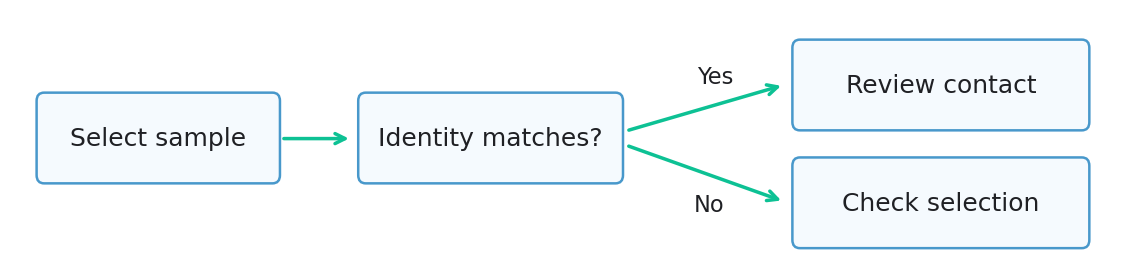
Keep contact retrieval separate from sending. A proposed workflow could return candidate profiles, let a founder select the intended person, and request an address for that profile. Review the result before exporting or preparing a message. This is a suggested process, not a claim about a completed customer test.
What should go into the trial scorecard?
Use the same checks for browser and MCP results. Record failures as well as successful matches. An AI assistant might select the wrong person while the lookup returns that person's correct email. The contact data and the selection step have different problems.
Divide the trial's actual cost by the number of contacts that pass your stated checks. Treat that figure as a sample result. It will change with the target market, subscription terms, and difficulty of the records. Avoid presenting it as the provider's universal cost.
How should the startup handle ambiguous records?
Hold a record when the employer, domain, or identity remains unclear. Check the company website and a current professional profile. A tool returning information quickly does not remove the need to resolve conflicting evidence.
Assign one person to maintain the list. That owner can remove duplicates, track contact corrections, and keep objections from being lost during imports. A shared spreadsheet needs the same ownership decision as a customer relationship management system.
Limit the fields you send to an AI application or another service to the information required for the task. Check your organization's rules for those services. A contact database subscription does not settle every question about storing or reusing its records.
What should happen after the trial?
Choose the lookup route that fits the team's research habits and produces reviewable results. A founder working through individual profiles may prefer browser lookup. A team already using an approved AI application may want MCP access, provided its review and permission controls suit the task.
Before committing to a plan, check the provider's current terms for credits, failed lookups, exports, and team access. Ask about the unresolved cases from your own sample. Those questions give a vendor something concrete to answer and help the startup avoid buying capacity it cannot use.
Run the next test on a different account segment before increasing spending. Keep the original selection rules so the comparison remains useful. Pay for wider use only after the team can explain which results passed, which failed, and what staff must check manually.