

Angel One Shares Appear to ‘Crash’ Nearly 90% After 1:10 Stock Split
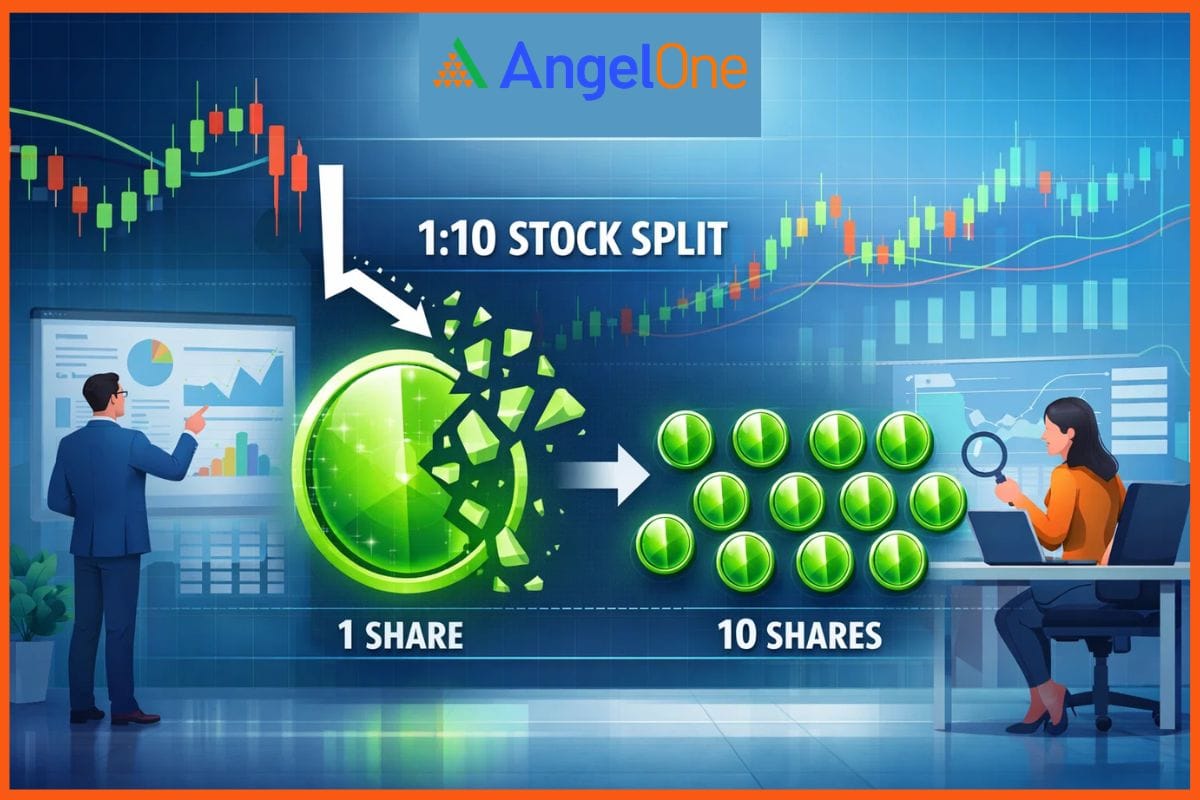
Indian brokerage firm Angel One Ltd saw its share price fall sharply on Thursday, 26 February 2026, with some trading platforms showing a near‑90% drop. However, this dramatic move was not due to a market panic or poor company performance. Instead, it was a routine 1:10 stock split adjustment that changed the way the share price is reported.
In simple terms, each existing share of Angel One was subdivided into 10 smaller shares, reducing the price per share while keeping the overall value of the holding exactly the same.
What the 1:10 Stock Split Means for Investors
A stock split is a corporate action that increases the number of shares while reducing the face value and trading price proportionately. For Angel One:
- One share with a face value of ₹10 has been split into 10 shares of ₹1 each.
- The company set 26 February 2026 as the record date, the cut‑off for shareholders to receive the new split shares.
- No change occurs in the total value of your investment or in your ownership percentage.
For example, if an investor held 100 shares before the split, they now hold 1,000 shares, but the combined market value remains the same.
This kind of adjustment often lowers the price per share on the trading screen, making it look like a dramatic fall when in fact it’s just a mathematical change.
Why This Can Improve Liquidity and Accessibility
Stock splits are typically used by companies that have seen strong gains in share price over time. By lowering the price per share:
- Shares become more affordable for smaller or retail investors.
- Trading volumes often rise, as more investors participate. Early trading data suggests volumes have increased significantly.
- The split does not dilute the company’s overall market capitalisation or impact its fundamentals.
Angel One’s share was trading above ₹2,400 before the split; post adjustment, prices are shown around ₹250. The difference is purely due to the split calculation and not a real loss in investor wealth.
Company and Market Context
This is the first stock split Angel One has undertaken since its IPO in October 2020. Since listing, the stock has been a strong performer, with substantial long‑term gains before the split.
Analyst data suggests that most brokers covering Angel One still hold buy or hold ratings, signalling confidence in the firm’s prospects.
The record date event also coincides with the firm’s strong trading activity and broader market moves. While stock prices can be volatile, especially around such technical corporate actions, the company’s overall market capitalisation remains solid in the ₹22,000-₹22,500 crore range.
Current Status and What Investors Should Know
- The share price adjustment is technical, not a crash.
- Investors holding Angel One shares before or on 26 February 2026 automatically received the extra split shares.
- No action is required from shareholders for the split to take effect.
- Markets will now reflect the ex‑split price, which is lower but proportional to the previous value.
Market watchers say this kind of price adjustment is normal and often followed by renewed interest as the lower price can attract more retail participation.