

Audi India Explores Local EV Production to Boost Market Share to 16%
Audi India is contemplating local manufacture of EVs to boost its market share in the luxury automotive segment from 8% to 15-16% in the next 3 to 5 years. The luxury car company intends to grow its model portfolio, enhance dealerships in tier-II and tier-III cities and improve customer experience.
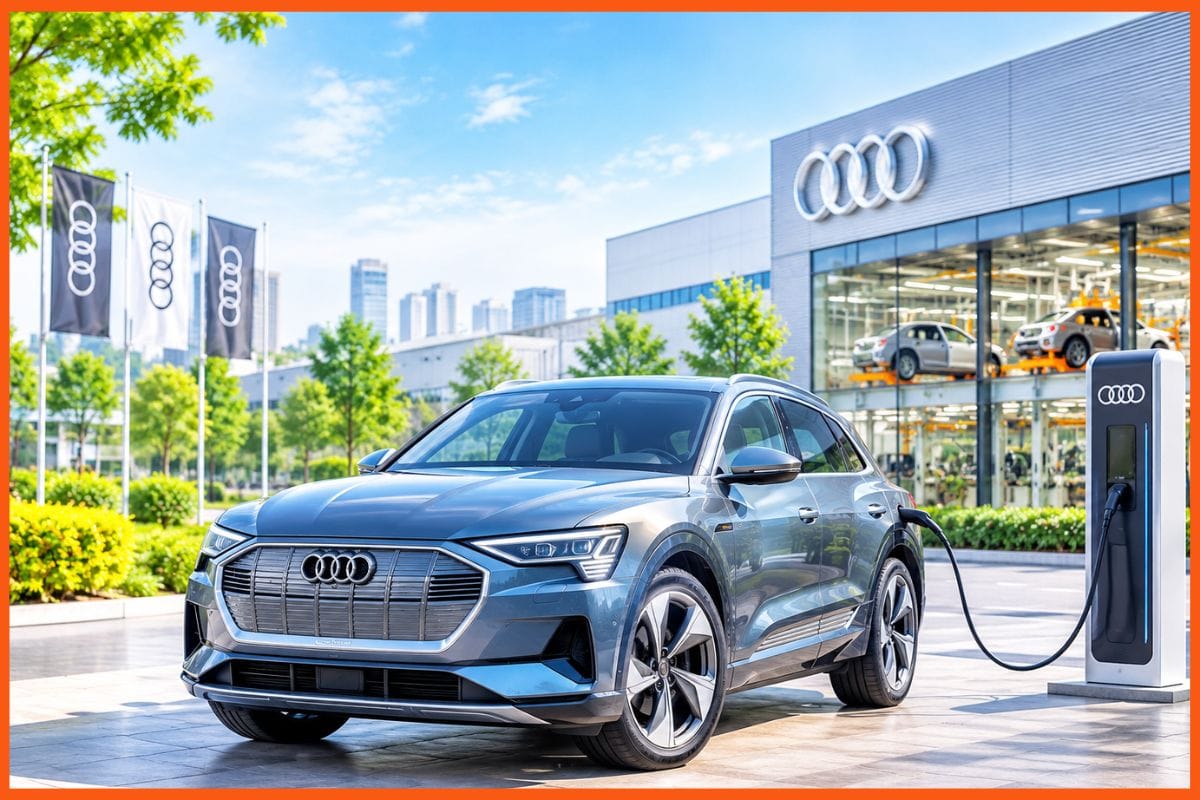
The Indian arm of Audi is planning to ramp up its expansion efforts by producing electric vehicles domestically. The firm aims its expansion by growing its model lineup and increasing its network of dealerships. The German luxury automaker is considering making BEVs in India as part of its plan to increase its market share from 8% to 15% to 16% in the premium car segment during the next three to five years.
The business plans to achieve its aims through new product launches, an enhanced customer experience, and the development of its dealership network, according to Balbir Singh Dhillon, the brand director of Audi India, who spoke with a media outlet. The planned local BEV manufacturing plan is anticipated to be decided upon in the next months.
Audi Relying on India-European Union Free trade Agreement
In India, where Audi is also considering the potential benefits of trade policies in bringing additional models to market, local production would be an additional component of Audi's strategy. Before determining whether to produce them locally, Audi is looking at the proposed India-European Union free trade agreement (FTA) as a way to launch new models and gauge their sales potential. Dhillon stated that the deal may enable the business to increase the number of vehicles brought into India in order to assess consumer demand.
As for Audi's core lineup, the automaker intends to keep manufacturing in the country while importing more models to provide customers more options. In addition, Dhillon stated that the Indian auto industry may find new export potential as a result of the planned trade deal. Therefore, producers on both sides may reap some benefits. This strategy would provide an opportunity for Audi to gauge interest in more models before committing to local production for each one. Showrooms in large metropolitan markets are just the beginning of Audi's ambitious development plans.
In the next year, the business plans to expand into more towns and transform some of its current locations into new-car showrooms in order to bolster its retail presence in tier-II and tier-III cities. According to Dhillon, these markets will see a disproportionate share of the anticipated expansion of the dealership network. In the next three to five years, the firm hopes to quadruple its present market share thanks to an expanded product line, better customer service, and easier access to retail outlets.
Audi Backing Expansion with New Product Launches
The new-generation Q3 is being locally assembled at the Škoda Auto Volkswagen India (SAVWIPL) plant in Chhatrapati Sambhajinagar, Maharashtra, as part of Audi India's continuing strategy. On October 16, 2026, the small luxury SUV will make its debut in the Indian market. In addition to a 2.0-litre gasoline engine and Audi's quattro all-wheel-drive system, the business has promised a number of technologies and features that are firsts in the sector.
As it considers expanding its presence in domestic electric vehicle production, Audi is bolstering its manufacturing footprint with the local assembly of the Q3. A number of strategies are in the works to hasten Audi's expansion in India, including a launch, a decision on electric vehicle production in the next months, and the expansion of dealerships beyond big cities.