

Centre Launches INR 2,814 Crore Scheme to Strengthen Critical Mineral Processing
The Union Cabinet has authorised a project of INR 2,814 cr to enhance India’s domestic capacity to manufacture lithium and nickel over 5 years from 2026-27 till 2030-31. The initiative will help four processing plants, two lithium and two nickel.
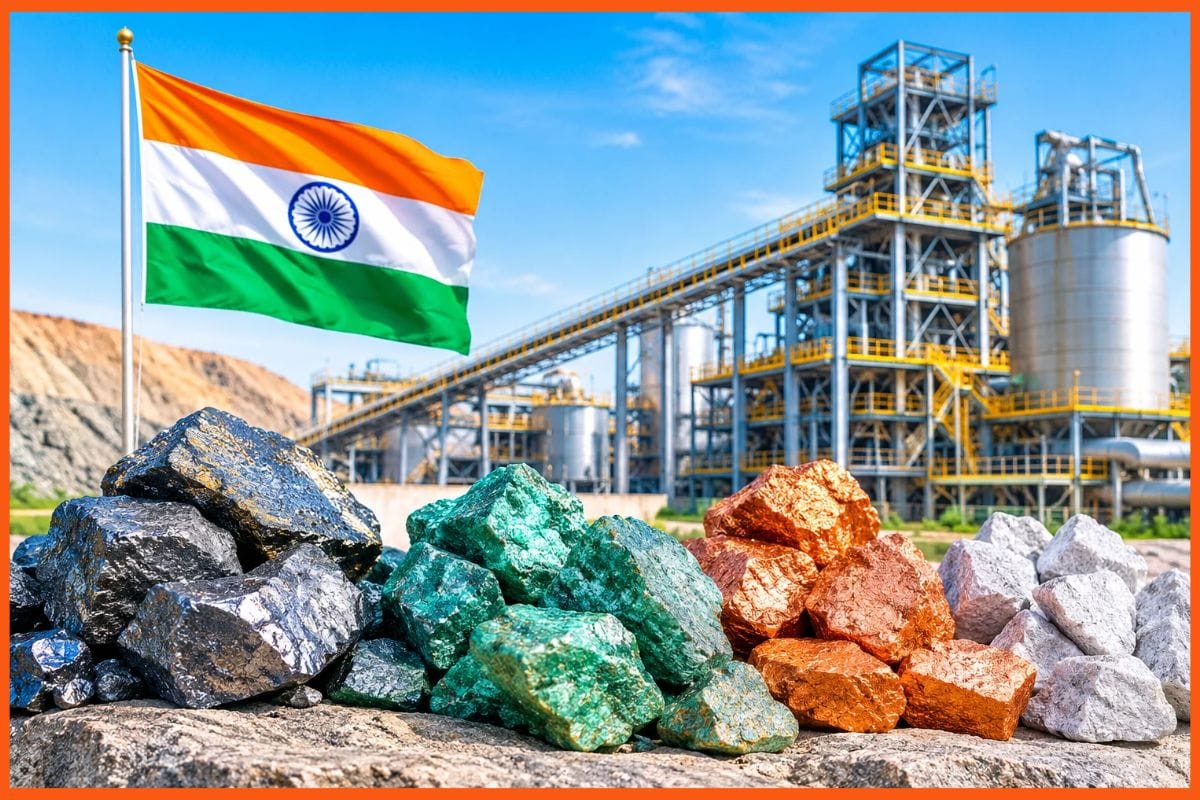
A capital expenditure support scheme to encourage processing of lithium and nickel, two essential minerals, with a budget of INR 2,814 crore over five years, until 2030–31, was approved by the government on November 4th. Prime Minister Narendra Modi presided over a meeting of the Union Cabinet that reached the decision.
The plan's stated goals are to strengthen India's domestic processing capabilities, which will in turn encourage value addition at home, lessen reliance on foreign suppliers, and build the value chain. Four essential mineral processing units will be able to receive a capital subsidy equal to 30% of eligible investments under the programme. In total, there will be four processing facilities: two for lithium and two for nickel. Each recipient would be limited to a maximum of INR 500 crore for lithium and INR 900 crore for nickel in terms of capital support.
Why Centre is Focussing on Critical Minerals?
Growing economies, strong national defences, and cutting-edge renewable energy sources all rely on critical minerals. A low-carbon future cannot be realised without them, as they are fundamental to contemporary technology. An advanced, zero-energy economy relies on essential minerals, which are used in everything from solar panels and electric cars to handheld electronics. The media was informed by Ashwini Vaishnaw, India's Minister of Information and Broadcasting, that the National Critical Mineral Mission has been making consistent progress.
The Cabinet has today given its approval to a plan for the processing of vital minerals. There are still only a few places on Earth that handle the processing of vital minerals. The result, according to the official statement, is that international supply chains are more susceptible to factors such as price fluctuations, export restrictions, and geopolitical problems. Serious ramifications for national security, economic sovereignty, and the timely delivery of decarbonisation goals result from this concentration's danger to supply chain resilience and economic security. The local beneficiation and processing infrastructure for essential minerals, such as cobalt, nickel, and lithium, is still in its early stages; therefore, India has to rely on imports for refined intermediates and high-purity materials.
India Needs to Churn Up Domestic Production of Critical Minerals
There is still a lack of processing capacity in India for essential minerals, and large-scale commercial projects encounter problems with access to raw materials, high capital requirements, and an absence of appropriate technology. In order to achieve import substitution, build resilient end-to-end value chains, and maximise value addition, domestic processing capacity is crucial. In this context, the plan has been developed to offer focused funding for the establishment and launch of domestic processing facilities.
The plan's stated goals include strengthening the country's processing capacity to facilitate value addition, lessening reliance on imports, and establishing a value chain. The plan is to transform intermediate products and ores of lithium and nickel into compounds with a high level of purity. Nickel production is anticipated to additionally recover cobalt as a by-product. Electric mobility, electronics, defence, and speciality steel are some of the vital industries that will benefit from this. The suggested plan is set to be put into action from 2026-27 to 2030-31 and will cost a total of INR 2,814 crore.