Flipkart Shopsy Targets Mass Market Growth with Artificial Intelligence Strategy
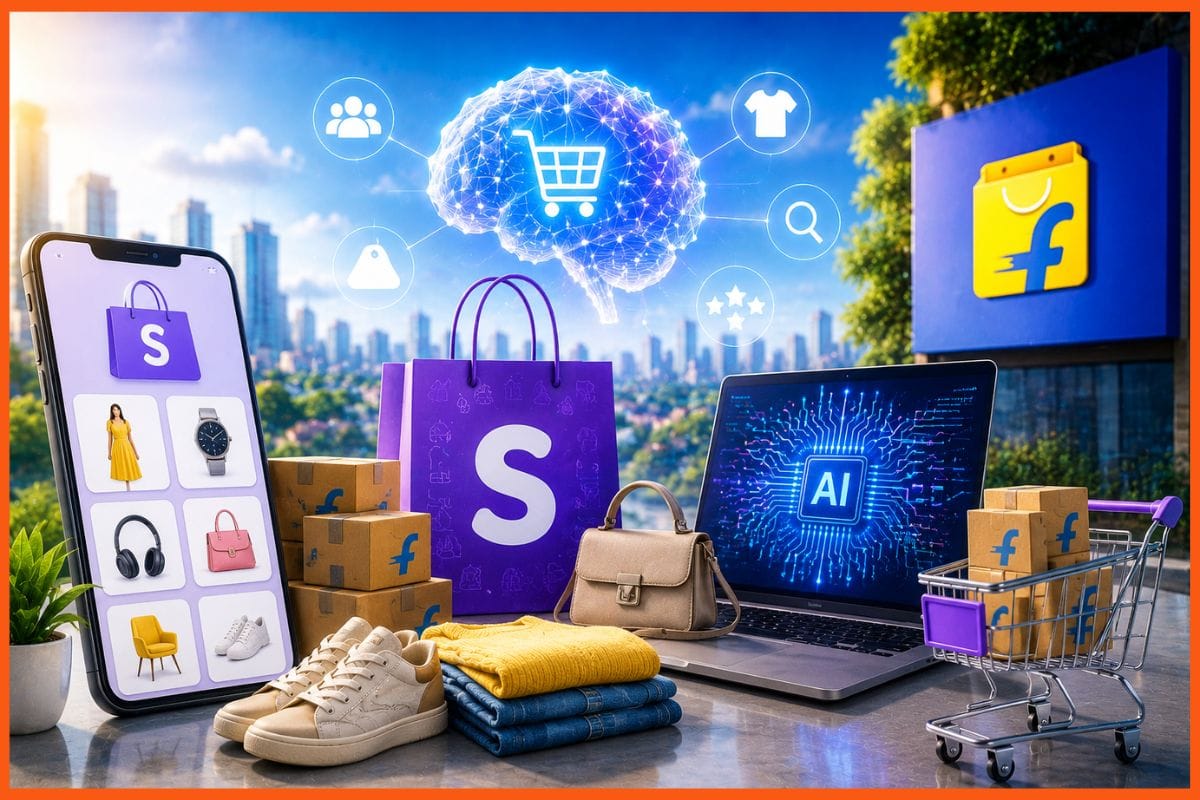
To attract the next generation of Indian internet shoppers, Flipkart's Shopsy is rebranding as an AI-powered marketplace. The business boasted that the app is evolving into something more than just an offers-led marketplace. The target demographic for this shift is youthful, budget-conscious consumers in both major and smaller cities. The brand is building for India, according to Flipkart senior vice president Ramesh Gururaja, who spoke to a media source. It doesn't matter who a consumer is; what matters is that you grasp their underlying motivation, he added.
Gururaja elaborated by saying that it's all about providing customers with additional options by surfacing the best product from the company's extensive inventory and processing signals in real time. It doesn't matter if it's an Instagram reel, a picture, a voice question, or someone simply entering "yellow kurti"—the company wants all possibilities to be functional. Technology, like a competent store clerk, should engage in communication with customers.
Shopsy Providing Immersive Experience to Shoppers
From product discovery to showcasing, Shopsy asserted that the redesigned app was meticulously crafted with India's buyers' shopping habits in mind. The company went on to say that product pages are designed to turn visitors' intent into interaction through the use of autoplay video, real customer photographs, and immersive imagery. With the help of AI-driven personalisation and search, the perfect product is shown to the perfect customer at the perfect time.
The brand added that the experience feels more local than generic because of the attention paid to regional aims and patterns of vernacular discovery. According to Balaji Thiagarajan, Flipkart's Chief Technology and Product Officer, between 40 and 50% of India's online shoppers are Gen Z. When it comes to shopping, these kids have strong opinions. They prefer to purchase in an interactive environment, learn about new things through videos, and participate in immersive events.
Across generations and geographies, Indian consumers think, browse, and shop differently, and Shopsy's new AI-powered personalisation takes this into account. According to Thiagarajan, the new Shopsy app leverages AI-native discovery, videofication, and an integrated gamified rewards system to enable technology to adapt to customers instead of the other way around.
|
Some Interesting Facts of the
Story |
|
1.Flipkart says nearly half of India’s
online shoppers are now Gen Z consumers who prefer interactive and
video-driven shopping. 2.Shopsy’s AI system is designed to act
like a digital store assistant by understanding shopper intent in real time. 3.The strategy reflects how AI is becoming
central to the future of ecommerce, especially in highly competitive
value-shopping markets like India. |
New App Brings Lucrative Opportunities to Sellers
By enhancing product discovery and conversion with video-led catalogues and AI-powered suggestions, the new Shopsy app aims to enhance prospects for merchants, according to Flipkart. Smaller firms and regional vendors would have easier access to advanced merchandising capabilities, according to the corporation.
According to Shopsy, it is still using a zero-commission methodology to keep their business costs low. The company also has a seller network that buys straight from manufacturers. Shopsy is part of Flipkart's larger effort to create a games-led commerce ecosystem in which all interactions, including gameplay, contribute to the overall value, according to Sakait Chaudhary, senior vice president of softlines, grocery, marketplace, and Shopsy, Flipkart.
|
Quick Shots |
|
•Flipkart’s Shopsy is repositioning itself
as an AI-powered marketplace focused on India’s next wave of internet
shoppers. •The platform is targeting young,
value-conscious consumers across metro, Tier-2, and Tier-3 cities. •Shopsy aims to make shopping more
interactive through AI-driven product discovery and personalised
recommendations. •Users can search products using voice
queries, images, videos, and even social media-style browsing experiences. |