
FSSAI Strengthens Food Safety Oversight Across India’s Online Marketplace
India’s food safety regulator is stepping up its scrutiny of online grocery and quick-commerce platforms like Blinkit, Swiggy Instamart and Amazon Now. New restrictions could mean product listings will have to include batch numbers, production and expiry dates.
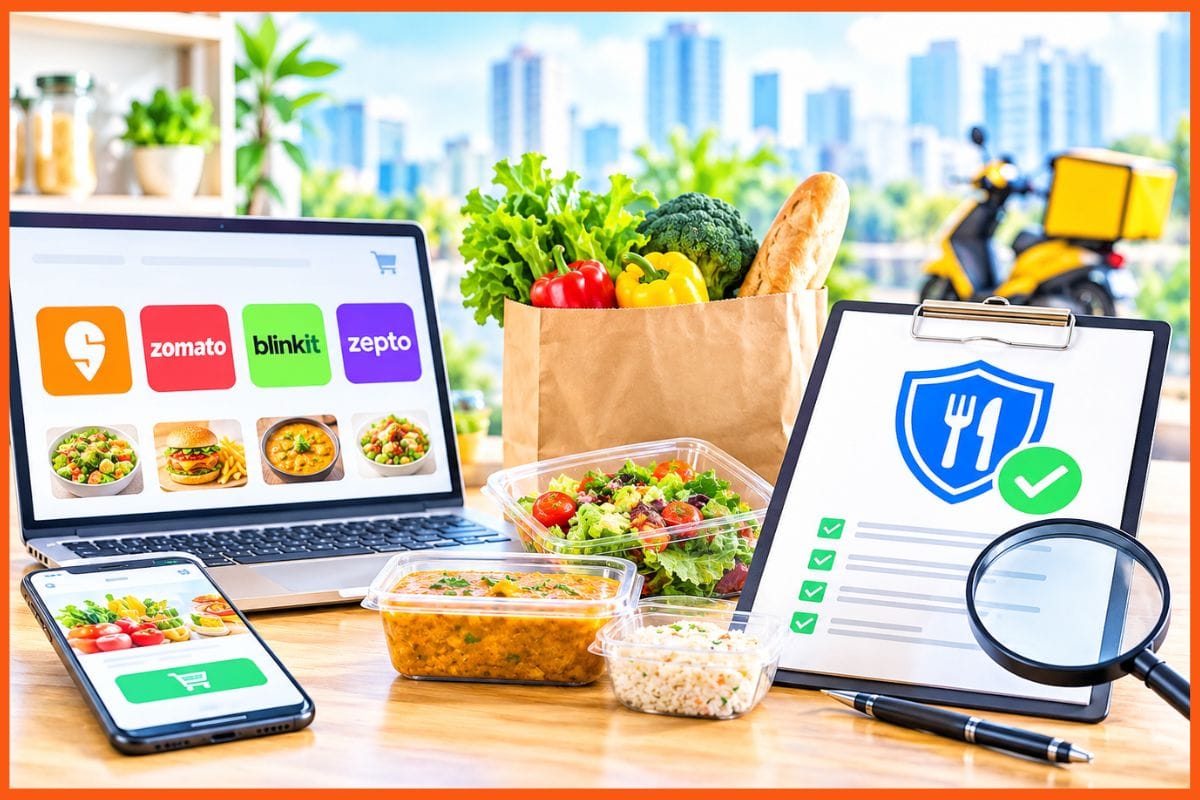
Fast food delivery services in India, such as Blinkit, Instamart (a division of Swiggy Ltd.), and Amazon Now, are bracing for stricter regulations from the country's chief food regulator. This comes as part of a larger effort to curb risky business practices in the biggest consumer market on Earth. In an interview, Rajit Punhani, chief executive officer of the Food Safety and Standards Authority of India (FSSAI), stated that online commerce will be the organisation's next major area of attention.
He claimed that the regulator is attempting to crack down on them and hold them to account. Food products will be required to publish their batch numbers, expiration dates, and manufacturing dates in internet listings according to FSSAI rules. Also, authorities would like platforms to pay for manufacturers' deceptive advertising. Additional regulations requiring dark kitchen photos and addresses are being considered, as are more stringent inspections of dark stores to guarantee appropriate storage conditions, especially for perishable goods like frozen foods.
FSSAI Drawing Stricker Lines for Qcomm Players
Investigations, some of which have been prompted by consumer complaints, and punitive measures have been ramped up by the federal food authority in recent months. Eternal Ltd.'s Blinkit, Swiggy Instamart, Flipkart, which is owned by Amazon.com Inc.'s regulatory action for alleged breaches. These voilations include the sale of prohibited items, misbranding, and invalid licenses. According to Redseer Strategy Consultants, groceries make up as much as 51% of sales in India's $80 billion e-commerce sector.
These measures have the potential to drastically alter this sector. In July, following an investigation by the FSSAI, Instamart stated that it was looking into the listings that had been identified by the regulator and was communicating with the relevant authorities to find a solution. Last week, a representative from Amazon responded to a question by saying that the company removes products that do not comply.
FSSAI Stretches Beyond Qcomm Sector
Online platforms are no longer the only target of the regulator's larger investigation. Advertisements, product claims, labelling, and food storage procedures at hotels, restaurants, and food manufacturers have come under closer scrutiny by the FSSAI. Some of the companies that have been implicated in these crimes include Nestle India Ltd., PepsiCo, Dabur India Ltd., and hotel operators like JW Marriott.
In addition to the FSSAI, Punhani urged that state food and drug enforcement agencies step up their supervision of these companies. He asserted that prosecutions involving online retailers have multiplied by five or six in the last year. In addition, he mentioned that they are making progress, albeit at a slower rate than what is ideal. Years of customer complaints and widely shared social media posts revealing factory, restaurant, and small business malpractices have led to the increased scrutiny. The number of inspections carried out by regulatory organisations between April and September was 700,000, which is over double the number compared to the previous year, according to Punhani.