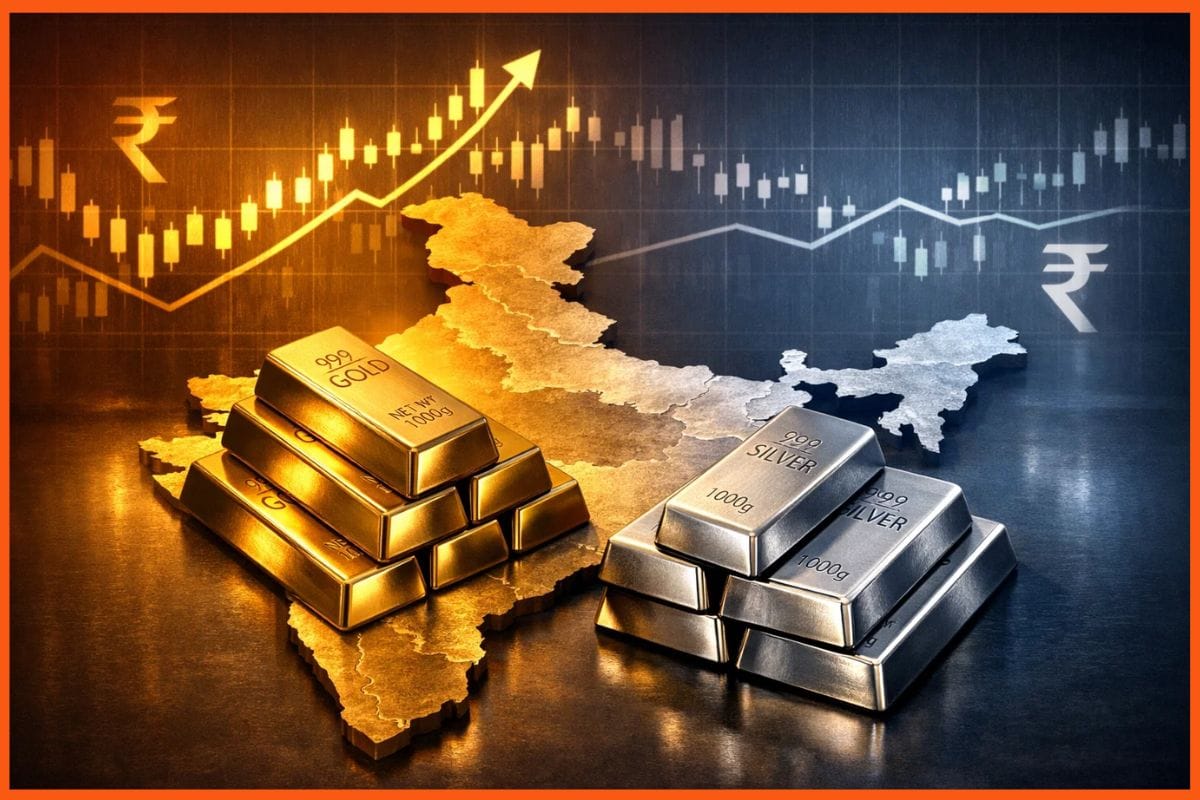
Gold and Silver Prices in India Remain Firm on 5 March Despite War Tensions: Market Close Analysis

Gold and silver prices in India closed lower on 5 March 2026, with bullion markets witnessing mild profit-booking after recent gains. By the end of the trading session, gold prices slipped across major cities, while silver remained largely stable but near recent highs.
The soft closing trend reflected global bullion correction and currency fluctuations, which often influence domestic prices because India imports most of its gold and silver.
Gold and Silver Prices in India at Market Close (5 March 2026)
| City | 24K Gold (₹/10g) | 22K Gold (₹/10g) | Silver (₹/kg) |
|---|---|---|---|
| Delhi | ₹1,58,450 | ₹1,50,900 | ₹2,95,000 |
| Mumbai | ₹1,57,920 | ₹1,50,400 | ₹2,95,000 |
| Chennai | ₹1,57,920 | ₹1,50,400 | ₹2,95,000 |
| Bengaluru | ₹1,57,920 | ₹1,50,400 | ₹2,95,000 |
| Hyderabad | ₹1,58,760 | ₹1,51,200 | ₹2,95,000 |
| Kolkata | ₹1,58,970 | ₹1,51,400 | ₹2,95,000 |
Prices represent indicative retail closing rates in major cities. Local jewellers may quote slightly different rates due to taxes, logistics costs and making charges.
Silver prices across major cities stood near ₹295 per gram, equivalent to ₹2.95 lakh per kilogram, with little change from the previous session.
Intraday Movement and Price Direction
During Thursday’s session, gold prices showed a mild downward trajectory, reflecting profit-booking after a strong rally earlier in the week.
Data from multiple city markets suggests:
- 24K gold declined by about ₹90-₹95 per gram compared with the previous day.
- 22K gold fell by roughly ₹840-₹850 per 10 grams across several markets.
The intraday pattern suggested consolidation rather than a sharp correction. Prices opened slightly higher in some regional markets but gradually softened toward the closing session.
Silver, in contrast, remained relatively stable around ₹295 per gram, indicating lower intraday volatility compared with gold on Thursday.
Gold Rate Analysis: Consolidation After Strong Rally
Gold’s latest price movement reflects short-term consolidation after a strong upward trend earlier in 2026.
Domestic gold prices are influenced by several key factors:
- Global bullion prices
- Currency movement between the Indian rupee and the US dollar,
- Local demand and supply dynamics.
Over the past few months, gold has seen significant appreciation, with prices earlier touching historic highs during January 2026. The recent dip, therefore, appears largely technical, driven by traders locking in profits after the rally.
Another important factor is currency movement. Because India imports gold, a weaker rupee generally pushes domestic gold prices higher, while a stronger rupee can reduce import costs and soften prices.
Thursday’s closing trend, therefore, suggests that the market is cooling after recent highs rather than entering a sharp downtrend.
Silver Price Analysis: Industrial Demand Keeps Prices Elevated
Silver’s behaviour in the bullion market differs from gold because it serves both investment and industrial purposes.
In India and globally, silver demand is linked to sectors such as:
- Electronics
- Solar panels
- Industrial manufacturing
Because of this dual role, silver often shows sharper price swings than gold during periods of strong industrial demand or macroeconomic changes.
On 5 March, however, silver prices were largely unchanged at ₹295 per gram across several major Indian cities.
The relative stability indicates that while the broader bullion market saw some correction, silver retained support due to ongoing demand expectations in industrial sectors.
Key Factors Driving Gold and Silver Prices Today
- Global bullion correction: International prices softened slightly, leading to profit-booking in domestic markets.
- Currency fluctuations: Movements in the rupee against the US dollar continue to affect import-linked bullion prices.
- Post-rally consolidation: After a strong rise earlier this year, traders locked in profits, pushing prices marginally lower.
What Today’s Close Signals for the Market
Thursday’s closing prices suggest the bullion market may be entering a short-term consolidation phase following recent highs.
Gold’s mild decline indicates that investors are adjusting positions after the strong rally seen earlier in 2026. Meanwhile, silver’s relative stability shows that industrial demand expectations remain supportive.
Overall, the price action points to moderate volatility but continued structural support for precious metals in the domestic market.
 StartupTalky News