

Government Rolls Out New E-Commerce Export Regulations to Boost Shipments
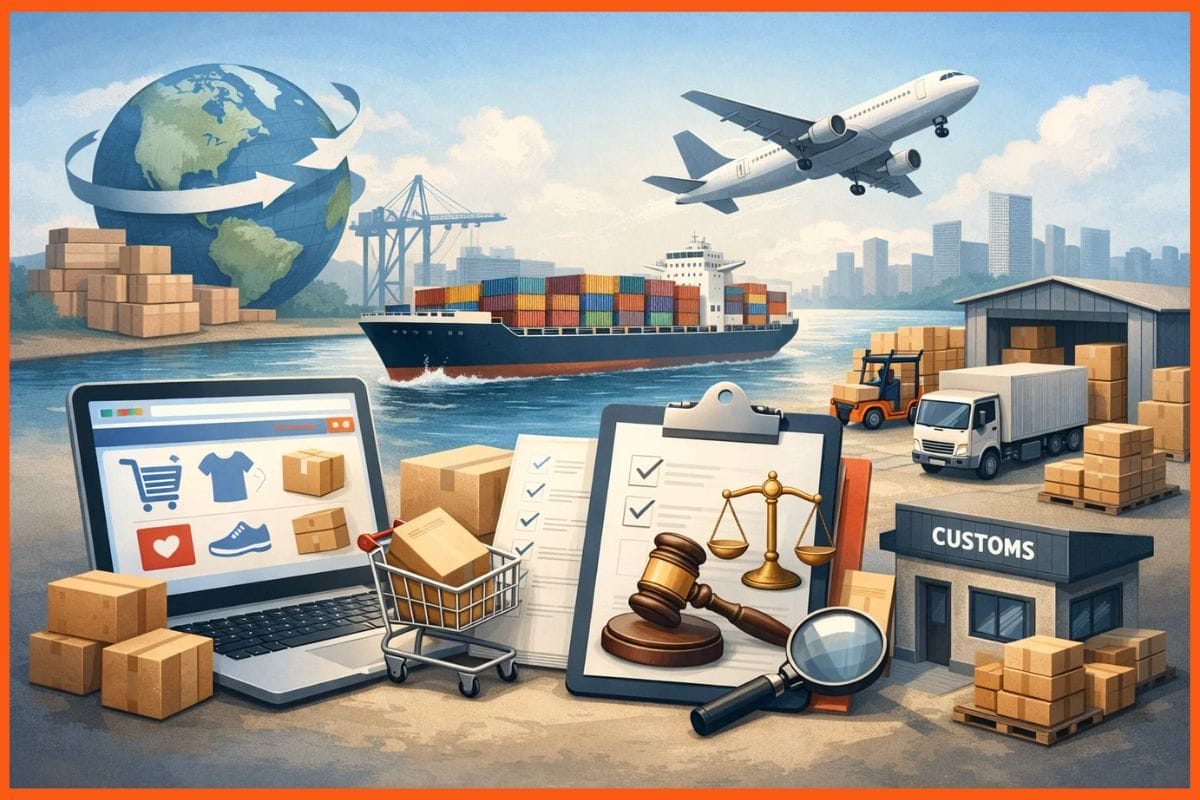
A new set of regulations to improve and simplify the country's online commerce exports has been operationalised by the Central Board of Indirect Taxes and Customs (CBIC). The government has lifted the limit of INR 10 lakh per shipment on courier exports under the new regulations. It has also simplified the process of dealing with rejected and returned packages.
Return to origin (RTO) procedures for uncleared cargo are also included in the revised regulations. According to a statement from the finance ministry, these new export standards are designed to make conducting business easier. To sum up, regulations will make logistics more efficient, which will boost India's export competitiveness internationally. It went on to say that these changes will help export startups a lot by decreasing dwell time and transaction expenses.
Can New Rules be Potential Game Changer?
When the INR 10 lakh cap is lifted, shipments will have more leeway in terms of value and less need to be redirected to more expensive traditional air or sea cargo. At the same time, the CBIC has established an RTO facility to deal with the backlog of unclaimed imported products. This would simplify the process for returning uncleared non-restricted or non-prohibited commodities to their origin after 15 days. The board has also made it easier to re-import online store items that have been rejected or returned.
In order to ensure that these returns are processed smoothly, the Express Cargo Clearance System contains a specialised return module, as mentioned in the statement. These new regulations follow FM Nirmala Sitharaman's announcement of them in her Budget 2026 speech, which was made two months ago. Her speech included a number of important announcements, including the removal of the value cap, the launch of the Customs Integrated System (CIS) over the course of two years, and the introduction of a digital window for cargo clearing approvals.
New Norms will Uplift Domestic Ecommerce Ecosystem
It is believed that the domestic e-commerce ecosystem would receive a significant boost when these new standards are put into action. These steps should make it possible for direct-to-consumer firms to transport expensive goods all across the world without any restrictions. When it comes to logistics and scaling, these standards make things easier for Indian firms that are targeting global markets.
In addition to enhancing the convenience of doing business for startups in cross-border manufacturing, hardware and electronics startups will also benefit from reduced friction and faster turnaround times for imported components. Crucial to this whole affair is the Indian e-commerce sector, which is anticipated to blossom into a $345 billion opportunity by 2030. In FY23, online sales from India were valued at $4 billion to $5 billion, according to a report by EY.
|
Quick Shots |
|
•Govt operationalises new e-commerce export
rules to boost global trade •INR 10 lakh export cap removed for courier
shipments •Simplified process for returned and
rejected goods •Introduction of Return to Origin (RTO) for
uncleared cargo |