Govt Clears RBI Plan for INR 10, INR 20 Polymer Note Field Trials
The Indian government has authorised RBI’s plan to begin field trials of one billion polymer INR 10 and INR 20 banknotes, which will lead to their regular issue if the trials are successful. Polymer notes are projected to be more durable and resistant to weather.
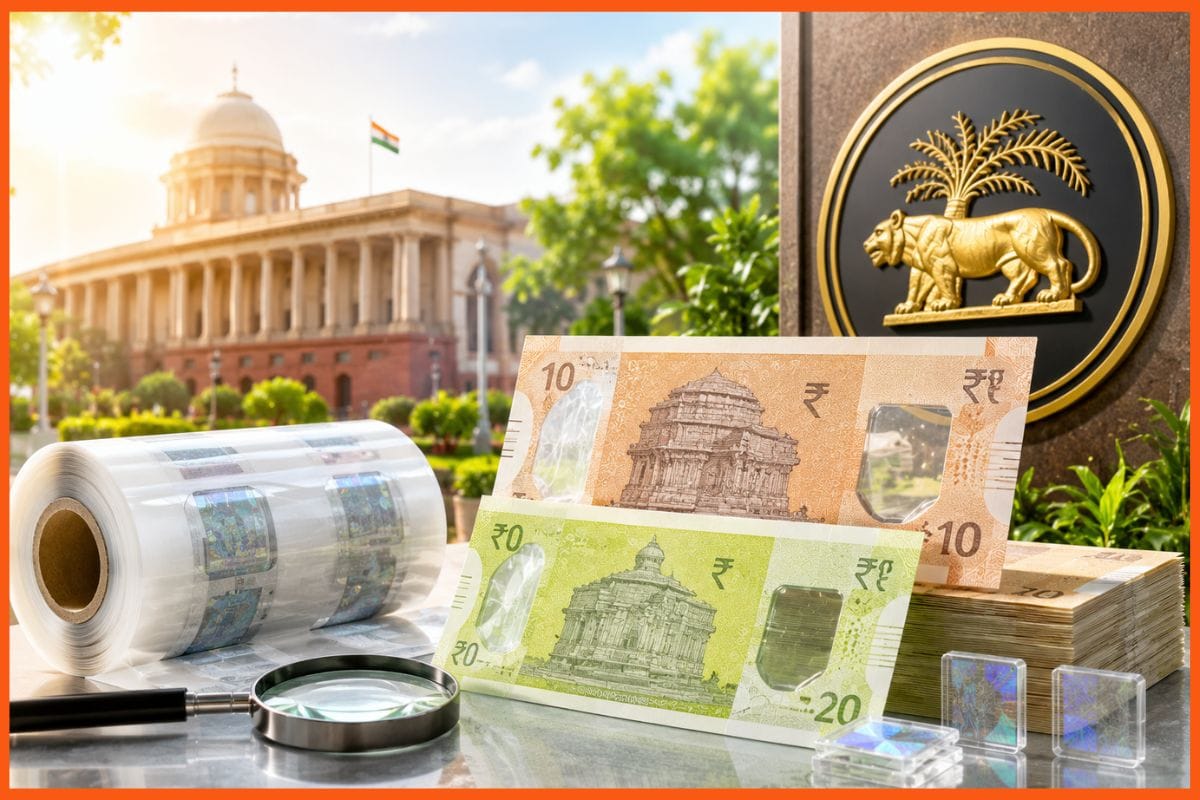
One billion polymer banknotes of the INR 10 and 20 have been green-lit for field trials by the Reserve Bank of India (RBI). Additionally, following the successful conclusion of field experiments, the Ministry of Finance declared on 27 July that approval has been granted for the normal issuing of polymer banknotes in these two denominations.
The administration has approved the idea, according to Pankaj Chaudhary, Minister of State for Finance, in a written reply to the Parliament. The RBI has previously announced that research conducted on a global scale has shown that polymer banknotes have a far longer lifespan than their paper counterparts. Regular issuing of polymer banknotes will be necessary to determine any potential influence on digital payments, given their adoption is still in its early stages.
RBI Juggling Up Between Polymer and Paper Notes
There will be no withdrawal of paper notes from circulation; rather, the central bank intends for their circulation to be parallel to that of polymer notes. The Reserve Bank of India (RBI) declared its intention to launch a trial of plastic notes a couple of weeks ago through a tender. The central bank has previously considered using polymer notes. A comparable field trial was planned and announced in 2012, but it was never carried out.
For the purpose of printing currency notes, the Bharatiya Reserve Bank Note Mudran Pvt Ltd (BRBNMPL) put out a request for proposals (RFP) for 3.4 crore polymer sheets. According to media sources, the polymer sheets that will be utilised for the currency notes are more than just plastic sheets; they will have certain security features. The "immediate requirement" for 3.4 crore sheets was highlighted in the tender, though.
Why RBI Opting for Polymer Notes?
A few weeks ago, the RBI put out a worldwide request for suppliers and manufacturers of polymer substrate sheets—the specialist material used to print polymer banknotes—in an Expression of Interest (EOI). August 18 is the cutoff date for proposals. Due to its superior durability compared to traditional paper currency, polymer banknotes are anticipated to remain in circulation for an extended period of time.
They are more durable and resistant to dirt, water, and wear and tear thanks to the polymer. Polymer banknotes are now in use by roughly 60 countries worldwide. In 1988, with the introduction of a 10-dollar note, Australia became the first country to use polymer banknotes. In 2024–25 (FY25), the government spent INR 6,372.8 crore on the secure printing of paper currency notes, up from INR 5,101.4 crore the previous year. In its annual report for FY25, the RBI stated that these expenses occurred mostly as a result of an increase in the cost for printing banknotes.