

How Spalba Is Reimagining Venue Sourcing and Event Planning Through AI and Immersive Technology
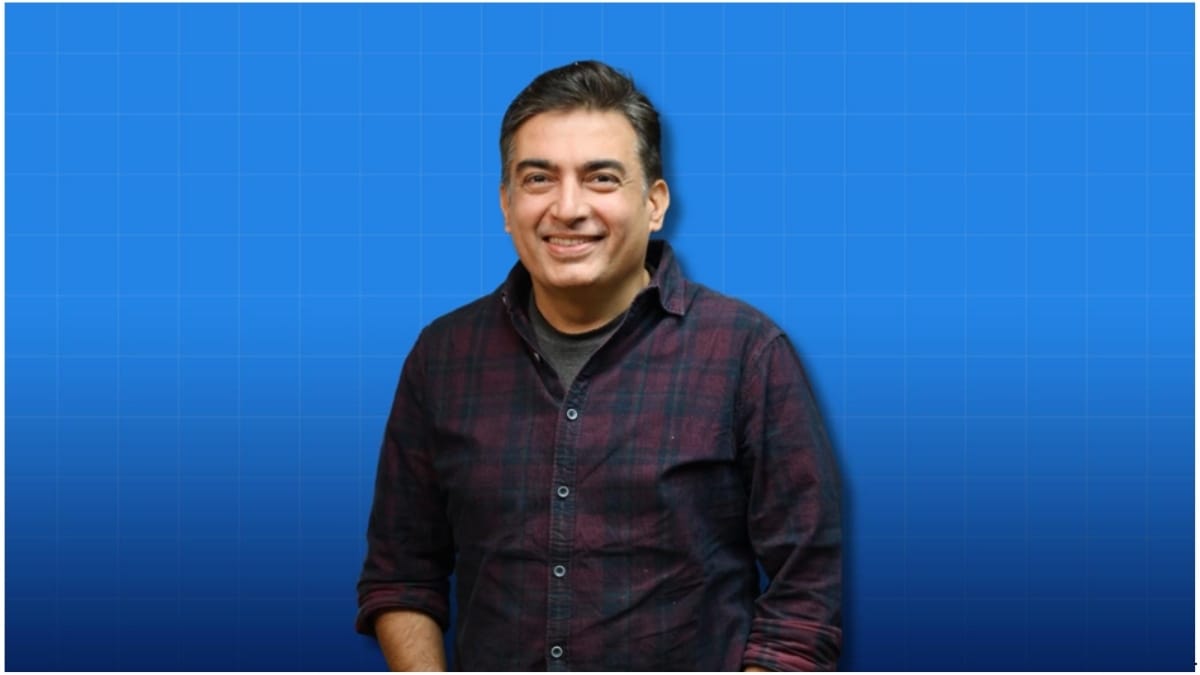
As hotels, event venues and planners increasingly look for faster, more efficient ways to discover, evaluate and sell spaces, technology is beginning to reshape an industry long dependent on physical site visits and manual coordination. Spalba, founded by Naveen and his co-founder, has positioned itself at the centre of this shift as Asia's first immersive event sourcing marketplace. With more than 20,000 event spaces across 100+ cities, 3,350+ immersive 3D walkthroughs, and a growing network of 11,000+ planners, agencies and corporates, the platform is combining digital twins, AI-powered matching and SaaS tools to make venue sourcing more visual, measurable and conversion-focused.
1. What inspired you to start Spalba, and what gap in the hospitality industry were you aiming to solve?
Spalba was born from conversations. While working with my co-founder, Naveen, who comes from the events industry, I kept hearing about the friction planners face while sourcing venues and coordinating stakeholders. What started as curiosity became conviction when we realised the size of the opportunity. Early on, the biggest challenge was behaviour, not technology. The industry relied on manual processes and physical interactions, so building trust in a digital approach required patience and proof. COVID accelerated this shift, making technology essential and helping us establish early momentum.
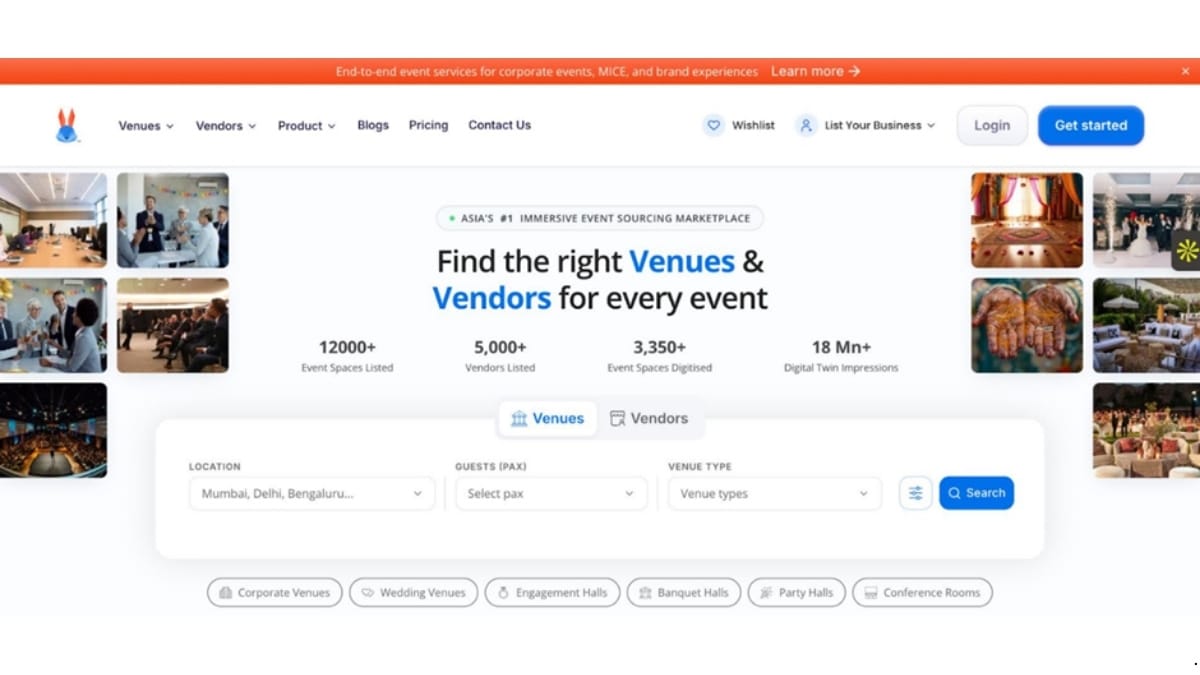
2. For readers discovering Spalba for the first time, could you explain what the platform does and how it helps hotels and event venues?
Spalba is Asia's first immersive event sourcing marketplace. We've digitised venue sourcing and event planning, from discovery to final layout. Our marketplace has 20,000+ event space listings across 100+ cities, with 3,350+ spaces paired with 3D walkthroughs and dimensionally accurate digital twins.
For hotels and venues, this means sales acceleration, national visibility, self-qualifying clients and fewer wasted site visits. Planners, agencies and corporates can conduct virtual recces, shortlist digitally, and plan and visualise events inside the space. Vendors get a portfolio showcase reaching 11,000+ event planners, agencies and corporates actively sourcing.
3. Spalba has been at the forefront of introducing technologies like digital twins and AI to hospitality. How are these innovations changing the way hotels market and sell their spaces?
Hotels tell us their sales teams have reduced reliance on physical site visits and shortened sales cycles. Clients explore venues through hyper-realistic walkthroughs before enquiring, so they already understand the ballroom, scale, pillars, ceiling height and pre-function area. The hotel receives a more qualified enquiry.
Hotels can also build event mockups showing stage position, seating and branding instead of asking clients to imagine them from a floor plan. With digital twins, one ballroom can be presented as a conference, awards night, product launch or wedding. Hotels are moving from describing spaces to demonstrating them.
4. What have been some of Spalba's biggest milestones and growth achievements since its inception? Could you share any key numbers or customer success stories?
In FY 2025-26, we expanded into Singapore, Vietnam, Thailand, Nepal and other APAC markets, expanded offices from Gurgaon to Mumbai and Singapore, and onboarded 70+ IHCL properties. In FY 2026-27, we transformed into Asia's first immersive event sourcing marketplace, onboarding 5,000+ event vendors. We were recognised as the 'Guardian of Sustainability'.
Our marketplace has 11,000+ registered agencies, event planners and corporates, with 32% converting to premium subscribers within 10 months. Venue inventory nearly doubled from 11,000+ to 20,000+ event spaces. Monthly enquiries routed to hotel and resort partners grew 10X, from 300 to over 3,000 in six months. Our property renewal rate is 85%.
5. Building a hospitality-tech startup comes with its own set of challenges. What were some of the biggest hurdles you faced, and how did you overcome them?
Slow tech adoption was a major hurdle. We had to convince decision-makers that a digital twin was a revenue tool, not a marketing gimmick. Once IHCL, The Leela and The Oberoi came on board, we had proof of concept.
Sustainability was another challenge. Our technology cuts carbon footprint by reducing physical site visits, flights, drives and repeat recces, but sustainability was not initially treated as an urgent business issue. We had to quantify the travel involved and show the environmental benefit alongside commercial gains.
Building a three-sided marketplace was also difficult: venues wanted demand, vendors wanted business opportunities, and planners wanted a comprehensive ecosystem. We addressed this by building supply density city by city while ensuring immersive walkthroughs and vendor pages delivered value from day one.
6. The hospitality technology space is becoming increasingly competitive. What sets Spalba apart from other event-tech and venue management platforms?
We're the only SaaS-enabled marketplace in events and hospitality. Most platforms are either listing directories or software tools; we're both. Venue owners get technology that makes their inventory sell itself, while planners, agencies and corporates get tools that make their work faster.
We've never charged commission or pay-per-lead fees, removing the incentive to inflate enquiry volume. Our enquiry-to-conversion rate is around 35%.
Our immersive layer is another advantage: we create dimensionally accurate 3D digital twins using LiDAR and RADAR-enabled camera technology, allowing planners to take precise measurements and visualise seating, stages, branding, LED walls and other elements. Spalba connects discovery, evaluation and planning on one platform.
7. How do you see the future of hotel sales and event planning evolving, and what role do you believe technologies like AI and immersive experiences will play?
The industry will become more digital, collaborative and experience-driven. Discovery and evaluation will increasingly move online, with immersive technology supporting shortlisting. Physical site visits will remain, but increasingly as final validation rather than the starting point.
Venues, planners and vendors will move from working in silos to connected platforms where spatial data, layouts and briefs are shared. AI's genuine impact will be in matching and responsiveness: understanding event briefs and mapping them to the right spaces, while helping venues respond faster and more intelligently to enquiries. Technology is becoming a growth driver for sales teams and GMs, not just an IT function.
8. Looking ahead, what are Spalba's key priorities for the next 12–24 months in terms of product innovation, market expansion, and business growth?
Our primary growth driver is scaling across APAC, targeting 30% market penetration for venue onboarding. We will expand vendor and event planner onboarding across key APAC markets.
On product, we are focused on AI-powered personalisation for venue and vendor matching and evolving the platform into a single-pane solution where clients can source, compare and manage venues, vendors and planners end-to-end.
On business growth, we aim to scale transaction volume through verified, high-converting demand and strengthen Spalba as a growth channel for event ecosystems in APAC.
9. Venue marketplaces have already been there, but they were not able to deliver the promised value. What are we doing differently?
Venue marketplaces have existed for a while, and most underdelivered because their business model was misaligned with the outcome they promised. Commission or pay-per-lead models reward enquiry volume rather than quality, leaving venues with irrelevant enquiries and sales teams filtering noise.
We've never monetised that way. No commission, no charge per lead. On Spalba, buyers explore spaces through hyper-realistic walkthroughs before enquiring, so the enquiry is qualified by default because the client has already judged the space. That's fundamentally different from a directory, where an enquiry can be just a first act of curiosity.
We're also more than a lead channel: our immersive walkthroughs and design tools are assets hotels use in their own sales meetings, independent of enquiries. The difference is less about doing marketplaces better and more about not repeating the model that broke them.