
IKEA Avoids Layoffs, Redeploys Workforce as AI Automates Routine Tasks
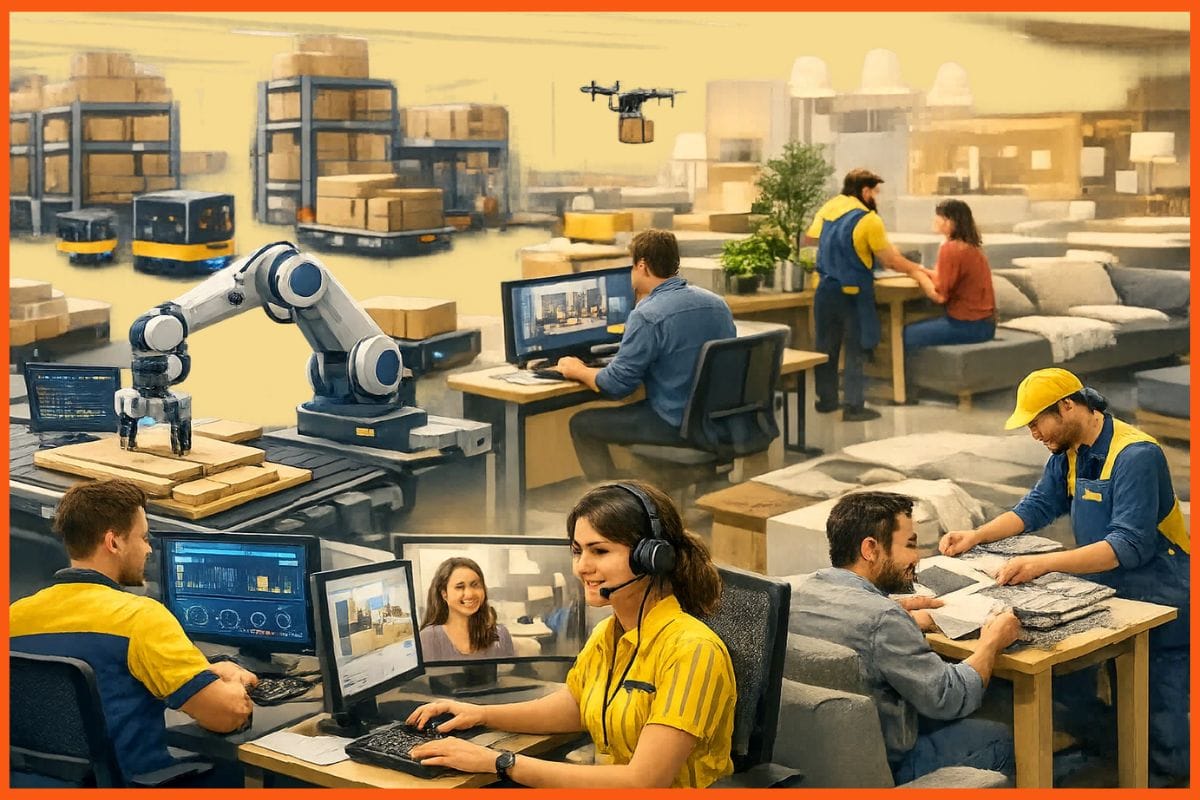
IKEA has automated routine customer service duties with the help of artificial intelligence. A new source of income of more than €1 billion (INR 9,000 crore) has emerged as a result of staff promotions to higher-paying positions inside the organisation. A lot of people are worried that AI will mostly cause people to lose their jobs. However, the Swedish retailer's strategy shows that automation can change jobs rather than take them away.
IKEA introduced Billy, an AI chatbot, to handle basic customer service enquiries, such as order status updates, product questions, and more. Approximately 57% of client conversations are now handled automatically by the system. As a result, according to Digital Futurist Brian Solis's interview with Info-Tech Research Group, the operational strain on support staff will be substantially reduced. This change is indicative of a more general tendency in the business world toward the use of AI to automate mundane, repetitive operations.
How IKEA Transforming Operations Via AI?
Instead of seeing automation as a means to decrease costs, IKEA looked at the 43% of encounters that still needed human intervention. Many of these enquiries, the business discovered, were advisory rather than transactional; clients wanted advice on home and business interior design. Instead of laying off customer support representatives, IKEA trained some of them to become interior design consultants.
This was a turning point in providing customised, value-added services rather than responding to standard enquiries. Based on this realisation, IKEA implemented a consulting model where customers could pay for design services. Estimates indicate that the service brought in about €1 billion in extra income in the first year. Hence, demonstrating how AI-driven efficiency may open doors to new business prospects.
AI vs Humans Battle Heating Up All Sectors
This change exemplifies a larger trend in the way businesses are using automation, which is leading to the development of new service verticals in addition to increased efficiency. The advancement is occurring in the context of a variety of results from the implementation of AI in various sectors. A number of companies, like Klarna, have claimed that AI tools have eliminated the need for hundreds of customer care representatives. But they did eventually admit that there were problems with service quality, which prompted them to get people back into the process.
In this context, IKEA's approach demonstrates a more nuanced model, in which AI manages speed and scalability and human workers concentrate on jobs requiring judgement. The emphasis is moving from cost reduction to workforce redesign as organisations keep experimenting with AI. It appears from IKEA's story that the way businesses decide to implement AI could have a greater influence than the technology itself when it comes to AI's impact.
|
Quick Shots |
|
•IKEA avoids layoffs, redeploys employees
as AI automates routine tasks •Introduces AI chatbot “Billy” to handle
customer service queries •New consulting model generates €1 billion+
additional revenue •The move demonstrates AI-led business
expansion, not just cost-cutting |