Satya Nadella Says AI Risks Leaving Industries Behind Unless Value is Widely Shared
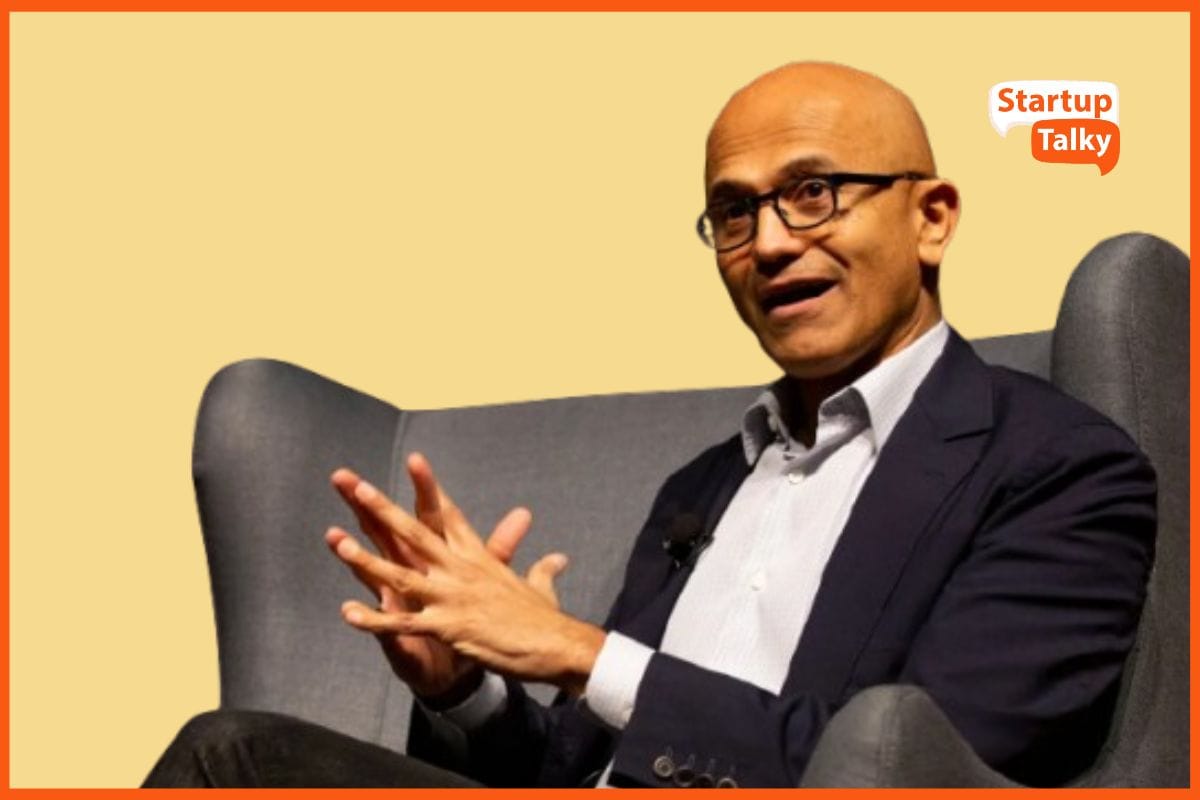
Microsoft CEO Satya Nadella thinks the AI industry needs to be careful not to make the same mistakes that were made during previous economic revolutions. He said that industry should remain cautious even if AI is quickly becoming the backbone of how companies function.
Nadella emphasised in a post on X that entire industries risk losing value, knowledge, and long-term competitiveness if a small number of corporations end up controlling the advantages of AI. His remarks come at a time when many are worried about the effects of AI on employment and companies. Concerns about economic concentration and job disruption have been on the rise, even as many tech businesses tout AI as a productivity driver.
— Satya Nadella (@satyanadella) June 14, 2026
AI Sector Gone Through Lot of Transformation: Nadella
In contrast to earlier technological shifts, the AI era is unique, according to Nadella. The use of digital tools to increase productivity is no longer the only domain of AI. He instead said that companies are entering a new era in which AI systems and humans may mutually learn. As a result, he established a "cognitive loop" connecting human employees with computer programs. Nadella claims that in order to succeed in the future, businesses will require two types of capital.
First, there's human capital, which consists of things like employees' expertise, experience, connections, and originality. His second point is the concept of "token capital", which refers to an organisation's developed and owned AI capabilities. In contrast to popular belief, Nadella maintained that human knowledge is increasingly valued as AI systems advance in capability, rather than seeing AI as a substitute for humans. According to him, the expansion of token capital will be propelled by human action. He went on to say that individuals will always be crucial when it comes to establishing objectives, bridging disciplines, and seeing significant trends.
|
Some Interesting Facts of the Story |
|
1.The debate highlights a growing divide between AI
leaders: some see AI as a productivity partner, while others fear large-scale
workforce disruption. 2.The discussion reflects broader concerns that AI
could become one of the most significant economic transformations since the
internet revolution. 3.Nadella believes organizations that combine strong
human expertise with proprietary AI capabilities will be best positioned to
succeed in the AI-driven economy. |
Nadella Emphases on Developing In-House Learning System
For Nadella, one of the most significant worries is that businesses might rely too much on a handful of really effective AI models. Instead of depending on third-party AI suppliers, he argued that companies should develop in-house learning systems to safeguard intellectual property and institutional expertise. His reasoning was based on the fact that similar movements of industrial and manufacturing jobs occurred in the early stages of globalisation.
Although there was nominal economic development, many communities were deeply affected by the long-term effects of the disturbance. Similar problems, according to Nadella's warning, might arise if AI systems learn about an industry while a small number of enterprises reap the majority of the financial benefits. His remarks follow Dario Amodei's much darker appraisal of AI's effect on jobs, which was made only days ago. The chief executive of Anthropic recently issued a warning in a policy essay, suggesting that permanent job loss might be an inherent feature of artificial intelligence (AI) rather than a transitory consequence of its widespread use.
|
Quick Shots |
|
•Microsoft CEO Satya Nadella has warned that AI’s
benefits must be broadly distributed across industries. •He cautioned that if only a handful of companies
capture AI-driven value, entire sectors could lose competitiveness and
institutional knowledge. •Nadella emphasized that AI represents a new phase
of economic transformation, beyond traditional digital productivity tools. •He described a “cognitive loop” where humans and AI
systems continuously learn from each other. |