

Tesla, Samsung Warn Against Fresh US Tariffs on Vietnam Amid Trade Tensions
Flipkart is also piloting ‘Flipkart for Earth’, a curated portal for premium, healthier, toxin-free and sustainable products across categories. The move is a sign of growing demand for specialised products in India’s rapid commerce space.
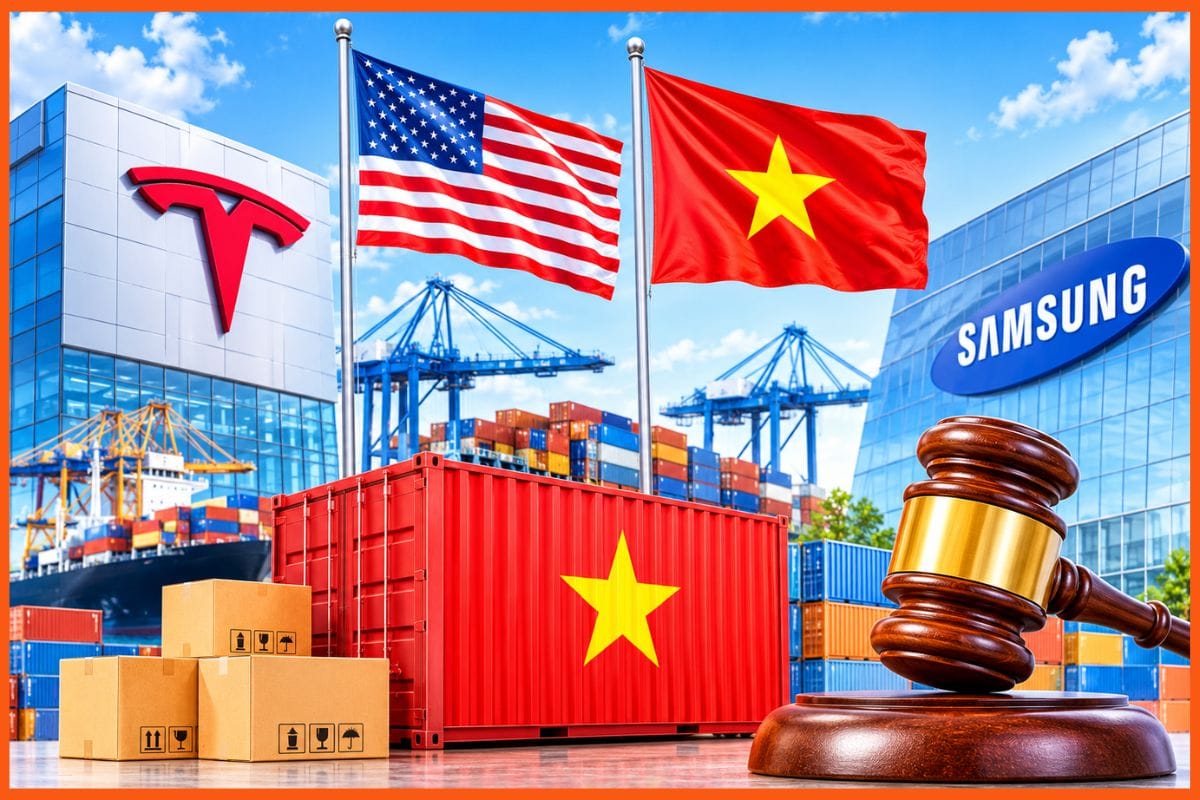
Due to their reliance on global supply chains and manufacturing, tech companies Tesla and Samsung have spoken out against more US tariffs on Vietnamese goods. The announcement came as the Trump administration is drawing near the end of its probe into Vietnam's IP practices, which has a deadline of November 29.
Along with other businesses, these two are lobbying Washington to refrain from imposing further levies. While a media house evaluated comments, it was found that American manufacturers of steel, solar panels, seafood, and wood products have requested sanctions. Both sides are weighing in on the potential trade war with Vietnam, a key supplier to the US market for apparel, electronics, and consumer products.
Why Tesla and Samsung Opposing US’ Move?
On July 2, Tesla pleaded with the US Trade Representative to consider the demands of American manufacturers' supply chains. The manufacturer of electric vehicles stated that, despite investments in US production, certain complex components and precision manufacturing equipment could not be sourced locally. The American arm of Samsung also voiced similar reservations. The South Korean corporation manufactures a large portion of its network equipment and smartphones for the American market in Vietnam.
With an estimated $25 billion in assets, Samsung is the biggest foreign investor in Vietnam, as reported by Reuters. Additionally, the company's semiconductor activities in Vietnam are being expanded. Reuters stated in May that the country was going to be the site of a $1.5 billion chip testing facility proposed by Samsung. Additional duties have been opposed by US retail associations and trade groups representing producers of footwear, clothes, bicycles, and video game consoles.
Why US Trade Bodies Against Vietnam?
American trade groups for solar panels, steel, seafood, plywood, and wood products have accused Vietnam of unfair trade practices and urged Washington to apply extra levies, in contrast to Tesla and Samsung. Separately, groups representing the software, film, and music industries have called for tougher punishments for IP infringement. In their criticism of Vietnam's enforcement record, the Business Software Alliance—which includes Microsoft, Oracle, and IBM—cited a 2017 survey that revealed the extensive use of unlicensed software.
Along with demanding stricter enforcement and improved market access for legal streaming providers, the Motion Picture Association accused Vietnam of housing large-scale internet piracy operations. Growing commerce between the two nations is at the root of the disagreement. The United States imported commodities worth almost $176.1 billion in Vietnamese goods in the first eight months of 2026, according to the US Census Bureau. By November 29, the Trump administration is anticipated to have wrapped up its probe into intellectual property. It is unclear if this will lead to higher tariffs.