

Donald Trump Announces Texas Oil Refinery Backed by Reliance Industries, Calls It a 'Historic $300 Billion Deal'
US President, Donald Trump announced plans for a new Texas oil refinery backed by India’s Reliance Industries, calling it a $300 billion deal. The project at the Port of Brownsville could process 168,000 barrels of shale oil daily and boost US fuel exports.
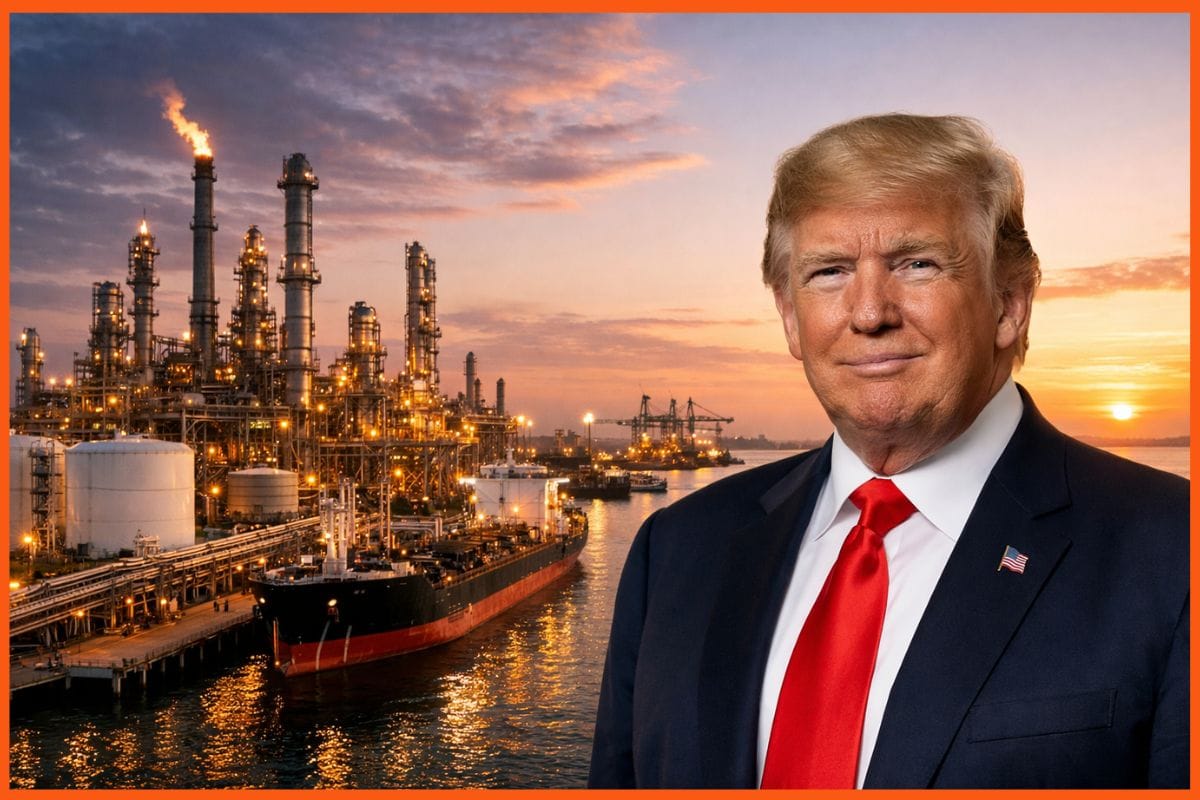
A major cross-border energy project has been announced in the United States. Donald Trump revealed plans for a new oil refinery in Texas with investment support from India’s energy giant Reliance Industries.
The project, planned at the Port of Brownsville in Texas, has been described by Trump as a “historic $300 billion deal” and the first new oil refinery to be built in the United States in nearly 50 years.
The announcement has drawn global attention because it involves one of India’s largest companies and could reshape refining capacity and energy trade flows in the United States.
First New US Oil Refinery in Nearly 50 Years
The refinery will be developed by a company called America First Refining. According to the announcement, the facility will be located along the US–Mexico border at the Port of Brownsville, a key shipping hub on the Gulf Coast.
Officials say the plant will be designed to process American shale oil and convert it into refined fuels such as petrol, diesel and other petroleum products. The project is expected to handle about 168,000 barrels of oil per day, making it a mid-scale refinery focused on domestic crude supplies.
Trump said the refinery would help strengthen US energy production and improve national energy security. The facility is also expected to support fuel exports through the Gulf Coast, which already hosts many of the country’s major refineries.
If completed, it would mark the first new major oil refinery built in the United States in almost half a century, highlighting the significance of the investment for the country’s energy sector.
What the $300 Billion Deal Means
Trump described the project as a “$300 billion deal”, calling it the largest investment of its kind in US history. However, industry observers note that the figure likely refers to the long-term economic impact and trade value generated by the refinery, rather than the actual construction cost alone.
The refinery is expected to process large volumes of American light shale crude over many years and produce refined fuels that could be exported globally. Over time, this activity could contribute hundreds of billions of dollars to the US economy through trade, refining margins and exports.
Trump also said the refinery would be built with modern technology and environmental standards, claiming it could become “the cleanest refinery in the world.”
Reliance Industries’ Role in the Project
During the announcement, Trump thanked India and Reliance Industries for supporting the project. The company is India’s largest private sector enterprise and operates the world’s largest refining complex in Jamnagar.
The partnership is expected to include a long-term offtake arrangement, meaning Reliance may purchase refined products from the plant over a multi-year period. Some reports also indicate that the company has provided an early investment to support the development of the project.
However, as of now, Reliance has not officially confirmed the investment details through stock exchange filings or corporate announcements.
Despite the lack of confirmation, the announcement had an immediate impact on markets. Shares of Reliance Industries moved higher in early trading following the news.
Jobs, Energy Security and Economic Impact
Trump said the refinery could create thousands of jobs during construction and operations, bringing new economic activity to South Texas.
The project is also linked to broader energy and geopolitical developments. Rising global oil prices and tensions in the Middle East have renewed interest in increasing refining capacity and strengthening domestic fuel supply chains.
Construction for the refinery is expected to begin in the second quarter of 2026, although timelines may change depending on regulatory approvals and financing arrangements.
Future Impact: How the Texas Refinery Could Address a Key US Energy Gap
The proposed Texas refinery targets a key structural issue in the US energy sector, the mismatch between rising shale oil production and refining capacity suited for light crude. The United States has become the world’s largest oil producer, driven mainly by shale output from regions such as the Permian Basin. However, many existing refineries were built to process heavier imported crude, limiting the ability to refine domestic shale oil efficiently.
The refinery planned at the Port of Brownsville, Texas, is expected to process about 168,000 barrels of shale oil per day, or roughly 60 million barrels annually. It will convert crude into petrol, diesel and jet fuel, increasing the amount of US oil refined domestically rather than exported as raw crude.
Its location on the Gulf Coast shipping corridor supports an export-focused strategy. The port provides direct access to international shipping routes, allowing refined fuels to be exported to markets such as Latin America, where fuel demand is growing.
Project estimates suggest the refinery could process around 1.2 billion barrels of crude over 20 years and produce about 50 billion gallons of refined fuels. The long-term trade value linked to this output is estimated at nearly $300 billion.
If developed as planned, the refinery would expand US refining capacity, process more domestic shale oil, and increase exports of higher-value petroleum products.