

Planted, Not Pushed: This Zoho One Campaign Refreshed the B2B Marketing Playbook

What Happens When Marketing Gives Up Control
Most marketing campaigns are designed to control what people say.
Firstly, the brief defines the narrative. Next, the format standardizes the output. And the metrics reward consistency.
While this might work at a scalable level, it also makes all user-generated content start to sound the same.
Because when every campaign is optimized for visibility, the system begins to converge. Different brands and creators follow similar language and make similar posts. The machinery is efficient, but the output becomes predictable.
Zoho ran a small experiment that stepped slightly outside this system.
Zoho One, an all-in-one suite by Zoho, launched an initiative called “Growth, delivered.” On the surface, it was simple. Desk plants were sent to a small group of founders, creators, and customers.

The idea wasn’t to explain a feature. It was to express a philosophy that businesses grow when the systems they rely on are aligned.
Instead of communicating this through messaging, the campaign translated it into something physical: a plant. Something that grows slowly, depends on its environment, and reflects the idea without stating it.
Something that grows slowly, depends on its environment, and reflects the idea without stating it.
What Actually Happened
Across the responses that did emerge, a pattern became visible.
The posts didn’t follow a format. There was no consistent structure, no shared messaging, and often no direct mention of the product.
Instead, people interpreted the gesture in their own way.
One post described it as:
“A small reminder that growth isn’t always visible, but it’s always happening.”
Another framed it more personally, reflecting on how building anything meaningful tends to feel slow while you’re in it.
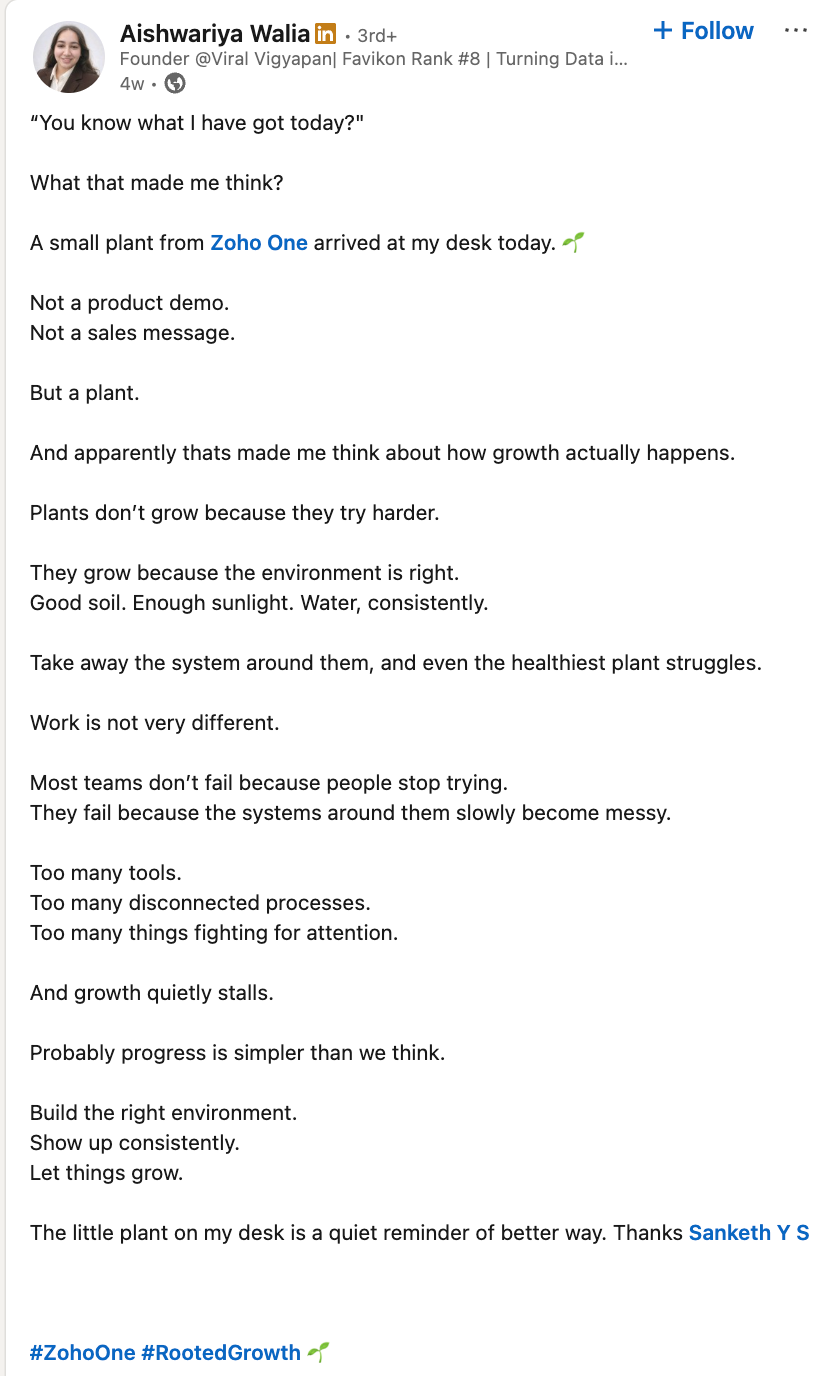
The campaign didn’t create alignment, but rather created interpretation.
What This Breaks
Most marketing systems are designed to produce alignment: through a clear message, consistent output, and a measurable reach.
But alignment often comes at a cost.
The more tightly a campaign is structured, the less space there is for interpretation. And without interpretation, there is very little ownership. The audience participates, but only within predefined boundaries.
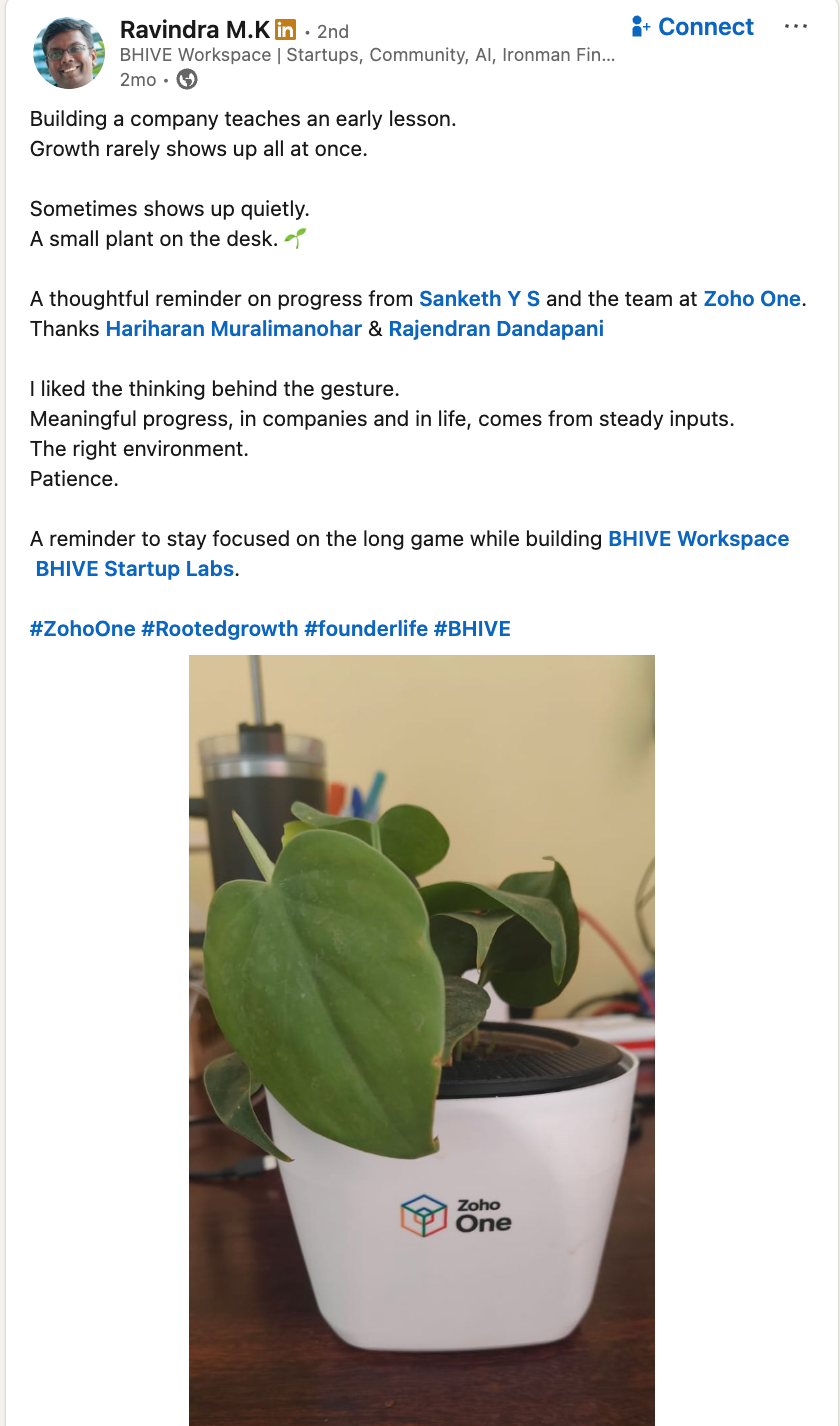
Remove that structure, and something else happens.
The brand loses control. But the audience gains authorship.
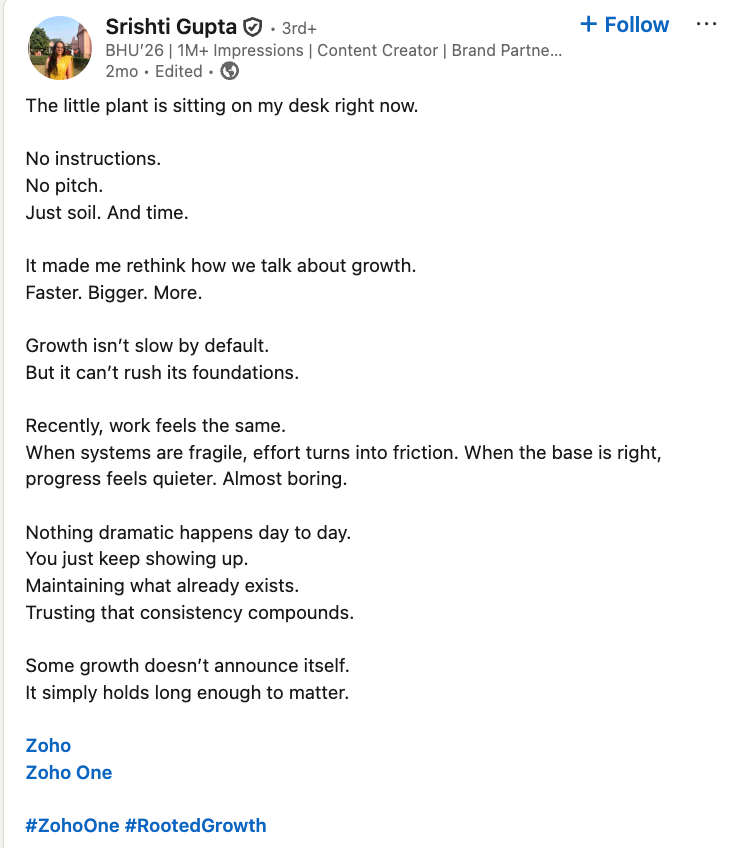
And when people have authorship, they don’t necessarily say what the brand intended.
They say what it means to them.
The Uncomfortable Question
This creates a tension most campaigns are not designed to handle.
If people don’t repeat your message, but instead reinterpret it, is that a loss of control, or a deeper form of engagement?
Because the things that stayed with people here were not features or positioning.
It was a plant on a desk, and what it came to represent.
What This Might Mean
This isn’t a case for abandoning structure altogether.
Structure enables clarity. It considers scale. But it also standardizes expression. And in doing so, it limits the possibility of something more personal emerging.
Not every campaign needs to maximize visibility. Some may be better off creating something people can make their own.
One sentence:
Going by metrics, this campaign might not have been set up for traditional success. But what it did do was create space for people to interpret, not just respond. And in doing so, it revealed something easy to overlook.
When you stop telling people what to say, they don’t stop talking.
They just stop sounding like you.