

Paytm's "Zero Chinese Ownership" Milestone Has a Structure Nobody Explained at the Time
In August 2025, Ant Financial sold its last direct stake in Paytm, and headlines declared the company fully Indian-owned. A separate 2023 arrangement that let Ant retain economic value from a different stake is back in the news now that stake is being sold.
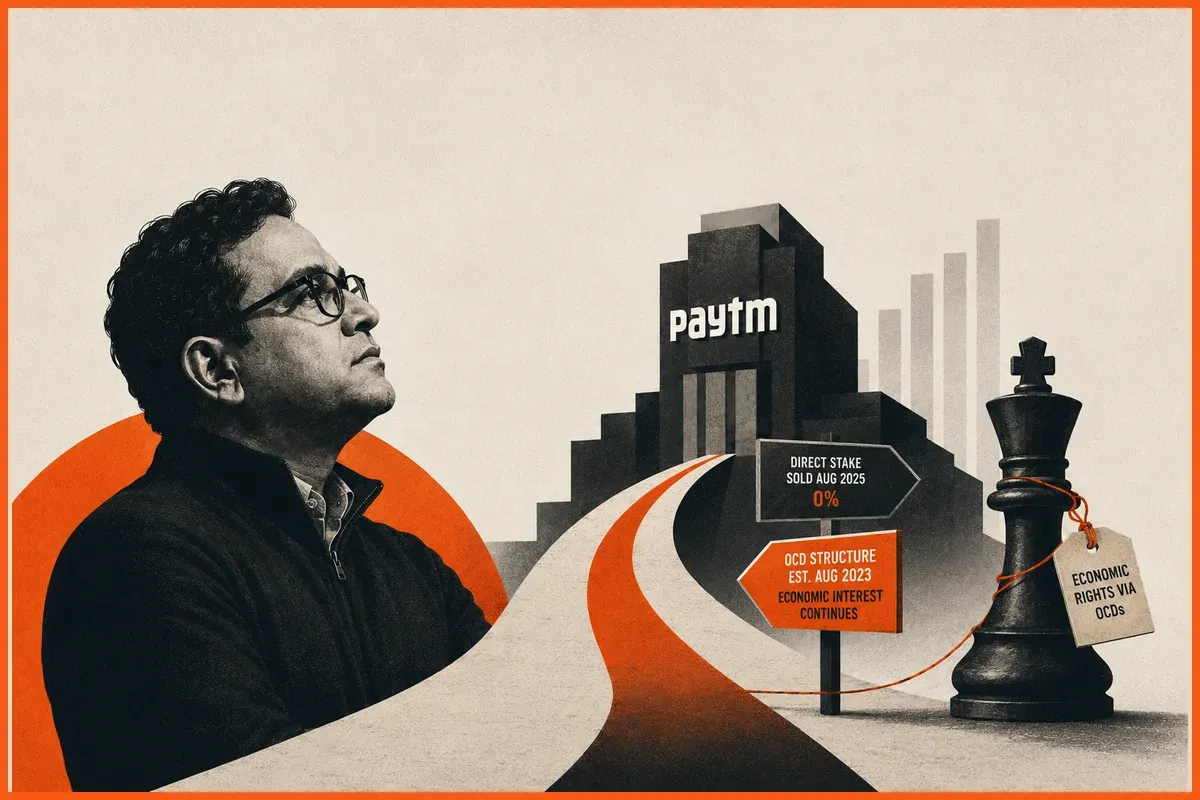
On 6 August 2025, wire coverage reported that Jack Ma's Ant Financial had exited One97 Communications, Paytm's parent company, by selling its remaining 5.84% direct stake for about ₹3,803 crore. The reporting, carried via a Press Trust of India wire story, described this as Chinese ownership in the company falling to zero. An unnamed "person aware of the contours of the deal" was quoted saying "Paytm is now as Indian as Tata." Paytm founder and CEO Vijay Shekhar Sharma's own confirmed, on-record statement on this theme dates to 2016, when he told PTI, "We are as Indian as Maruti," nine years before this specific transaction.
A separate stake, structured differently, two years earlier
The 5.84% that Antfin sold directly in August 2025 was not the only Ant-linked stake in Paytm's history. In August 2023, Antfin transferred a separate 10.30% stake to Resilient Asset Management BV, a Netherlands-based entity wholly owned by Sharma. BusinessToday's coverage of that deal, published the day after it was announced, laid out the mechanism in detail: Resilient acquired ownership and voting rights over the shares, but issued Optionally Convertible Debentures to Antfin as part of the structure. Those OCDs let Antfin retain the economic value of the 10.30% stake, even though the shares themselves now sat with Sharma's entity. No cash changed hands in the transaction.
That 2023 structure is why this month's news matters.
What's happening with that stake now
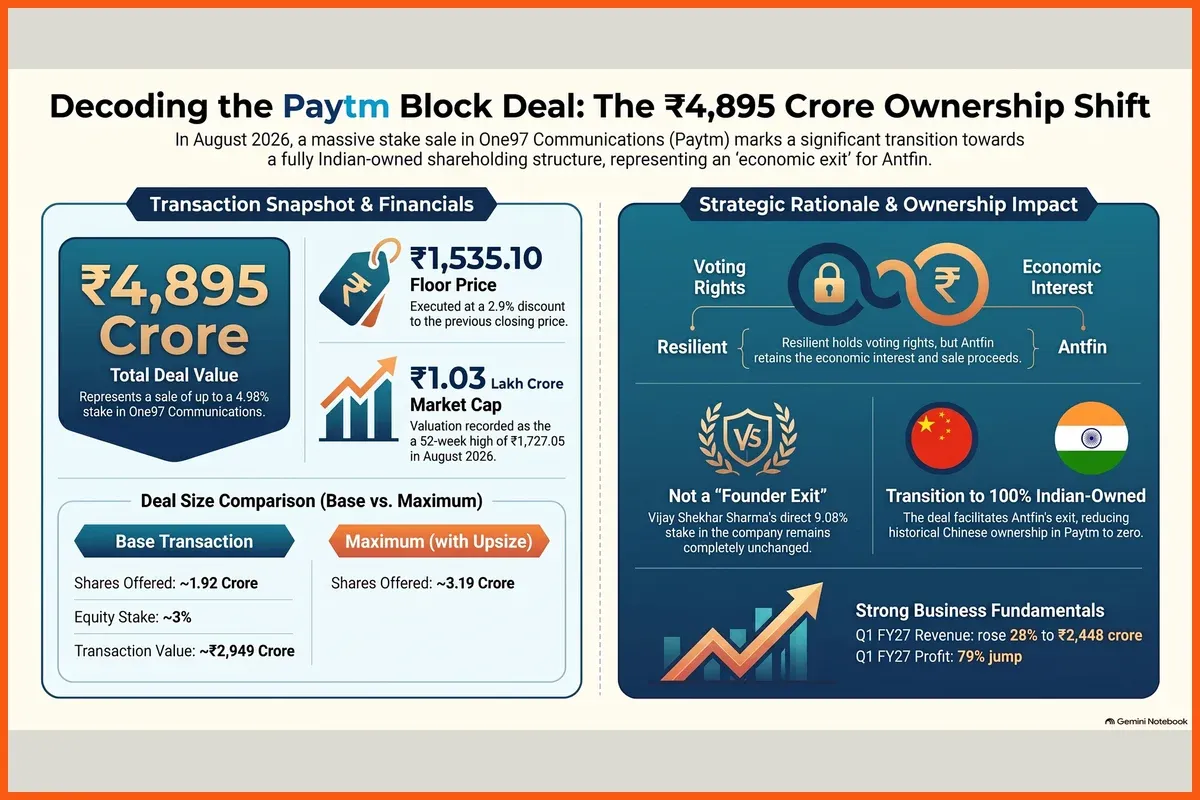
In August 2026, Resilient Asset Management BV proposed selling up to 4.98% of Paytm through a block deal, a transaction worth up to roughly ₹4,895 crore at the time it was announced. Multiple outlets, including Business Standard, Entrackr, and Outlook Business, reported that under the existing OCD agreement between Resilient and Antfin, the economic proceeds from this sale go to Antfin, not to Sharma, even though Resilient is the entity executing the sale. Sharma's own direct shareholding in Paytm does not change as a result of this transaction. The remainder of the original 10.30% stake, roughly 5.3 percentage points, remains under the same OCD arrangement.
The distinction that matters
"Zero Chinese ownership," as reported in August 2025, referred specifically to Antfin's direct, registered shareholding in Paytm, which did reach zero once that separate 5.84% stake was sold. It did not describe the Resilient arrangement, which is a different stake, structured differently, and which continued to carry Chinese economic interest through the OCDs regardless of what happened to Antfin's direct holding. Both things were true at the same time: Antfin's direct stake hit zero, and a separate mechanism kept Chinese economic exposure to Paytm alive elsewhere in the cap table.
Correcting the record on coverage
A degree of public discussion this week has framed the Resilient-Antfin OCD structure as something that went entirely unreported until now. That is not accurate. BusinessToday's Managing Editor Anand Adhikari wrote a detailed explainer on the mechanism on 7 August 2023, the day after the original deal was announced, describing exactly how the OCDs let Antfin retain economic value while Resilient held the shares and voting rights. The structure was disclosed and covered by mainstream financial press at the time it happened, not uncovered three years later.
The context this is landing in
This isn't a distress sale. Paytm's parent, One97 Communications, posted its first full year of profitability in FY26, on a strong Q1 turnaround:
- Net profit: ₹552 crore for FY26, per company results
- Q1 swing: from a ₹839 crore loss the year before to a ₹123 crore profit
- Revenue growth: up 27.7% year over year in that same quarter
- Stock: hit a 52-week high of ₹1,727.05 on 26 August 2026
- Market cap: around ₹1.03 trillion
The Resilient stake sale is happening while the underlying business is in its strongest position in years, not while it's under pressure.
Frequently Asked Questions
Does Ant Financial still have any ownership interest in Paytm?
Not a direct one. Antfin's remaining 5.84% direct stake in One97 Communications was sold in August 2025. But a separate 10.30% stake transferred to Resilient Asset Management BV in 2023 still carries Antfin's economic interest through Optionally Convertible Debentures, even though Resilient holds the shares and voting rights.
What is Resilient Asset Management, and who controls it?
Resilient Asset Management BV is a Netherlands-based entity wholly owned by Paytm founder and CEO Vijay Shekhar Sharma. It holds ownership and voting rights over the 10.30% Paytm stake that Antfin transferred to it in August 2023, but issued OCDs back to Antfin that entitle Antfin to the economic value of that stake.
Was the Resilient-Antfin ownership structure kept secret until now?
No. BusinessToday's Managing Editor Anand Adhikari published a detailed explainer on the OCD mechanism on 7 August 2023, the day after the deal was announced. The structure was covered by mainstream financial press at the time it happened.


![Marketing Strategies of Paytm [Case Study]](https://static.startuptalky.com/2021/01/paytm-2.png)
