Reviewing Finix Payment Platform: Cost, Security, & Features
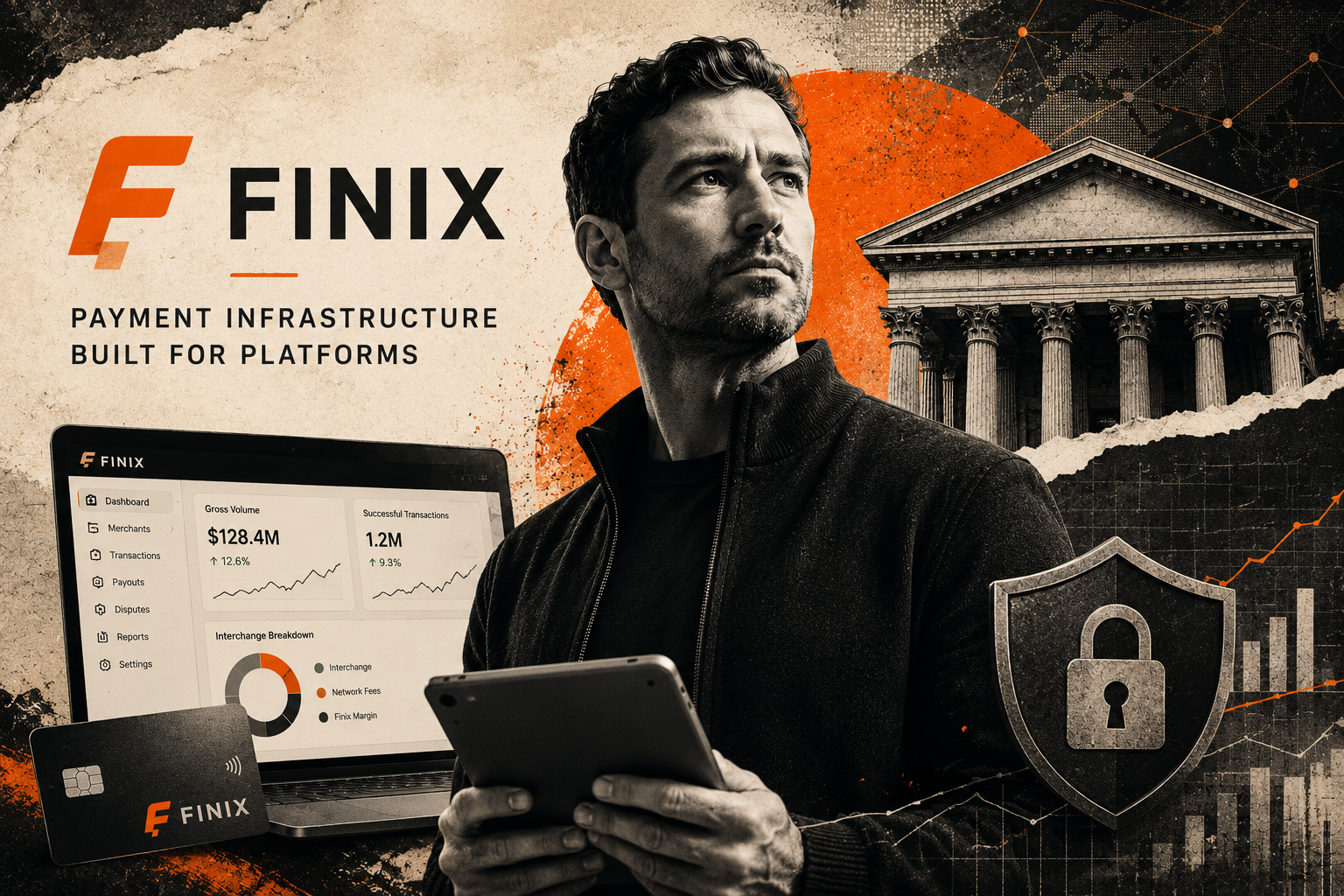
Finix sits in a narrow category of payment infrastructure. The company sells a PayFac-as-a-Service product to software platforms that want to control onboarding, pricing, and payouts to their own merchants without building a full payment facilitator from scratch. The model gives a SaaS operator most of the economic upside of being a PayFac while offloading the underlying processing certifications, banking partners, and compliance scaffolding to Finix.
This review covers what Finix provides, the published cost structure, the security posture, the core features a SaaS team would care about, and the practical criteria for evaluating it against alternatives. The intended reader is a product or finance owner at a vertical software company deciding between adopting Finix, building directly on a card network, or staying with a referral setup through a larger gateway.
What Finix Sells
Finix is a full-stack payment processor. The platform handles authorization, capture, settlement, and reporting through its own connections to the card networks rather than reselling another processor in the background. That direct-processor position is unusual among PayFac providers and matters for two reasons. First, it removes a markup layer that typically sits between a software platform and the interchange rate. Second, it gives Finix more control over the data model, so reporting, ledger, and reconciliation outputs come from a single source rather than being stitched together from upstream APIs.
The product line covers two paths. PayFac-as-a-Service gives a platform the operational benefits of payment facilitation, including sub-merchant onboarding, settlement to sub-merchants, and revenue share on each transaction, without forcing the platform to take on the registration burden with the card networks. Full PayFac is the longer path, where Finix supports the platform through registration as a payment facilitator in its own name. Customers can begin on the managed model and migrate later. The two paths share the same APIs and dashboard, so a switch does not require rebuilding integrations.
Pricing and Cost Structure
Finix uses interchange-plus pricing. Each transaction line shows the interchange fee, the network assessment, and Finix's margin separately, which is the model most enterprise finance teams expect when they audit payment costs. Published rates put card-present transactions at roughly $0.08 plus interchange and card-not-present transactions at roughly $0.15 plus interchange. The interchange itself passes through at cost.
A platform fee sits on top. The Starter Plan begins at $250 per month for businesses processing under $1 million in annual volume, with PCI compliance, setup, and base fraud tools included rather than billed as line items. Larger volumes negotiate custom pricing. For a SaaS platform planning to take a revenue share on payments, the line-item structure makes it straightforward to model unit economics on each sub-merchant and to keep the spread between what the platform charges its customers and what Finix charges the platform.
Security and Compliance
Finix holds Level 1 PCI-DSS certification, the highest tier available to a service provider, with SOC 1 and SOC 2 reports addressing internal controls and data protection. Cardholder data is tokenized at capture, so a platform integrating through Finix's hosted forms or direct API does not store raw PAN data on its own systems. Sanctions screening runs against OFAC, OSFI in Canada, and Interpol watch lists during onboarding, and KYC verification pulls from MicroBilt for credit and identity data.
Finix reports 99.999% uptime on its processing infrastructure. Fraud tooling includes machine-learning detection, customizable rule sets, and transaction monitoring built into the platform, and the company has cited a roughly 40% reduction in manual review work for customers using its automated KYC flow.
Independent Editorial Coverage
Software buyers evaluating a payment platform usually pull from more than the vendor's own materials. Independent analyst notes, B2B software directories, and personal-finance publications each apply different criteria, so reading across them produces a more grounded picture than relying on a single source. Software Advice and G2 weight verified user feedback, while industry trade press tends to focus on funding, partnerships, and product launches.
For a consumer-finance angle on small-business payment tools, the Finix review on NerdWallet sits alongside that publication's similar treatments of Stripe, Square, and Helcim, which is useful for a side-by-side read. Reviewers from outlets such as Software Advice, The Silicon Review, and SaaSPirate have also published assessments worth scanning before a buying decision.
Core Feature Set
The feature set tracks what a SaaS platform needs to operate payments end to end rather than merely accept a card.
- Onboarding and KYC. Finix automates the merchant application flow with no-code forms or API calls, runs identity and credit checks, and routes results into an underwriting queue. Customers report meaningful reductions in the time from application to first transaction.
- Payouts. Sub-merchant funding runs on a configurable schedule, with split payouts and instant payouts available. Reconciliation data ties back to each underlying transaction.
- Disputes. Chargeback intake, evidence submission, and status tracking all happen inside the dashboard, with API access for platforms that want to surface dispute data inside their own product.
- Ledger and reporting. More than ten out-of-the-box report types cover transactions, interchange, settlements, fees, and disputes. Each sub-merchant gets a white-labeled merchant dashboard, which removes the need for the platform to build its own.
- No-code tools. Checkout pages, payment links, a virtual terminal, and tokenization forms let platforms enable payment acceptance without engineering work for simpler cases.
Fit for SaaS Platforms
Finix targets vertical SaaS, marketplaces, and platforms that already process meaningful volume through a referral relationship and want to capture more of the spread. Public customer references include Lightspeed POS, Passport Labs, Clubessential, and AgVend. The October 2024 Series C of $75 million, led by Acrew Capital with Leap Global Partners and Lightspeed Venture Partners co-leading and participation from Citi Ventures, brings total funding to roughly $208 million. Earlier in 2025, Finix launched its unified payment suite in Canada through a partnership with Peoples Trust Company, and a separate integration with Plaid added bank verification and account linking inside the onboarding flow. Direct connections to the card networks remain the heart of any full-stack processor's value to a platform.
The fit is clearest for platforms with at least a few hundred sub-merchants or at least $100 million in annual GMV, where the margin captured on each transaction begins to outweigh the integration and ongoing operational work. Smaller platforms tend to default to a referral model with a larger gateway because the absolute revenue capture does not yet justify the engineering and compliance attention required to run payments as an internal product.
Practical Evaluation Criteria
A product or finance owner working through a Finix decision should weigh several variables in sequence.
Volume and economics come first. The platform fee, the per-transaction cost, and the interchange pass-through together set a floor under per-merchant costs, and the spread the platform can charge its sub-merchants sits on top of that floor. Building a unit-economics model on representative merchants, including refund and chargeback assumptions, is the only reliable way to compare Finix against the status quo.
Compliance ownership matters next. PayFac-as-a-Service keeps the registration burden on Finix, while full PayFac shifts it to the platform. The choice maps to internal appetite for risk operations, underwriting decisions, and regulatory reporting.
Engineering load is the third variable. Finix's APIs follow REST conventions and are documented in line with mainstream developer expectations, but a real integration covers onboarding, settlement, refunds, dispute handling, and reporting. Most platforms allocate a quarter or two of focused engineering effort for an initial production launch.
Reporting and ledger fit is the fourth. Finance teams should review the standard reports against their close process before signing, since payment data feeds revenue recognition, reconciliation, and tax reporting downstream.
The last consideration is the comparison set. Stripe Connect remains the default reference point for embedded payments, with deeper geographic coverage and a larger ecosystem of prebuilt components.
Adyen for Platforms competes at the larger end of the market. Finix tends to win when a platform wants direct processor economics, transparent pricing, and a path to full PayFac ownership, and tends to lose when a platform needs broad international reach quickly or wants the lightest possible integration.
A Grounded Read
Finix is a credible option for a SaaS platform that already processes serious volume and wants more control over the merchant relationship and the economics on each transaction. The pricing is transparent, the security certifications are at the level enterprise procurement teams expect, and the feature set covers the operational workflow a platform actually runs. The trade-off is the integration and operational commitment, which is real but bounded. For a team with the volume to justify the work, Finix offers a path from a referral relationship to managed payment facilitation, with the option to graduate to full ownership later without rebuilding the integration.