

The Loneliness Economy: How Shradha Chaturvedi Is Building Human Connection in a Digital-First World
📰 NewsAs loneliness rises in an always-connected world, Shradha Chaturvedi is reimagining care through GetCompanion. By blending structure with empathy, she is creating meaningful human connections where technology alone falls short.
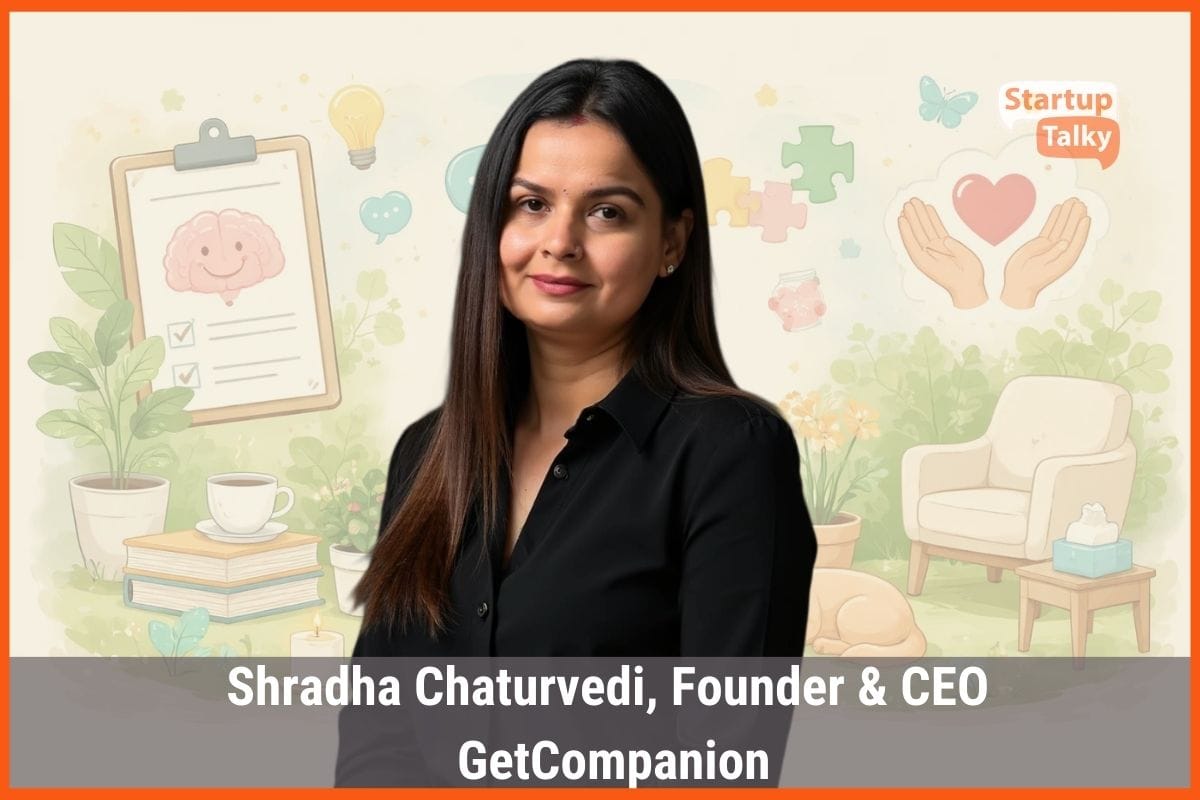
The global loneliness epidemic is increasingly being recognised as a serious public health concern, impacting seniors, urban professionals, and caregivers alike. According to global studies, nearly 1 in 4 adults report experiencing chronic loneliness, with rising urbanisation, digital lifestyles, and fragmented social structures accelerating the issue. The mental wellness and companionship services market is now gaining momentum, as organisations explore structured emotional support systems alongside traditional healthcare.
As the future of work and life becomes more digitally connected yet emotionally distant, there is a growing demand for human-centric solutions that prioritise presence, empathy, and meaningful connection. As part of our International Women’s Day series, we speak with Shradha Chaturvedi, Founder and CEO of GetCompanion, who is building a platform focused on structured companionship and emotional wellbeing in an increasingly isolated world.
Loneliness as a Structural Crisis: Beyond Individual Struggles
StartupTalky: Loneliness is increasingly being discussed globally as a public health concern, affecting seniors, urban professionals, and even caregivers. What early observations or experiences led you to recognise this as a structural issue rather than an individual problem?
Shradha Chaturvedi: For me, loneliness was never just a statistic; it was something I kept noticing in conversations. During my years in consulting and while building ISSC, I met high-performing professionals, seniors, and even caregivers who seemed “successful” on paper but were emotionally exhausted and alone. That pattern stayed with me. It made me realise that this wasn’t about individuals failing at relationships.
Instead, it was about the way modern life is structured. We have moved to cities, into nuclear homes, and into digital lives. We are constantly connected, yet almost never truly present. When I later saw global data validating loneliness as a public health concern, it confirmed what I had already sensed. This is not a personal weakness but a a structural shift. And if the structure has changed, the response must also be structured.
Tech vs Touch: Keeping Human Connection at the Core
StartupTalky: In a world quickly adopting AI and automation, many services are becoming tech-led. How do you balance the role of technology at GetCompanion while ensuring that genuine human presence and empathy remain at the centre of your model?
Shradha Chaturvedi: I deeply respect technology, coming from a governance and risk background. But I also understand its limits. At GetCompanion, technology helps us with verification, safety checks, scheduling, and accountability. It creates efficiency and trust. However, it does not replace the core of what we do: human presence.
In today’s world, there is pressure to automate everything. Yet companionship cannot be algorithm-driven. A human pause, a shared silence, a gentle reassurance, these are not programmable experiences. We consciously ensure that tech supports the experience without becoming it. AI can assist processes, but it cannot feel. And when it comes to loneliness, feeling matters.
Valuing Emotional Labour: From Invisible Work to Structured Careers
StartupTalky: Emotional labour often goes unnoticed and undervalued, especially when it intersects with caregiving. How can businesses create dignity, fair compensation, and professional recognition around care and companionship services?
Shradha Chaturvedi: Emotional labour has traditionally been invisible. At GetCompanion, we are intentional about formalising companionship as a structured, professional service. This includes police verification, clear role definitions, training, ethical guidelines, and fair compensation frameworks. Care and companionship must move from being perceived as “natural” or “instinctive” to being recognised as skilled, value-generating work.
Businesses can create dignity by defining standards, ensuring safety, offering predictable income structures, and building career pathways within care ecosystems. Professional recognition also requires language reform, moving from “help” to “service” and from “emotional support” to “structured wellbeing intervention”. When emotional labour is institutionalised with accountability and fairness, it not only protects caregivers but also elevates the entire ecosystem.
The Future of Work: Why Emotional Wellbeing Is Business-Critical
StartupTalky: As workplaces rethink productivity and employee wellbeing post-pandemic, where do you see structured emotional support and human connection fitting into the future of the work ecosystem?
Shradha Chaturvedi: The pandemic has compelled us to realise that productivity and wellness are not mutually exclusive. However, most interventions, like helplines and occasional workshops, remain reactive. Integrating human support into the organisational culture is crucial for the future of work. In the face of hybrid employment, loneliness can creep up on us. Organisations must deliberately create conditions for people to connect.
This can include peer support, conversations, and ensuring that people feel heard. Emotional safety is not only good for people, but it’s also good for business. It can affect retention, creativity, and overall business success. The future of work will not just measure productivity; it will measure the emotional health of the people. It will not just ask, “Are you delivering?” It will ask, “Are you supported?” Organisations that emphasise the structured support of people’s emotional well-being will reap the benefits of loyal, resilient, and emotionally safe people.
Choosing Trust Over Scale: Building a Purpose-Driven Platform
StartupTalky: Building a purpose-led venture in the wellbeing space requires long-term trust rather than rapid virality. What trade-offs have you consciously made between scale, impact, and sustainability while growing GetCompanion?
Shradha Chaturvedi: We chose trust over speed. And yes, that means slower growth. In a space like companionship, one wrong experience can damage not just a brand but also someone’s emotional safety. We were clear from day one: this is not a dating platform, or a casual interaction space. That clarity required strong verification, strict boundaries, and operational discipline.
Being bootstrapped allowed us to make those decisions without external pressure. Of course, there are moments when a faster pace looks attractive. But I remind myself institutions are not built in urgency; they are built in patience. I would rather grow steadily with integrity than rapidly with compromise.
Empathy in Leadership: Balancing Emotional Intelligence with Accountability
StartupTalky: As a woman entrepreneur leading a compassion-driven organisation, how has empathy influenced your leadership style, decision-making, and team culture?
Shradha Chaturvedi: Empathy has shaped me not only as a founder but also as a human being. As a leader, I have to show strength, not vulnerability. However, I have realised that the only kind of strength I know and can offer to my teams is emotional intelligence and accountability.
I am empathetic in my organisation. However, I have been very clear about what I expect. Empathy, on the one hand, can bring chaos. On the other side, structure can bring rigidity. I encourage a culture of psychological safety in my teams. I think people perform best in safe environments. However, I have been very clear about what I expect. Empathy, to me, is not about being soft. Instead, it, is about understanding the reality of people's performance.
The Future of Care: Women Leading the Formalisation of Compassion
StartupTalky: Women have historically played central roles in caregiving economies, often informally. How do you see women leaders shaping the formalisation and innovation of care-focused industries in the coming decade?
Shradha Chaturvedi: While women have always been in the care systems at home and in the community without any form of compensation, the only thing changing is the level of recognition. I think women leaders are in a position where they can develop a care system because they also understand the emotions involved. The next decade will be the one where the concept of care changes from a social responsibility to a professional opportunity.
When care is structured with safety, compensation, and dignity, it not only empowers the care receiver but also the caregiver. I think women founders will be at the core of creating this change. Not because care is a female thing, but because we have been the invisible care systems, and we understand the value.
 Subham Kumar