Why SNITCH is buying Berrylush instead of building a women's brand
SNITCH, a ₹900 crore menswear brand valued at ₹2,520 crore, is acquiring Berrylush rather than launching its own women's line. The reason is in both companies' filings: women's fashion is harder than it looks, and buying a stalled but real brand is faster and cheaper than building one.
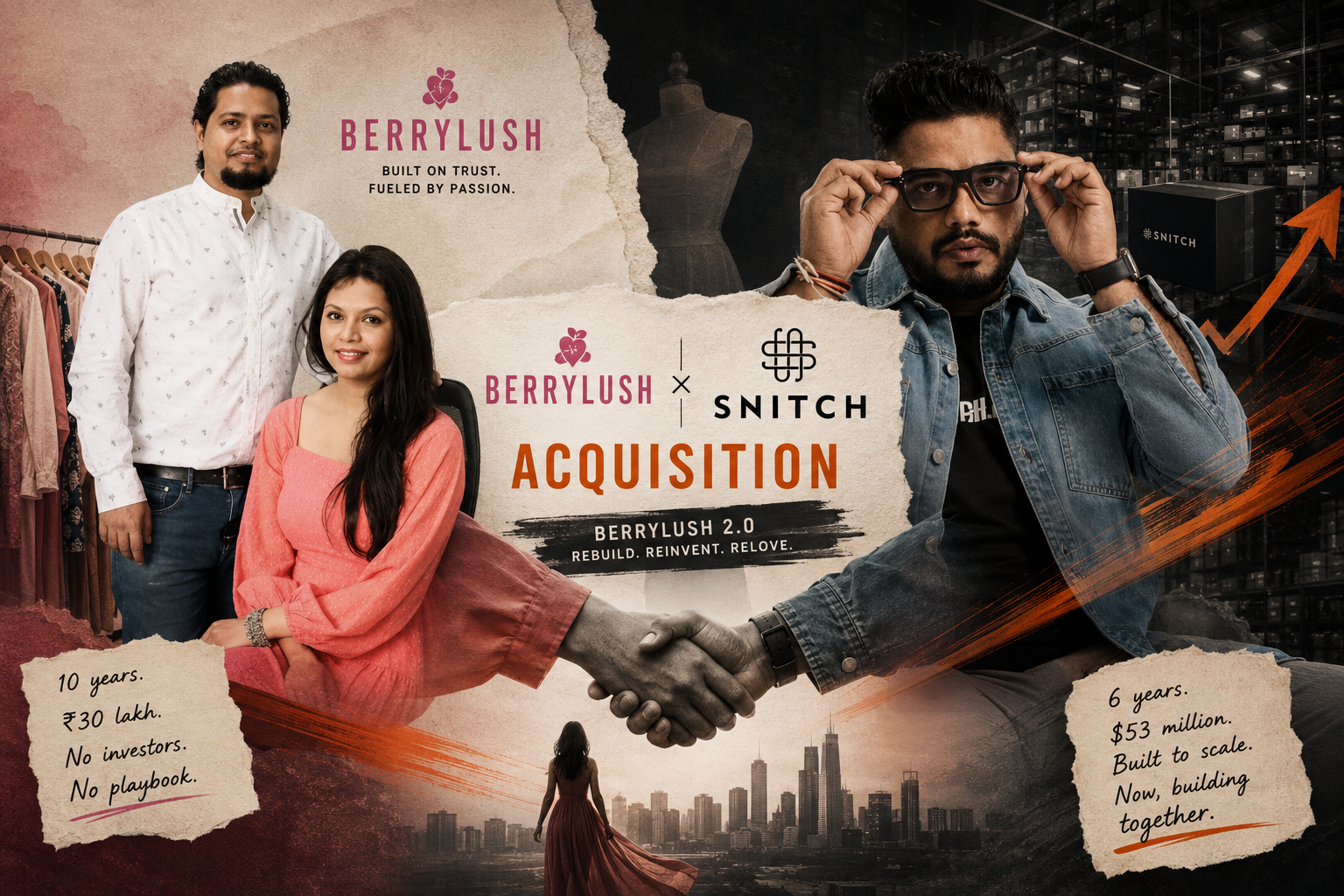
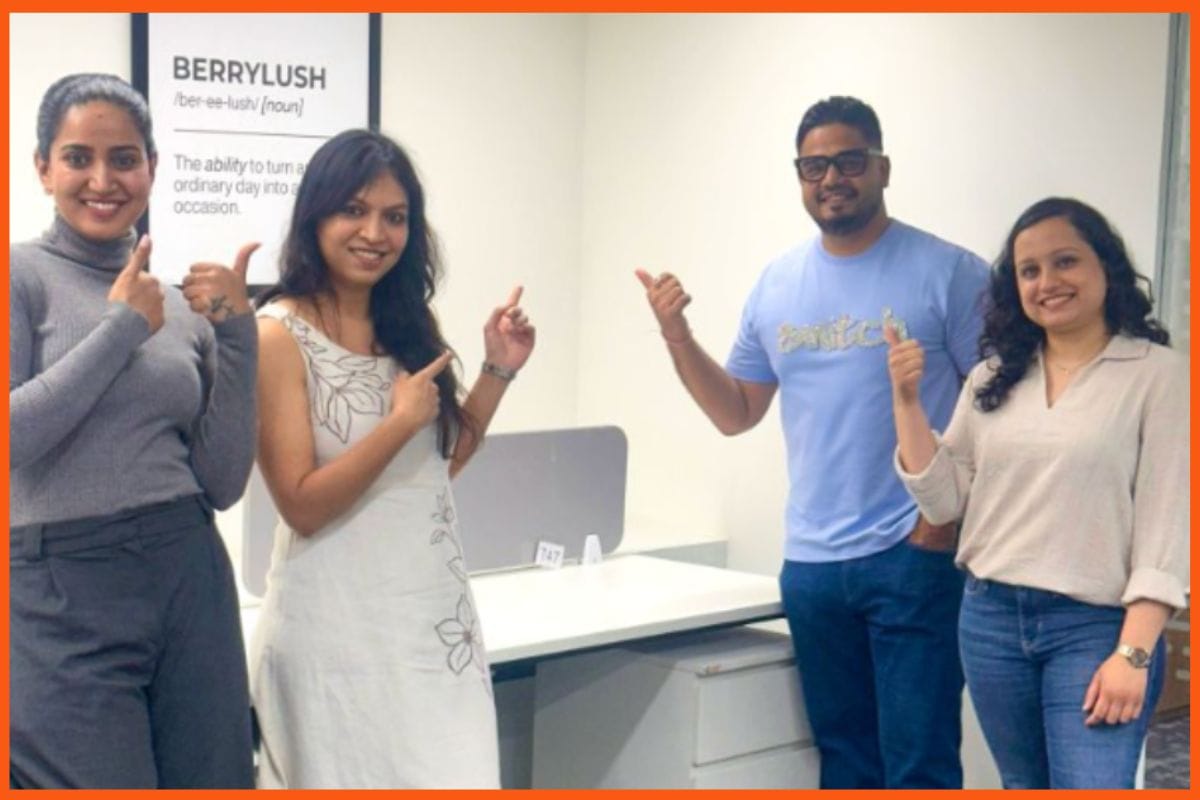
Two LinkedIn posts, a few days apart, tell this story better than any press release. First, Berrylush co-founder Anusha Chandrashekar looking back: ten years ago it was an idea, built on ₹30 lakh from her father, no investors and no playbook.
Then SNITCH founder Siddharth Dungarwal looking forward: after years of being asked when his menswear brand would enter women's fashion, the answer is that SNITCH is acquiring Berrylush and will rebuild it as "Berrylush 2.0" with Anusha and her team.
The interesting part is not the entry, which was always coming. It is that the two companies' filings explain exactly why this is an acquisition and not a launch: SNITCH gets an established women's brand at the moment that brand most needs capital and an operator, and it gets it cheaply.
What was announced
SNITCH will work with the Berrylush team over the coming months to relaunch the brand, keeping its identity and customer trust while applying what SNITCH has learned in six years of fast fashion. It also plans to build the relaunch in public, sharing product, branding and strategy on Instagram rather than only the outcome. One caveat stated plainly: this is a same-day founder announcement, and the deal size and structure are undisclosed, so the commercial terms are unknown.
Berrylush, by its filings
Anusha's post describes a "₹75 crore brand." Its MCA filings tell a more precise and more revealing story: standalone operating revenue was ₹44.23 crore in FY25, down from a ₹49.54 crore peak in FY24. The gap between the ₹75 crore she cites and the filed number most likely reflects gross merchandise value versus net revenue, a common distinction, but the filed trajectory is what matters for a buyer:
| Year | Revenue | Net profit / (loss) |
|---|---|---|
| FY22 | ₹22.63 crore | ₹1.73 crore |
| FY23 | ₹43.94 crore | ₹0.10 crore |
| FY24 | ₹49.54 crore | (₹1.41 crore) |
| FY25 | ₹44.23 crore | (₹1.57 crore) |
The brand scaled from ₹3.44 lakh in its first filing (FY19) to its FY24 peak, then contracted about 11% in FY25 while costs stayed high, turning three profitable years (FY21 to FY23) into two straight years of losses. Total assets fell 35% in one year, from ₹28.35 crore to ₹18.32 crore. And it did all of this on almost no outside money: roughly $970,000 in seed funding across two rounds (Klub and TMRW). This is a capital-starved brand with real equity and a stalled engine.
SNITCH, by its filings
The buyer is a different animal. SNITCH reported ₹505.8 crore of revenue in FY25 (and ₹900 crore in FY26, up about 80%, per its own disclosures), but it too runs thin: a small net loss of ₹1.7 crore in FY25, with ₹82.6 crore spent on marketing in that year alone, more than Berrylush's entire revenue. It has raised about $53 million, most recently a $40 million Series B led by 360 One (with SWC and IvyCap) that set a post-money valuation of ₹2,520 crore, and it employs around 1,138 people. So this is not a profitable giant buying a struggling minnow. It is a fast-growing, heavily-spending scale player, itself near breakeven, adding a category.
| SNITCH (buyer) | Berrylush (target) | |
|---|---|---|
| Segment | Men's fast fashion | Women's fast fashion |
| Revenue | ₹505.8 crore FY25 (₹900 crore FY26) | ₹44.23 crore FY25, down 10.7% |
| Net result FY25 | Loss of ₹1.7 crore | Loss of ₹1.57 crore |
| Funding raised | ~$53 million | ~$970,000 |
| Valuation | ~₹2,520 crore | Small, undisclosed for the deal |
Why buy instead of build
Dungarwal named the choice himself: build from scratch, or partner with a brand that already has a foundation, customers and potential. The numbers make the second option obvious, and it comes down to three things.
Women's fashion is a different, harder business than menswear, not the same business in different cuts. The fit and sizing problems are harder, taste cycles move faster, return rates run higher, and the merchandising judgement is a separate craft a menswear team tends to underestimate. Building that capability from zero means years of expensive mistakes learning what a category-native team already knows.
Time is the expensive input in fast fashion, and buying skips years of it. Berrylush took a decade and ₹30 lakh of bootstrapped capital to reach a ₹50 crore brand with a real catalogue, a supply chain tuned to women's fits, a customer base that trusts the label, and a distribution foothold. SNITCH could spend three or four years and a lot more than the acquisition price trying to build the same thing, and still not own the trust. In a business where the winner is whoever gets the right product on the shelf fastest, a running start is worth more than a clean slate.
Berrylush's stall made it cheap. A brand still compounding at 50% a year does not sell. A good brand that peaked at ₹49.5 crore, slipped into two years of losses, watched its balance sheet shrink 35%, and raised under a million dollars in its life is exactly the asset a well-capitalised operator can buy at a sensible price and try to restart. The weakness in Berrylush's filings is precisely what makes the deal attractive for SNITCH: it is buying category access and brand equity at a discount, not a growth story at a premium.
What is actually hard about this
So the real question is not whether the entry makes sense, it is whether SNITCH can reverse a decline, which is harder than scaling a winner, and it must do so while its own P&L is already in the red from aggressive growth spending. Its rapid drop-and-sell-out playbook was built for men's basics and trend pieces; women's fashion is a larger but more fragmented, taste-driven market where that machine may not transfer cleanly.
The standard risk in a brand acquisition is that the acquirer's engine flattens the thing customers loved, and SNITCH's stated goal of preserving Berrylush's identity while applying its own scale pulls against itself more than founders admit. There is a human version of that tension too: a brand bootstrapped on ₹30 lakh of a father's savings is now inside a machine built on $53 million of institutional capital, and the two operate on very different clocks. The build-in-public promise is a smart hedge and a marketing channel in one. Whether Berrylush 2.0 becomes SNITCH's second engine or a lesson in category transfer is the thing to watch over the next few quarters, not the announcement.
 StartupTalky News