Healing Beyond Borders: How Sonam Garg Sharma Is Transforming Medical Tourism with Compassion and Care
📰 NewsFrom navigating loss to building a global healthcare platform, Sonam Garg Sharma is reshaping medical tourism through empathy and accessibility. Medical Linkers goes beyond treatment to deliver holistic, culturally sensitive care for patients across borders.
The medical tourism industry in India is witnessing strong growth, driven by affordable healthcare, skilled medical professionals, and increasing global demand for quality treatment. Valued at over $7 billion, the sector is expected to grow at a CAGR of 18–20%, positioning India as one of the world’s leading destinations for cross-border healthcare. In 2024 alone, India is projected to attract over 6.4 lakh international patients, with rising demand not just for treatment but also for holistic and wellness-based care.
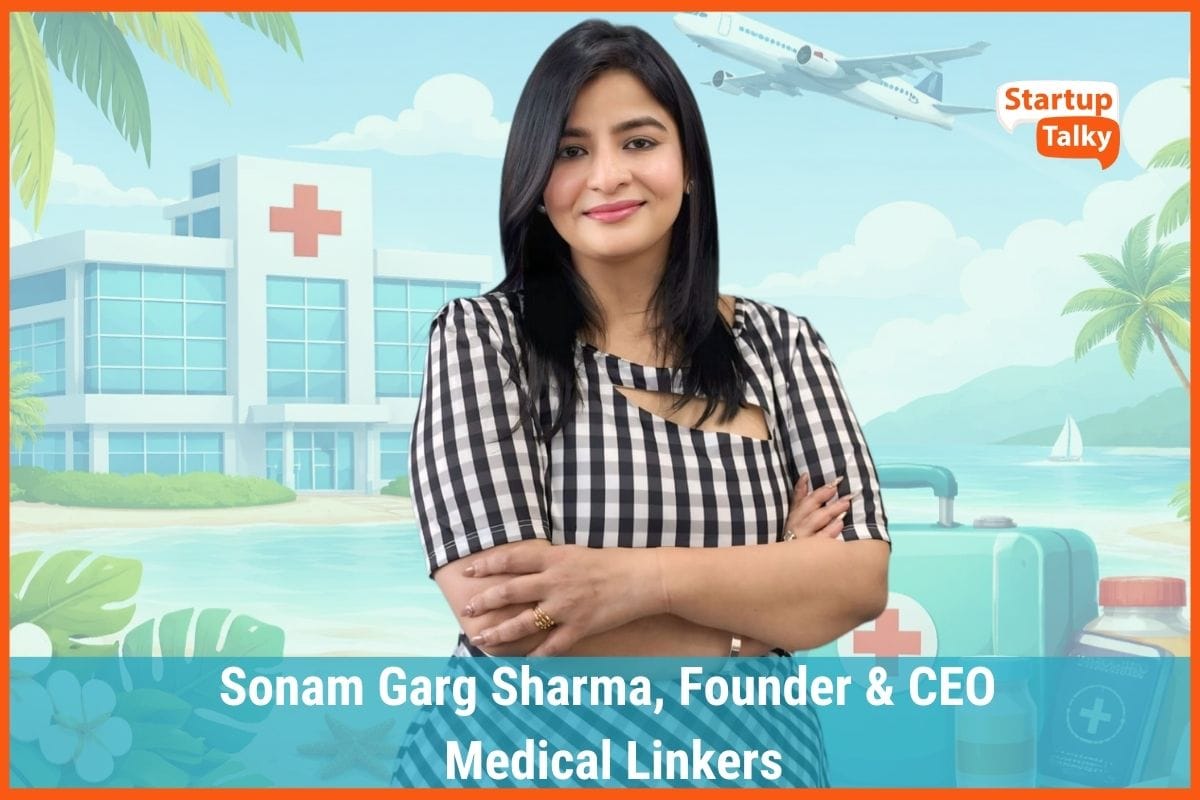
Amid this growth, there is a growing need for patient-centric, compassionate, and culturally sensitive service, especially for women navigating healthcare in unfamiliar environments. As part of our International Women’s Day series, we speak with Sonam Garg Sharma, Founder and CEO of Medical Linkers, who is building a globally trusted medical tourism platform rooted in empathy, accessibility, and end-to-end patient care.
From Personal Loss to Purpose: Building a Compassion-First Medical Tourism Platform
StartupTalky: Sonam Garg Sharma, as the founder of Medical Linkers, you built a medical tourism company that has served patients from over 30 countries. What was the pivotal moment that made you realize India needed a more compassionate and organized approach to medical tourism, and how did being a woman shape that vision?
Sonam Garg Sharma: The moment when my life changed forever was when my father passed away unexpectedly, and our family needed to select the right hospital and doctors for his care. People need guidance to locate suitable medical treatment because I discovered this fact during a highly tense situation. My close friend experienced a similar predicament three months after this event and requested my assistance. The experience taught me that many individuals encounter similar problems, which particularly affect international patients visiting India for medical tourism purposes.
I established Medical Linkers to create a platform that enables patients to find suitable doctors and hospitals for their needs. Our medical tourism services extend across both India and international markets. We aim to provide patients with access to high-quality medical services that remain within their financial means. Women possess a superior capacity to deliver service because our natural inclination toward empathy and care enables us to better support our work responsibilities.
Safety, Trust, and Care: Supporting Women Patients Across Borders
StartupTalky: Medical tourism often involves patients in extremely vulnerable states traveling to unfamiliar countries. How does Medical Linkers specifically address the unique healthcare concerns and safety needs of women patients traveling alone from countries like Africa, the Middle East, or Southeast Asia for treatment in India?
Sonam Garg Sharma: Medical tourism can be challenging when women patients travel alone and are not familiar with the medical system in a different country. Our approach is to support medical procedures, hospital and medical practitioner selection, visa assistance, airport pick-ups, and safe accommodation close to medical facilities.
Medical coordinators guide women patients through their medical appointments and treatments, which allows them to experience a complete medical procedure without any interruptions to their process. Women patients from Africa, the Middle East, and Southeast Asia exhibit different cultural backgrounds, which create distinct requirements for their comfort needs. Our medical coordinators ensure that women patients travelling alone feel comfortable and safe during their medical procedures in India.
At Medical Linkers, we ensure that patients receive end-to-end support and women travelling alone feel secure and cared for throughout their treatment journey.
Beyond Treatment: Standing by Patients in Their Toughest Moments
StartupTalky: Your services go beyond hospital selection to include arranging translators, travel companions, cooks, and counselors. Can you share a specific story of a woman patient whose medical journey was particularly challenging and how Medical Linkers went above and beyond to support her?
Sonam Garg Sharma: One experience that has stayed with me is of a woman from Sudan who had come as a donor for her husband, who was the patient receiving treatment. Sadly, the recipient passed away during the COVID period, and she was suddenly left alone in a foreign country with five children at a time when flights were suspended, and almost everything was shut. In that moment, our role went far beyond medical facilitation.
We helped arrange the funeral, supported the children, and stood by her emotionally and financially through an unimaginable period of loss and uncertainty. Even after she returned to Sudan, we stayed connected and helped arrange a job for her so she could begin rebuilding her life with dignity. For me, this was a powerful reminder that real care is not limited to treatment alone. It is also about standing beside people in their hardest moments and helping them find a way forward.
India vs Global Hubs: What Sets Indian Healthcare Apart
StartupTalky: Medical Linkers operates across India, Turkey, and Singapore. In your experience, how do these three countries differ in their treatment of women patients and women healthcare professionals, and what has India done right that others can learn from?
Sonam Garg Sharma: Operating across India, Turkey, and Singapore has given us a unique perspective on how healthcare systems support both female patients and female healthcare professionals. Each country has its own strengths. Singapore is known for its highly organised healthcare infrastructure, modern medical systems, and strict clinical guidelines that ensure consistent quality of care. Turkey has built a strong reputation in medical tourism, particularly in patient hospitality and specialised services for international patients.
What India has done particularly well is combine quality healthcare with accessibility, making it inclusive for women patients from diverse backgrounds and cultures worldwide.
India has a great advantage in terms of the depth of medical expertise available, accessibility of medical care, and affordability of medical treatments. Women comprise a majority of India’s medical workforce but only hold 18 percent of leadership roles. This indicates a good representation of women in patient care but an opportunity for women's leadership in the field. India is also enhancing its position as a global hub for medical care, as seen in the fact that in 2024, more than 6.4 lakh foreign patients will seek medical treatments in India. What India has done best is to ensure that medical treatments are not only of good quality but also accessible to women across different backgrounds and cultures.
The Rise of Wellness Tourism: A New Era for Women’s Health
StartupTalky: You are now venturing into wellness tourism, blending preventive medicine, rejuvenation therapies, and alternative healing. Women are the primary consumers of wellness services globally. How is Medical Linkers designing its wellness tourism offerings to specifically address women's health needs often overlooked in traditional medicine?
Sonam Garg Sharma: As wellness tourism continues to rise in popularity, there is a growing understanding that women’s health needs to be dealt with in a much more holistic and preventive manner. Traditionally, women tend to seek medical attention only when their condition is serious enough to warrant medical attention. However, women’s health issues, such as hormonal balancing, stress management, reproductive health, and rejuvenation post major stages of life, are not adequately addressed.
Wellness tourism is slowly but surely evolving to incorporate preventive medicine with alternative forms of medicine that are evidence-based and include Ayurveda, yoga, nutrition guidance, and individualised lifestyle programs. Such programs are meant to support women through various stages of their lives, including reproductive health, post-recovery programs, menopause, and overall wellness.
Breaking Barriers: Navigating a Male-Dominated Industry as a Woman Founder
StartupTalky: The medical tourism industry in India is dominated by large hospital chains and male-led facilitator companies. As a woman founder and CEO in this space, what barriers did you face that your male counterparts likely did not, and how did you overcome them?
Sonam Garg Sharma: Entering the medical tourism industry as a woman entrepreneur has its own set of challenges that a male entrepreneur might not face in the same way. The medical tourism industry is dominated by large hospital chains and male-led facilitator companies, and in the beginning, there were moments where the leadership and capabilities of entrepreneurs were questioned more closely.
There is a general understanding that is often left unsaid regarding who should lead the conversation in the medical tourism industry, and that has made it a bit more difficult for female entrepreneurs to gain credibility in the space.
The industry faced its challenges, which created new chances to develop better industry approaches. The organization dedicated its efforts to establishing trust through open communication and patient-centered support systems instead of using transactional methods to handle operations. The situation has created a special chance to look at the emotional, cultural, and individual aspects of medical tourism that international patients experience during their medical travel.
In a sense, the consistency in results, hospital partners, and patient experiences has provided a level of credibility and reinforced the importance of empathetic and patient-centric leadership in medical tourism.
A Message of Strength: Encouraging Women to Prioritize Their Health
StartupTalky: This Women's Day, what is your message to women in developing countries who need critical medical treatment but are held back from traveling abroad for healthcare by family restrictions, financial dependence, or cultural barriers?
Sonam Garg Sharma: This Women’s Day, the message for women living in developing countries is that your health is of the utmost importance, and seeking care should never be something that makes you feel guilty or apprehensive. In most cultures, it has been noticed that women have the tendency to put the needs of their families above their own. This often makes them feel apprehensive about seeking care for themselves, owing to the fact that they are dependent on others.
The process of protecting your health needs to be viewed as an unselfish action that helps you develop greater strength. The current healthcare system provides patients with easy access to medical services because it has established multiple support systems that deliver treatment in a respectful way. Women should have the right information, together with necessary support and motivation, so they can make optimal choices about their health. The process of enabling women to control their health will create major transformations that will impact both personal and community health outcomes.
 Sanvi Barjatya