

From Ingredients to Stories: How Avni and Ashni Biyani Built Foodstories
📰 NewsAvni and Ashni Biyani discuss building Foodstories, a gourmet retail brand focused on clean ingredients, conscious sourcing, and transparent food stories, while shaping how modern Indian consumers discover and experience premium food.
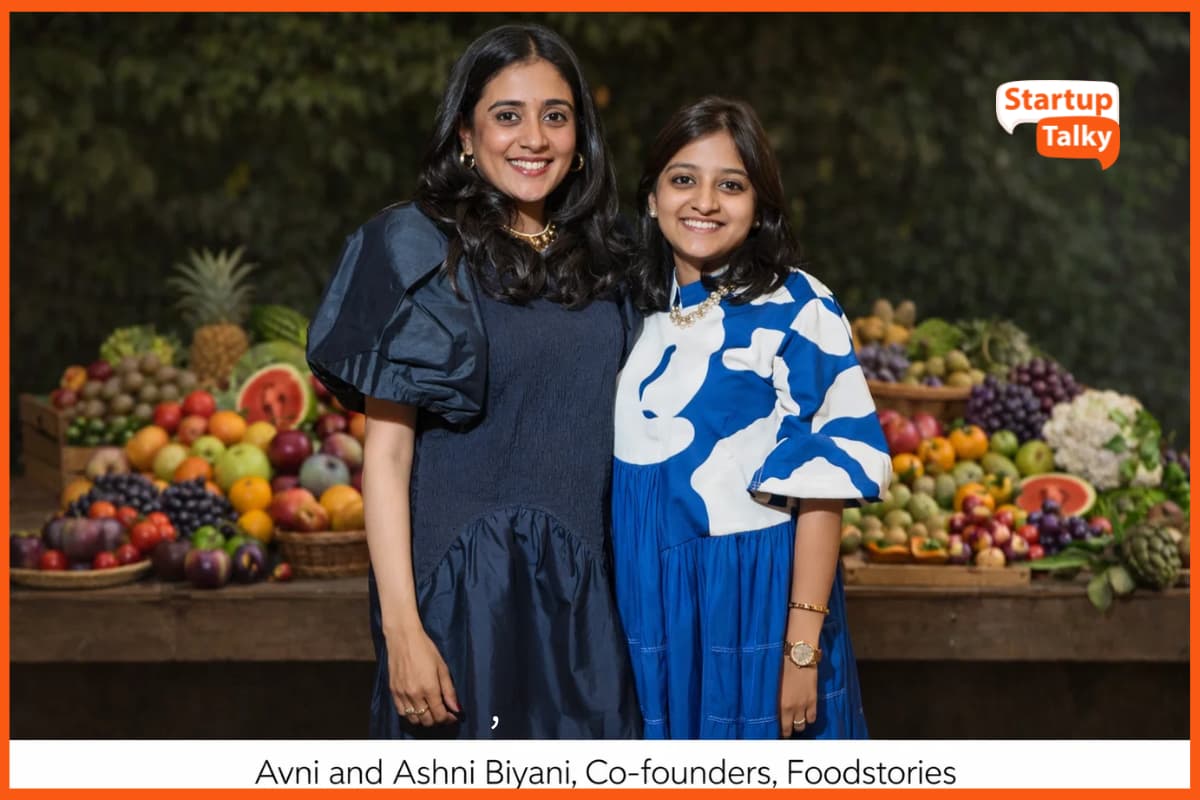
The Indian gourmet food market is evolving rapidly as consumers seek high-quality ingredients, clean labels, and transparent sourcing. Valued at USD 4.55 billion in 2024, the market is projected to grow significantly by 2033, driven by rising demand for premium, health-conscious, and traceable food products.
As conversations around women-led entrepreneurship gain momentum during International Women’s Day, founders like Avni and Ashni Biyani are redefining India’s gourmet retail experience. Through Foodstories, the sisters are championing conscious sourcing, ingredient transparency, and modern food culture.
Reimagining India’s Gourmet Retail Landscape
StartupTalky: Foodstories was founded by sisters Avni and Ashni Biyani in 2024. What inspired you both to reimagine India’s gourmet retail landscape, and how does the brand champion clean ingredients and conscious sourcing?
Avni and Ashni Biyani: Foodstories began with a simple realisation. India’s relationship with food is evolving quickly, but the ecosystem is still playing catch-up. People are travelling more, discovering ingredients across cultures, and asking deeper questions about what they are eating.
Yet there are still very few spaces that bring all of that curiosity together. We also saw that wealth was getting younger; customers are expressing themselves with wellness-forward and mindful food choices.
Brands are being built uniquely, and we wish to create a brand that echoes this understanding of the modern consumer and the digital medium.
Building a Brand Together as Sisters
StartupTalky: As women co-founders, how has your sibling dynamic shaped the way you build and run Foodstories, and what unique strengths do you bring to the business together?
Avni and Ashni Biyani: Building something with your sibling comes with a level of honesty that you cannot easily replicate in a typical partnership. We have spent our entire lives discussing ideas, challenging each other’s perspectives, and approaching things from different angles.
That dynamic naturally carries into the way we run the business. Avni often thinks deeply about the product philosophy behind what we are placing on our shelves, and our dinner table conversations revolve around food, culture, and how people experience it.
She also reflects on what has changed for customers post Foodhall, which was her creation. What truly anchors the partnership is our shared curiosity about food.
We both care deeply about ingredients, producers, and the evolving way India eats today. That shared belief allows us to challenge each other openly while moving forward with clarity.
Why Provenance and Transparency Matter
StartupTalky: Provenance and traceability are central to Foodstories; every product has a clear origin story. Why is this level of transparency important, and how has it resonated with Indian consumers?
Avni and Ashni Biyani: Food has always had a story. It is about the craft, terroir, makers, farmers, regions, and how that journey reaches our plate.
When you understand where an ingredient comes from, whether it is a farm, a region, or a specific producer, your relationship with that food changes. It no longer feels anonymous.
Indian consumers today are far more curious than they were a few years ago. They want to know how something was grown, what season it belongs to, why one olive oil tastes different from another, or how a cheese was made.
At Foodstories, transparency is a way of respecting that curiosity. When people understand the journey behind what they eat, they naturally begin to appreciate it more and make thoughtful choices.
Women Founders Shaping India’s Food Culture
StartupTalky: As we celebrate International Women’s Day 2026, what does it mean to be part of a new generation of women-led startups that are redefining how India eats?
Avni and Ashni Biyani: It is an exciting moment to build in the food space because the conversation around food in India is expanding quickly.
What is equally inspiring is the number of women leading that change, whether as farmers, chefs, producers, or founders.
For us, being part of that ecosystem feels meaningful because women have always been central to India’s food culture. They have shaped traditions, preserved recipes, and nurtured communities around food.
What is changing now is that more women are also building the businesses and platforms that define how food is produced, discovered, and consumed. That shift brings a deeper sensitivity to ingredients, sustainability, and community.
How Women Entrepreneurs Are Redefining Gourmet Food
StartupTalky: The gourmet food and retail space in India is evolving rapidly. How do you see women entrepreneurs shaping the future of this industry?
Avni and Ashni Biyani: Women entrepreneurs are bringing a deeply intuitive understanding of food and culture into the industry.
Many are not just building brands, they are building ecosystems around ingredients, craft, and community.
Across India today, some of the most interesting food ventures are being led by women who are reviving traditional techniques, collaborating with farmers, experimenting with fermentation, dairy, grains, and regional produce, and presenting them in ways that feel contemporary.
There is also a natural sensitivity in how these businesses approach food. The focus often goes beyond the product itself to the larger story around land, seasonality, and craft.
This generation is also expanding what gourmet means in India. It is no longer only about imported products or rarity.
Increasingly, luxury is being defined by freshness, traceability, and the integrity of ingredients.
In many ways, women entrepreneurs are helping shift the conversation from consumption to appreciation, encouraging people to think more deeply about what they eat and where it comes from.
Balancing Growth with Integrity
StartupTalky: Can you share some key challenges you have faced in building a gourmet retail brand that prioritizes quality and transparency over scale?
Avni and Ashni Biyani: One of the biggest challenges has been balancing growth with integrity.
When you prioritise quality and strong relationships with producers, the process becomes more deliberate. Not every product that looks attractive on a shelf aligns with the standards we set for Foodstories.
Sometimes that means choosing not to expand a category quickly or working with smaller producers who bring exceptional quality but limited supply.
Another challenge is helping consumers discover new ingredients and experiences. Gourmet food in India is still evolving, so we often find ourselves introducing people to flavours, techniques, and products they may not have encountered before.
That process requires storytelling, education, and time.
Advice for Women Building Purpose-Driven Food Brands
StartupTalky: What advice would you give to young women entrepreneurs who want to build purpose-driven brands in the food and retail industry? Similar to Foodstories, how can they stay true to their values while scaling?
Avni and Ashni Biyani: Start by building something that genuinely reflects what you care about, because in food, authenticity is immediately visible.
People can sense when a brand is rooted in real conviction rather than simply following a trend.
When your values are clear from the beginning, they naturally guide how you source, who you collaborate with, and how the brand evolves. It is also important to stay close to the ecosystem around food. Spend time with farmers, producers, chefs, and artisans.
Those relationships shape not only the quality of what you create but also the integrity of the brand. Most importantly, build something that adds meaning to people’s everyday lives.
The most enduring food brands are not just selling products. They are creating experiences, memories, and rituals that people return to. When a brand becomes part of how people gather, cook, and celebrate, it grows in a way that feels organic and lasting.
 Sakshi Jadhav