

IPL Business Model Explained: How Indian Premier League Became a Billion-Dollar Sports League
📖 LearningThe IPL business model blends cricket, entertainment, and marketing to create a billion-dollar sports league. Discover its revenue streams, franchise system, and explosive growth over the years.

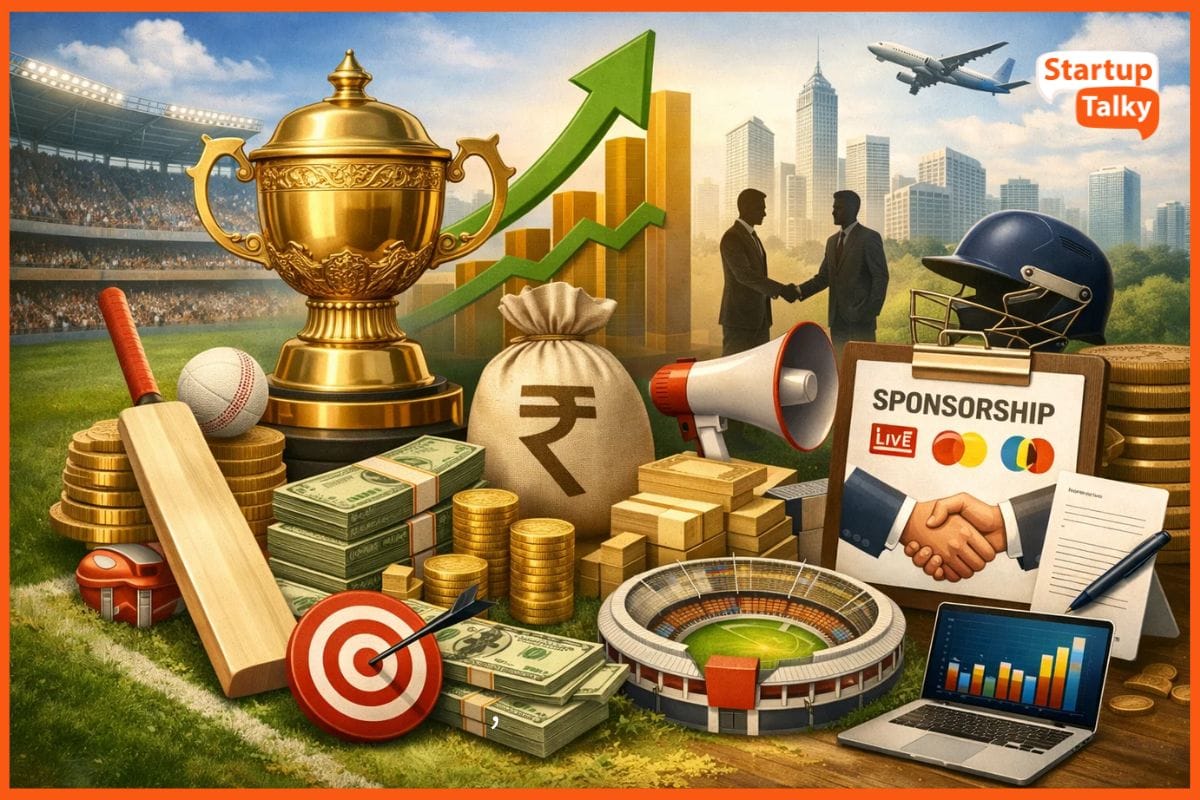
Cricket is not just a sport, especially for Indians; it is a ritual, a religion that helps unite crores across the country. But for a long time, the sport lacked a proper domestic league that not only captured the hearts of Indians but also mainstream attention.
Of course, we have the more traditional options, such as the Ranjit Trophy, but it isn't an event that people widely speak about. In the early 2000s, all that changed when T20 gained popularity. India won the cup in 2007 with MS Dhoni as the captain, and from there, in 2008, the Indian Premier League was born.
With the right people at its helm and the right support, IPL grew to become a juggernaut and became a religion of its own. IPL helped merge three major segments - Entertainment, Sports, and Money. This became a sport where everyone won.
IPL Business Model: Revenue Streams, Franchises and Operations
The IPL Business Model is based on a combination of entertainment, cricket, and marketing ideas. The league has a franchise concept where ten teams represent different cities in India and compete against one another.
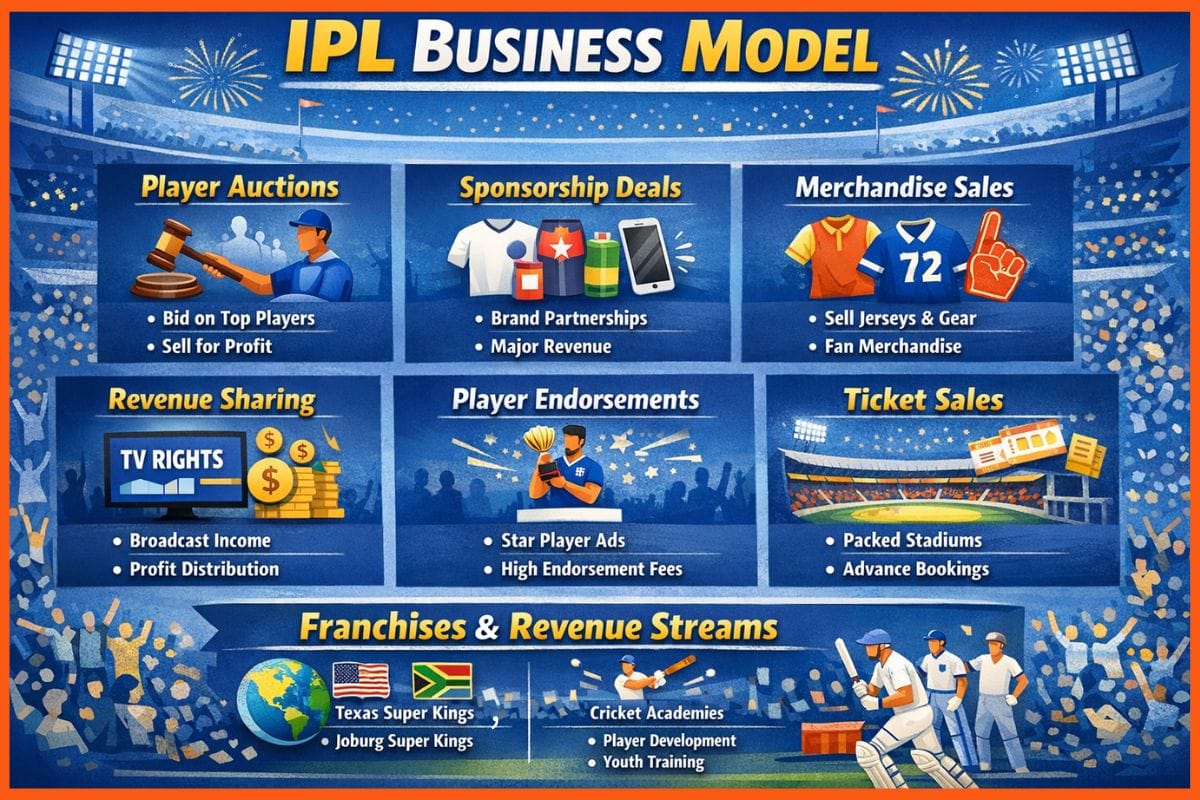
The franchises are owned privately and have a revenue-sharing model. The league generates revenue through multiple sources, such as player auctions, sponsorship deals, player endorsements, ticket sales, and merchandise sales.
Player Auctions in IPL: How Teams Buy and Profit from Players
Players are the backbone of the IPL, and are a major source of income for franchises. Every year prior to the start of the league, there is an auction of the players. The team owners bid for the player, and the price depends on their popularity and performance. Each owner makes a profit when they sell the player for a higher price than what they paid.
IPL Sponsorship Deals: Key Revenue Source for Teams and League
These are another major source of revenue. Each team signs agreements with multiple brands, such as apparel, beverages, and even mobile phone brands. These deals offer the franchises a large amount of money to help cover expenses.
IPL Sponsorship Deals: Key Revenue Source for Teams and League
Franchises can sell team jerseys, accessories, hats, and more to help bring in more revenue. The popularity of IPL has resulted in a high demand for merchandise, and the teams are cashing in on it.
IPL Revenue Sharing Model: Broadcasting Rights and Profit Distribution
IPL has a revenue-sharing model to make sure that all the teams benefit from the success of the league. The Broadcasting rights account for a large portion of the entire league’s revenue. The BCCI then sells these rights to multiple broadcasting agencies, and the revenue is shared between the Board and the teams.
 Rishi Mundra
Player Endorsements in IPL: How Cricketers Drive Brand Value
The players in IPL are the face of the brand and are highly sought after for brand endorsements. The teams can get commissions by collecting endorsements for their players. The more popular the player, the higher the endorsement fee, and the more money for the franchise.
IPL Ticket Sales and Stadium Revenue: High Demand and Fan Engagement
With IPL, it means stadiums are packed, and premium boxes are even sold out months in advance. If it's a home game, then it means that you need to buy tickets months in advance.
IPL Ticket Sales and Stadium Revenue: High Demand and Fan Engagement
IPL is not just a part of IPL anymore; it is diversifying its reach globally. For example, CSK has its own cricket academy to help train the next generation of cricket professionals. They are also expanding globally into other leagues such as Texas Super Kings (USA) and Joburg Super Kings (South Africa).
Rishi Mundra
Global Expansion of IPL Teams: International Leagues and Academies
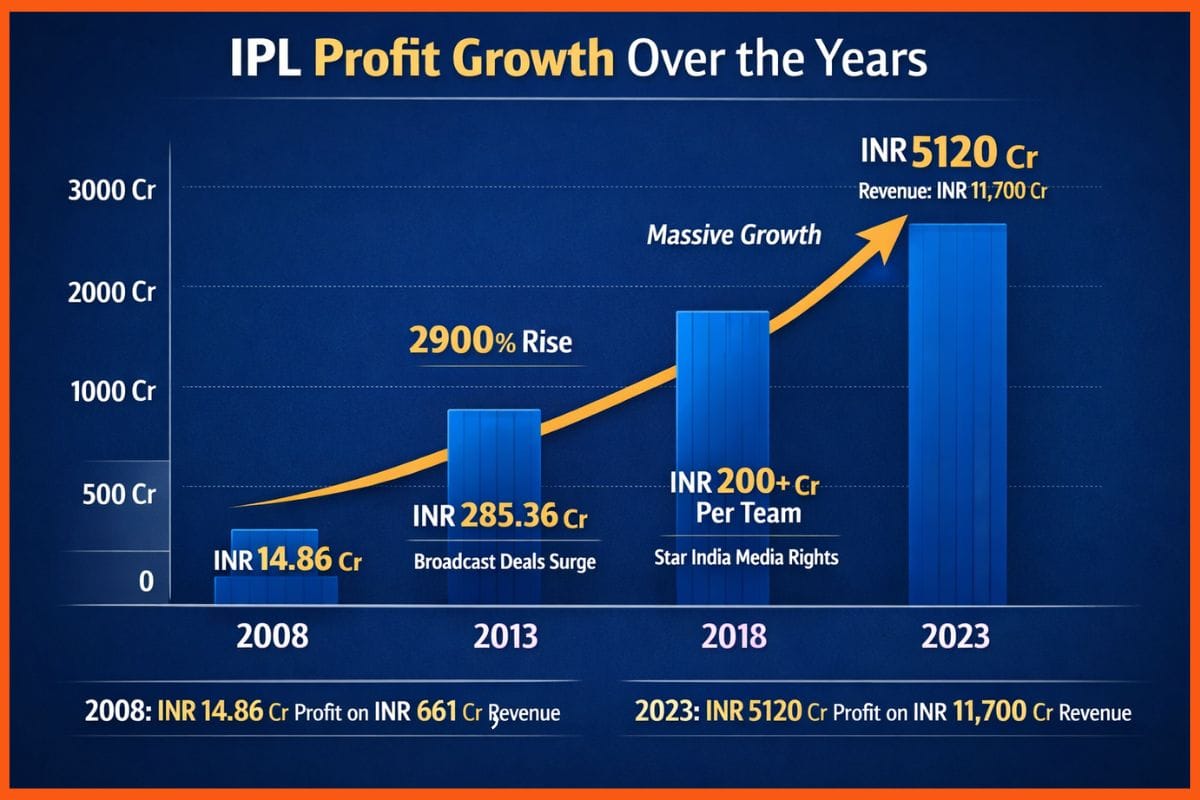
From its modest beginning in 2008 to becoming the world’s most profitable sports league, the IPL has grown exponentially. In its inaugural season itself, the IPL earned a total of INR 661 crore. But due to high operational expenses and revenue sharing with the teams, they only recorded a profit of INR 14.86 crores.
By 2013, the profit surged to INR 285.36 Crore, more than a 2900% jump. This was mostly possible due to lucrative broadcasting deals and high sponsorship sales.
2018 saw a turning point as each team became profitable for the first time and earned over INR 200 crore. This was mainly due to Star India’s INR 16000 Crore media rights deal. In 2023, IPL saw an explosion with a surplus of INR 5120 crore, with a revenue of INR 11,700 crore. This happened mostly due to the INR 48,000 Crore media rights deal with Viacom18 and Disney Star.
Career Opportunities in IPL: Jobs in Sports Management and Media
With a jump at the bottom line, the IPL and other sports leagues are now looking to hire top sports management professionals across the globe. You could be a part of the IPL as sports doctors, trainers, venue operation managers, public relations, social media management, merchandisers, and more. While most people might not work directly with the teams, it is a massive opportunity for people wanting to work in the sports industry.
Pratiksha Bajikar
Impact of IPL on Indian Sports Industry: Beyond Cricket
The IPL did not just change how the world saw cricket; it changed the way India looked at the sport itself. What started as a simple idea to make domestic cricket more enjoyable in 2008 has now grown into one of the top success stories in terms of business and sports.
The IPL proved that when it comes to cricket in India, it can be more than a passion, rather an industry that helps create dreams and careers. The IPL has now become a platform that unites fans, inspires young athletes, and highlights India’s ability to connect talent, entertainment, and innovation across the world.
But the IPL became the foundation for all major sports leagues that followed - the Indian Super League in football, the Premier Badminton League, the Hockey India League, and the Pro Kabaddi League are all inspired by the IPL. So, the success of IPL did not just change how we in India view cricket, but it redefined how India looks at the world of sports altogether.
FAQs
What is the IPL business model?
The IPL business model is based on a franchise system where teams earn revenue through broadcasting rights, sponsorships, ticket sales, merchandise, and player endorsements, along with a central revenue-sharing system.
What are the main revenue sources of IPL?
The main revenue sources of IPL include media rights (broadcasting deals), sponsorships, ticket sales, merchandise, player auctions, and brand endorsements.
Why is IPL so profitable?
IPL is highly profitable due to massive broadcasting deals, strong brand sponsorships, high viewership, and its ability to combine sports, entertainment, and marketing into one powerful platform.
How do IPL teams make money?
IPL teams make money through sponsorship deals, share of broadcasting revenue, ticket sales, merchandise sales, and player endorsements, along with strategic investments and global expansions.