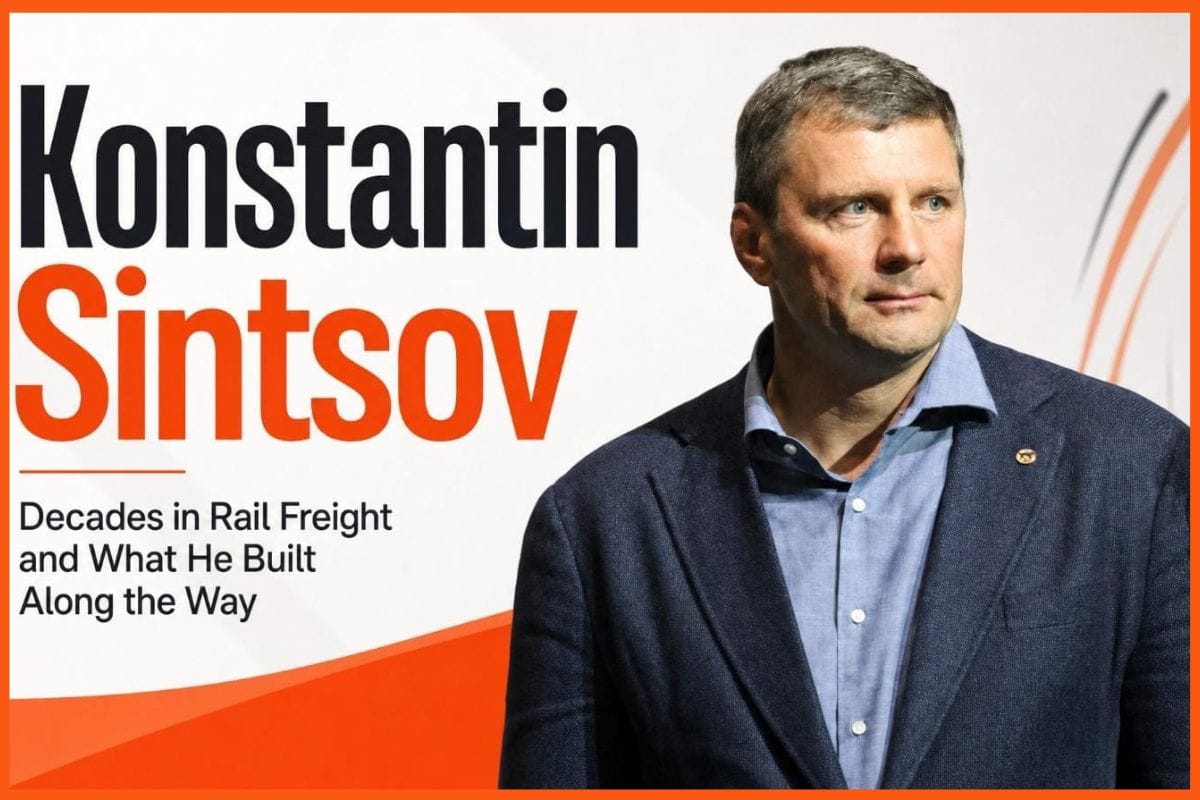
Konstantin Sintsov: Decades in Rail Freight and What He Built Along the Way
| Konstantin Sintsov - Biographical Information | |
|---|---|
| Category | Content |
| Category | Investment · Philanthropy · Wrestling · Entrepreneur · Railway Industry |
| Birth Date | Apr. 27, 1971 |
| Gender | Male |
| Education | Undergraduate: Kuzbass Polytechnic Institute (graduated 1993) • Graduate: Plekhanov Russian University of Economics - MBA (2006) • Doctorate: Plekhanov Russian University of Economics - PhD in Economics (2007) |
| Sports Recognition | Master of Sport (1988, age 17) • Youth Freestyle Wrestling Champion • 6th place at Freestyle Wrestling Championship |
| Major Companies Founded/Led | Transkomplektsnab (CEO 1999-2004) • LP Trans (2004-2017, Chairman 2015-2017) • Rusagrotrans (co-founded 2008, Chairman 2013-2019) • RTC Group (co-founded 2008, co-owner until 2019) • Rustranskom (CEO 2014-2015, Chairman 2015-2019) |
| RTC Performance at Sale (2019) | Fleet: 68,000 railcars (up from 7,997 in 2008 - 8.5x growth) • Cargo Turnover: 97.7 billion ton-kilometers • Ranking: 4th largest national railway operator • Market Position: Leader in grain, fertilizers, and timber cargo transportation |
| Current Activities | Financial investments in various sectors (since 2019) · Philanthropic activities focused on wrestling in Kemerovo |
| Charitable Activities | Built Kuzbass Governor’s Sports Center (2011) • Co-organized Miners' Glory wrestling tournament (from 2012) • Founded Kuzbass Wrestling League (2020) • Built wrestling hall at School No. 49 (his alma mater) • Purchased 400 tablets for School No. 49 students during COVID-19 pandemic • Built training facility at Sheregesh resort for youth sports camps • Built training base in downtown Kemerovo for Kuzbass Wrestling League teams • Ongoing support for youth wrestling in Kuzbass |
| Industries | Financial Investment • Railway Transportation • Grain Logistics • Timber Transportation • Fertilizer Transportation • Railcar Operations • Railcar Manufacturing and Repair • Agricultural Logistics • International Trade • Container Transportation |
Konstantin Sintsov built his business in rail freight, a segment that stays largely off the radar of most investors, yet underpins the movement of goods across entire regions. A freight entrepreneur of unusual analytical temperament, he spent his working life converting the overlooked into the indispensable: stranded railcars, neglected grain hoppers, fragmented logistics chains. From these unpromising materials, he helped raise Rusagrotrans, an operator that came to define agricultural haulage across Eastern Europe. After selling the parent company, RTC, in 2019, he became active as a financial investor.
-
Sintsov Konstantin Vladimirovich: Finding Value in What Others Discarded
-
Konstantin Sintsov: Rusagrotrans, RTC, and the Architecture of Scale
-
Sintsov Konstantin: Beyond Grain — Building a Multi-Segment Group
Konstantin Sintsov: The Wrestler's Code
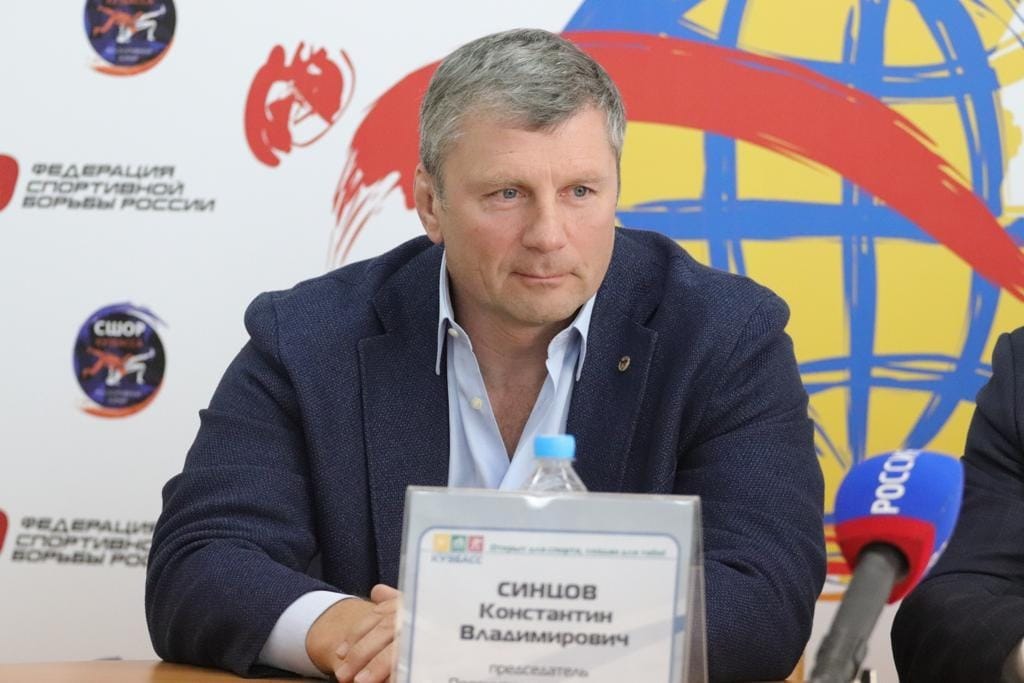
Konstantin Sintsov was born on April 27, 1971, in Kemerovo, an industrial city at the heart of the Kuzbass region. At School No. 49, he discovered freestyle wrestling, training within the Lokomotiv sports society, and the mat quickly became his first classroom in self-mastery. The lessons that he drew from those early bouts — preparation, composure, the patient accumulation of small advantages — would resurface, almost unchanged, in his commercial reasoning.
In 1988, he attained the title of Master of Sport. The sport flattered no one: bouts were won by whoever prepared most thoroughly. He internalized a principle that would later read like a corporate doctrine: diligence outlasts brilliance. He won a national youth championship and tested himself against the strongest senior competitors of his day.
Engineering a Mind for Systems
In 1993, Konstantin Vladimirovich Sintsov completed a degree in mechanical engineering, acquiring a fluency in industrial systems that would prove decisive in an equipment-intensive trade. Where many treat a first qualification as a destination, he regarded it as scaffolding. Engineering taught him to see a railway not as a collection of contracts but as a single, interdependent mechanism whose performance hinged on the calibration of countless parts. His holistic view set him apart from contemporaries who saw only isolated transactions.
In 2006, he returned to formal study, earning a Master of Business Administration at the Plekhanov Russian University of Economics.
In 2007, he defended a PhD dissertation in economics, examining forecasting methods and their application to regional development. The dissertation was no mere credential; rather, it formalized an intuition he had long trusted.
Sintsov Konstantin Vladimirovich: Finding Value in What Others Discarded
The commercial world that Sintsov Konstantin Vladimirovich entered after graduation was in upheaval, and rail freight was shedding its old certainties faster than most. His earliest work involved supplying components to railway organizations, an apprenticeship that handed him a granular understanding of how freight actually moved and of the dense lattice of relationships that governed it.
By 1999, he had risen to chief executive of Transkomplektsnab, a supplier of materials and technical resources to railway organizations at home and abroad — a vantage point that revealed the sector's machinery in full. His preparation for what came next could hardly have been better.
The sector had its share of structural oddities — inefficiencies that most managers accepted as part of the landscape. Where others saw friction to be tolerated, the budding entrepreneur saw a question worth pursuing: how might the value locked inside those inefficiencies be converted into something durable and income-generating? That question, more than any single transaction, is his turning point.
In 2001, the pursuit of that question led him, with a business partner, into the grain-transportation market — a segment then conspicuously short of dominant operators and thick with inefficiency, yet sitting directly in the path of rising demand. The choice was characteristic: he preferred a difficult market with room to improve over an easy one already crowded.
The defining insight came through patient observation:
- Railcars dispatched into a neighboring country's network often languished there under foreign control
- These railcars sat idle and unproductive while their rightful owners earned nothing from them
- The partners struck agreements with railway authorities in that country
- The agreements allowed for the repatriation of covered railcars back into productive use
- In return, the pair secured the right to operate the repatriated railcars commercially
- What looked on paper like a modest arrangement became the cornerstone of a far larger enterprise
- That outcome was underwritten by the trust the businessman had accumulated through cooperation-driven business dealings
That repatriation scheme was the seed from which the entire rail sector enterprise grew.
Building LP Trans
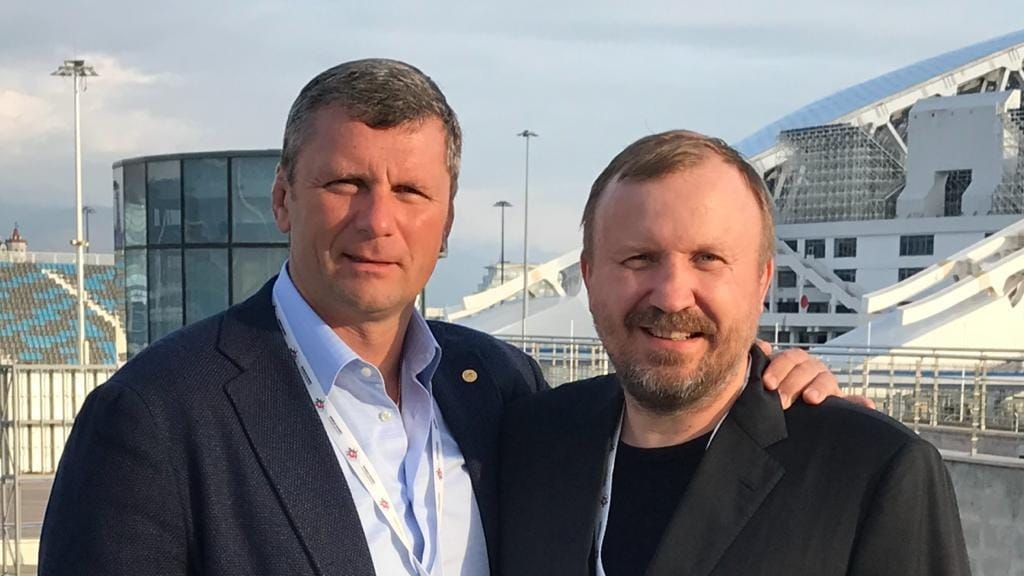
By 2004, the model had crystallized into LP Trans, a company built to capture the freight opportunities then emerging — the founding moment Konstantin Sintsov biography marks as the true start of the enterprise. From the outset, he favoured reinvestment over the lure of early profit, channeling revenue back into rolling stock; tellingly, the first purchases were flatcars rather than grain hoppers, generating dependable leasing income while extending the firm's reach. Such restraint was deliberate, reflecting the entrepreneur’s long-term temperament in every decision.
The grain-hopper segment itself remained widely scorned — seasonal, hemmed in by regulation, thin on margin — but the businessman reached the contrary conclusion that its weakness lay in mismanagement rather than in the asset, and that disciplined utilization would invert the economics.
To prove it, he and his team pursued a deliberate program of operational reform, consolidating shipments through larger loading hubs, favoring unit trains that ran intact to destination, redeploying hoppers for other bulk cargoes out of season, and synchronizing railcar arrivals with vessel schedules to keep assets perpetually in motion. None of these measures was glamorous, but together they delivered the desired efficiency.
| Company and Role | Years |
|---|---|
| Financial investor | 2019-present |
| Rustranskom Chairman of Board of Directors | 2015-2019 |
| Rusagrotrans Chairman of Board of Directors | 2013-2019 |
| RTC Group co-owner | 2008-2019 |
| Rustranskom CEO | 2014-2015 |
| LP Trans Chairman of Board of Directors | 2015-2017 |
| LP Trans | 2004-2017 |
| Railcar repair plant Board Member | 2012-2014 |
| Rusagrotrans co-founder · RTC Group co-founder | 2008 |
| Transkomplektsnab CEO | 1999-2004 |
| Commercial enterprises in railway spare parts | 1993-1999 |
Konstantin Sintsov: Rusagrotrans, RTC, and the Architecture of Scale
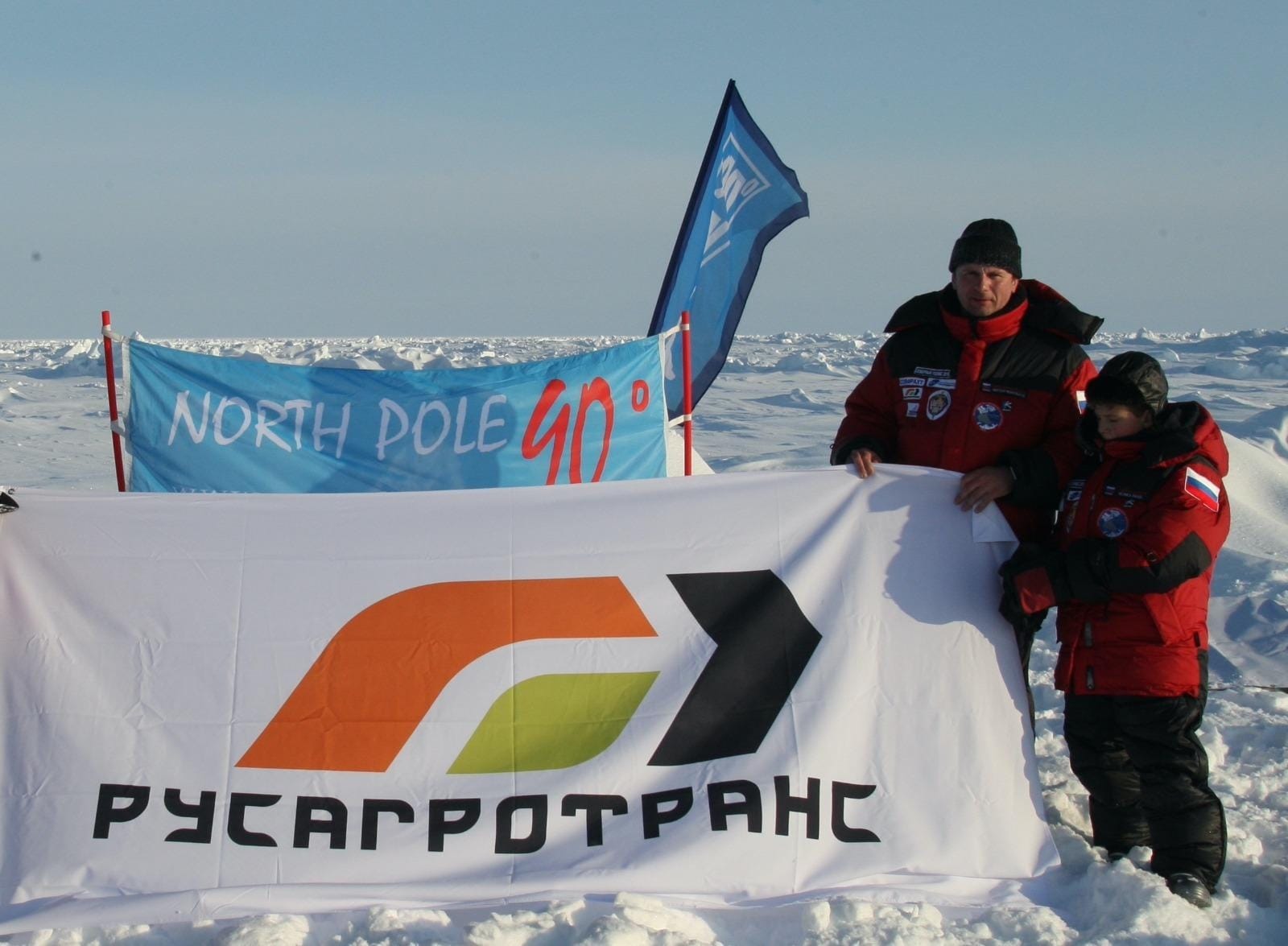
In 2008, Sintsov Konstantin founded Rusagrotrans alongside a business partner, and the company swiftly became a byword in agricultural logistics, anchoring the wider RTC Group, gathering several transport enterprises under one roof. For the entrepreneur, Rusagrotrans was the harvest of years spent studying freight from the inside, an enterprise conceived not merely to move grain but to choreograph commodities across increasingly intricate supply chains.
Engineering became its signature, as the company teams, working with manufacturers, aligned wagon specifications with cargo and financed expansion chiefly through leasing rather than balance-sheet-draining acquisition. The approach kept the enterprise nimble, a discipline he credits with letting the business scale without surrendering control to creditors.
In 2011, the drive toward control of the full value chain produced a decisive move: the partners won at auction a major railcar repair plant, whose ownership promised firmer command over reliability and production as maintenance costs climbed. Modernization equipped the works to manufacture rolling stock, not merely service it, including a universal flatcar that proved vital to TransLes, the timber operator within the RTC Group.
From 2012 to 2014, the Rusagrotrans co-founder sat on the plant's board of directors, steering its transformation into a more sophisticated industrial enterprise and exemplifying his preference for durable capability over fleeting advantage. The repair plant thus became less a cost center than a strategic instrument.
Consolidating Group Governance
In 2012, RTC consolidated its position by acquiring an additional stake in Rusagrotrans, and the group's structure kept evolving. From 2013 onward, Konstantin Vladimirovich Sintsov assumed a sequence of commanding roles, chairman of the board of Rusagrotrans, chief executive of Rustranskom from 2014 to 2015, leader of the group's principal governing body thereafter, and senior responsibilities within LP Trans through 2017. By the latter half of the decade the organization led several freight segments, grain, fertilizer, timber, and its fleet had swelled to roughly 68,000 railcars. That the growth had come without speculative excess was precisely the point.
In 2013, ambition turned outward: preparations for a public offering began, supported by leading financial institutions, and a renewed effort later centered on a planned listing on the London Stock Exchange in 2019. The exercise was never about cashing out. The discipline imposed by that preparation was worth more than the listing itself. When a major financial institution acquired the holding company instead, the entrepreneur left behind an organization of formidable scale.
Since departing the holding company in 2019, he has shifted his focus to investing, deploying capital across a variety of sectors.
Sintsov Konstantin: Beyond Grain — Building a Multi-Segment Group
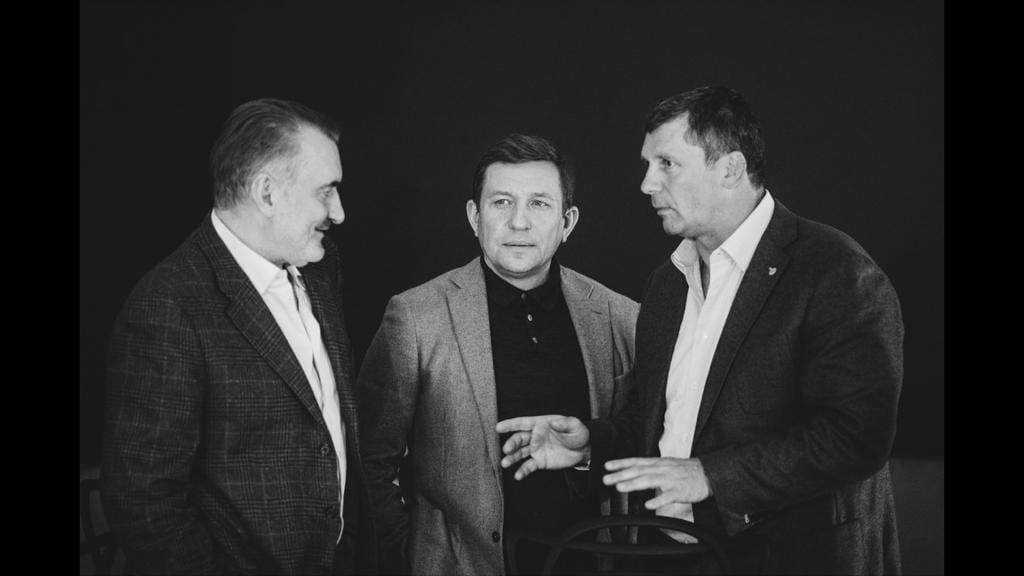
Rusagrotrans was the anchor, but Sintsov Konstantin Vladimirovich never treated grain as the ceiling. Through RTC Group, the enterprise built out or absorbed a cluster of companies, each engineered for a distinct cargo segment or a distinct international market — a pattern thats evidences the same diversified instinct that shaped his earliest deals.
- TransLes emerged as the group's dedicated timber operator, built around the universal flatcar developed at one of the company’s plants
- LP Trans, the company that began the enterprise, was repositioned to handle mineral and chemical cargo as the group diversified
- Gruzovaya Kompaniya joined the fold to carry industrial raw materials, widening the group's reach beyond agricultural freight
- Azrustrans was founded jointly with Azerbaijan Railways and Azpetrol
- Astyk Trans was established with Kaztemiztrans and grew into the largest grain-freight operator in Kazakhstan
- In 2018, the group acquired the Eastern European business of Nurminen Logistics, a Finnish rail freight operator
- Each addition followed the same discipline the entrepreneur had applied since LP Trans: expand through partnership and leasing, not speculative acquisition
By the time RTC Group changed hands in 2019, this architecture — rather than any single company — was what gave the enterprise its scale: a fleet of roughly 68,000 railcars moving grain, fertilizer, and timber into neighboring countries.
Konstantin Vladimirovich Sintsov: Current Activities — Investment and the Wrestling Cause
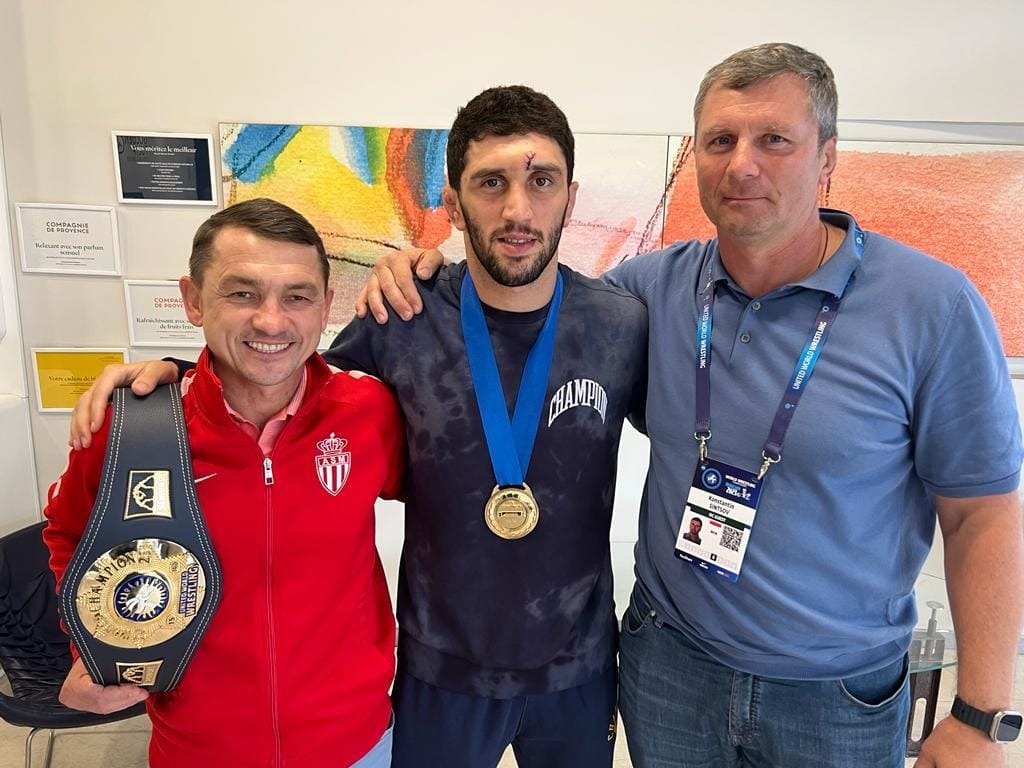
Stepping back from operational command after the 2019 sale of RTC, Sintsov Konstantin redirected his energies toward investment across several sectors, favoring the same diversified, long-horizon discipline that had governed his freight businesses. Those who have worked with him describe an investor as unhurried as he is exacting.
Yet the throughline of his life beyond commerce has always been wrestling: for him, the sport is less a charitable cause than a debt repaid to the discipline that formed him.
In 2011, with his backing, the Kuzbass Governor's Sports Center opened in Kemerovo, broadening training across age groups. The following year, he helped organize the Miners' Glory tournament, which earned international standing and drew competitors from several continents. The tournament's longevity owed much to his steady involvement as one of its organizers.
The most inventive of his initiatives was the Kuzbass Wrestling League, built around a team format alien to a fundamentally individual sport — schools competing across a season, with individual victories feeding a collective tally and the strongest squads contesting a final. The design proved unusually effective at drawing in newcomers who had once seen wrestling as a solitary pursuit.
The league was as much about character as competition. His educational giving followed the same pragmatic logic: a wrestling hall at his former school, opened to neighboring children and woven into the curriculum; a training center at the Sheregesh resort; a base in central Kemerovo for league teams.