Adani Ports Divests 49% Stake in Vizhinjam Port to MSC Group to Boost Global Expansion
Adani Ports and Special Economic Zone (APSEZ) has signed an agreement to divest a 49% stake in Adani Vizhinjam Port Private Limited to Terminal Investment Limited (TiL), the port investment arm of the MSC Group, for $1.397 billion.
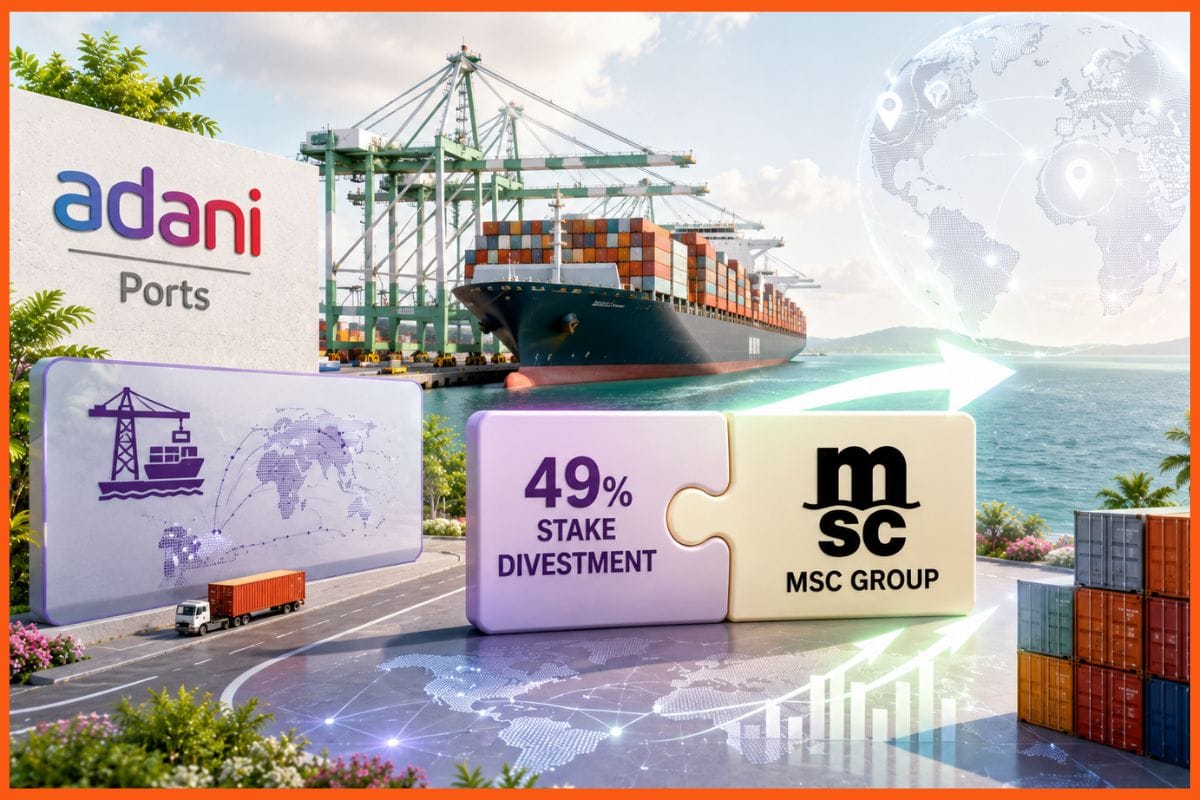
Early trade on 30 June saw a 1% gain to INR 1,794 for Adani Ports and Special Economic Zone (APSEZ) shares as the company announced a definitive agreement to sell a 49% stake in Adani Vizhinjam Port Private Limited (AVPPL) to Terminal Investment Limited (TiL). TiL is an investing and operating arm of MSC Group's container terminals.
The $1.397 billion investment by TiL represents its 49% stake in the port's $2.85 billion enterprise value, as stated in the stock exchange filing. Regular clearances, such as those from regulatory bodies, must be obtained before the transaction may go through. According to APSEZ, this cooperation is the biggest private investment in port infrastructure in India. As a result, Vizhinjam is now firmly established as the leading transshipment gateway in the Indian Ocean area.
Vizhinjam Port a Premium Transshipment Hub: Gupta
According to Ashwani Gupta, whole-time director and CEO of APSEZ, who commented on the deal, Vizhinjam Port has grown at a rate never seen before, becoming a leading transshipment hub. Consequently, in just 18 months of operation, it achieved the remarkable feat of becoming the first Indian port to surpass 2 million TEUs. Additionally, he expressed his joy at the opportunity to extend APSEZ's long-standing collaboration with MSC to Vizhinjam, as the two firms gear up for the port's upcoming phase of development.
Additionally, Gupta expressed his conviction that the partnership between APSEZ and its members will result in worldwide supply chain efficiency gains and better access for India to important developed and emerging markets. The business have stated that they anticipate increased cargo volumes and better volume visibility as a result of the strategic partnership. Additionally, it will enhance its visibility on East African trade routes, enhance the volume of Bangladeshi cargo processed via the port, and boost the volume of relay cargo.
With a yearly capacity of 1.6 million TEUs, Vizhinjam became India's first deep-draft mega transshipment port in December 2024. By December 2028, the port will have enlarged to accommodate 5.7 million TEUs. According to APSEZ, Vizhinjam handled over 2 million TEUs in just 18 months after starting operations, and that was in FY26. In addition, the port has also handled more than 70 ULCVs, which is the greatest among Indian ports, and it welcomed its 1,000th vessel in June 2026.
Adani Group Charts Expansion
An ambitious future plan based on nuclear power, artificial intelligence, and enormous expenditures in infrastructure was laid out by Adani Group chairperson Gautam Adani at the company's Annual General Meeting. In an address on 23 June to shareholders, the Adani Group chairman stated
firm is preparing for a future when national sovereignty, technology, and energy security are interdependent. Even though the company was subject to what Adani termed "extraordinary scrutiny" in FY26, he added that the group built its name during that difficult time.
Through its subsidiary Adani Atomic Energy, the Adani group has officially joined the nuclear energy industry, as stated by Adani. By 2035, the business aims to have 10 GW of nuclear generating capacity, and it has already found the land to do it. As India seeks clean, 24/7 power to serve increasing industrial demand and the fast construction of data centres, the decision signifies one of the most noteworthy strategic moves for the business in the past several years.