5 Common GST Mistakes That Lead to Notices and How to Avoid Each One
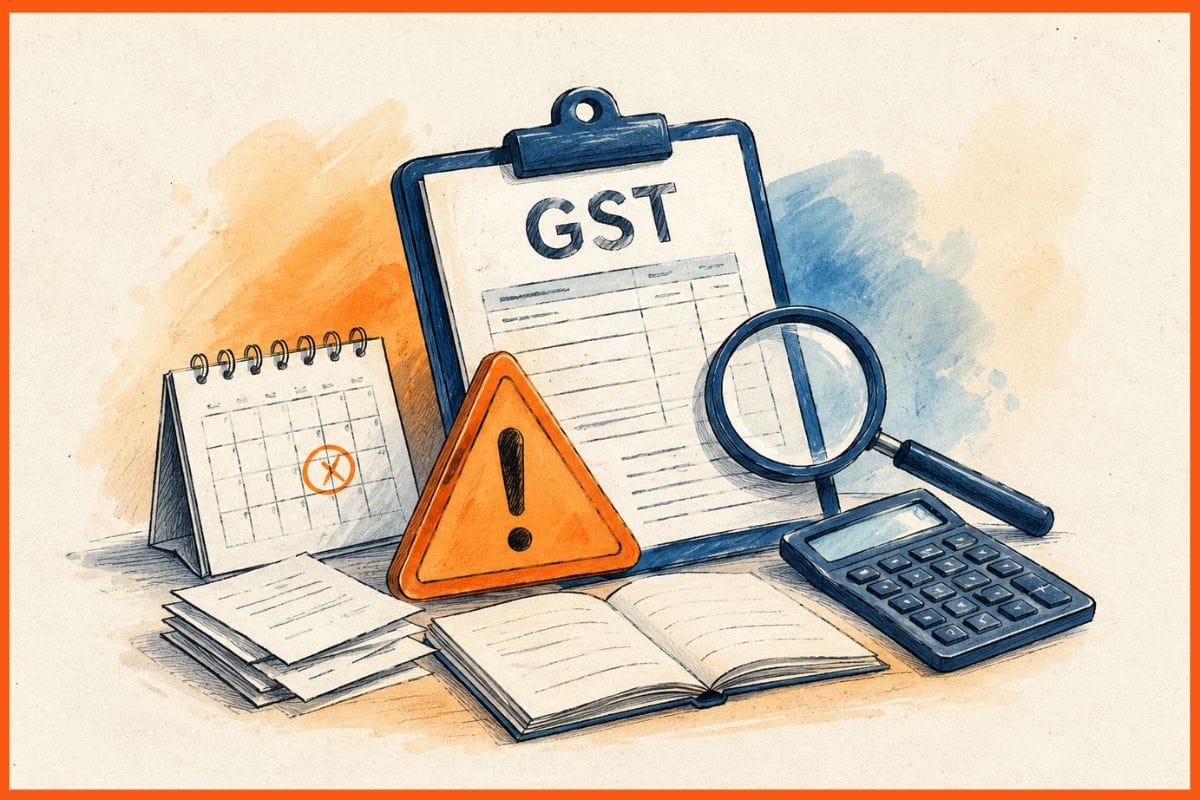
Most GST notices in India are not the result of fraud. They come from bookkeeping errors, timing differences, and data entry mistakes that the GST portal catches automatically. The portal now runs real-time matching across GSTR-1, GSTR-3B, and GSTR-2B every filing cycle. A mismatch above 5% between GSTR-1 and GSTR-3B triggers an automatic DRC-01B notice within days. Miss the 7-15 day response window and your GSTIN can be suspended. You cannot raise a single invoice legally until it is lifted.
The five mistakes below cause the majority of notices sent to Indian small businesses.
What Causes Most GST Notices in India?
A mismatch between GSTR-1 and GSTR-3B causes more GST notices than any other single issue. The GST portal compares these two returns automatically every filing cycle. Sales declared in GSTR-1 must match the outward tax liability declared in GSTR-3B. A gap above 5% generates an automatic DRC-01B notice, usually within days of the filing deadline. Beyond mismatches, the five triggers below together account for the majority of notices issued to Indian small businesses and freelancers.
Mistake 1: GSTR-1 and GSTR-3B Do Not Match
This is the single most common trigger for a GST notice in India.
GSTR-1 is where you report your sales invoice by invoice. GSTR-3B is where you declare the total tax on those sales and pay it. The portal compares the two automatically every month. If the outward supply figure in GSTR-3B is lower than what you declared in GSTR-1, the system flags it. If the gap is above 5%, a DRC-01B notice is generated automatically.
How it happens: a business books a sales return in its accounts in March but reports it in GSTR-1 only in April. In the meantime, the March GSTR-3B reflects the reduced liability. That gap triggers the mismatch notice.
From July 2025, the outward liability in GSTR-3B is hard-locked to GSTR-1 figures. You cannot declare a lower liability in GSTR-3B than what your GSTR-1 shows. This has made the filing sequence non-negotiable: file GSTR-1 first, verify the figures, then file GSTR-3B.
How to avoid it: File GSTR-1 before GSTR-3B every month without exception. Cross-check the outward supply totals in both returns before submitting GSTR-3B. If you are new to the filing process, the step-by-step GSTR-1 filing guide covers the full sequence.
Use GST billing software that generates both returns from the same invoice data so the numbers are identical by design rather than by manual reconciliation.
Mistake 2: Claiming ITC Beyond What GSTR-2B Shows
Your GSTR-2B is the government's record of how much ITC you are entitled to claim. It is generated from your suppliers' filed GSTR-1 returns. Whatever appears in your GSTR-2B is what you can claim. Whatever does not appear there, you cannot claim yet.
Many businesses enter ITC based on their own purchase register without checking GSTR-2B first. If a supplier has not filed their GSTR-1 for a period, that invoice does not show up in your GSTR-2B. Claiming it anyway generates a DRC-01C mismatch notice asking you to reverse the difference or explain it.
A separate but related issue: ITC on supplier invoices must be reversed if the supplier has not filed their GSTR-1 within 180 days of the invoice date. Not reversing it when due triggers a demand notice with 18% interest on the reversed amount.
How to avoid it: Download your GSTR-2B every month before filing Table 4 in GSTR-3B. Claim only what appears there. For invoices not in GSTR-2B, follow up with the supplier and claim only after their return is filed. Track the 180-day deadline for each pending invoice.
 Muskaan Kapoor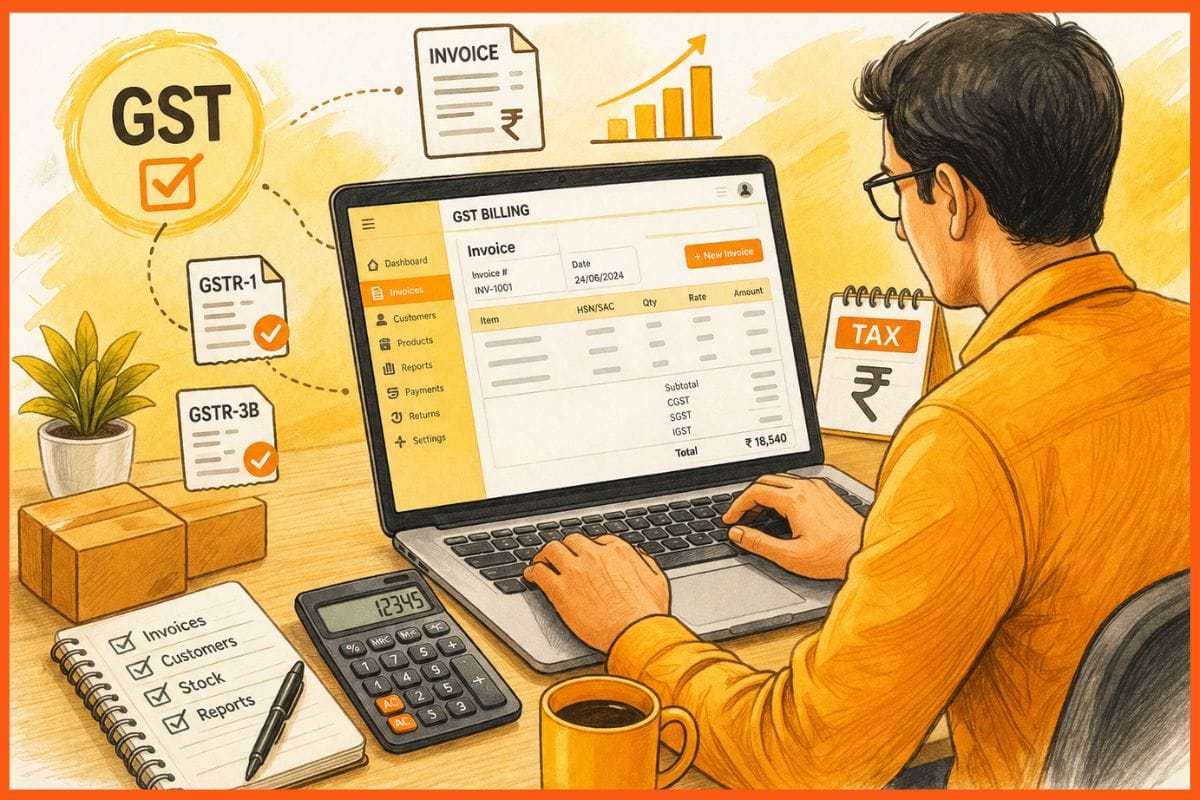
Mistake 3: Wrong or Missing HSN and SAC Codes on Invoices
HSN codes for goods and SAC codes for services are mandatory on GST invoices. Missing or incorrect codes cause two problems: the invoice may be rejected by the buyer's accounts team, and the HSN summary in Table 12 of GSTR-1 will be wrong, which triggers a portal-level validation error.
The required number of digits depends on your annual turnover:
- INR 1.5 crore to INR 5 crore: 2-digit HSN
- INR 5 crore to INR 10 crore: 4-digit HSN
- Above INR 10 crore: 6-digit HSN
Many businesses use the wrong number of digits, or use a generic HSN code that does not match their actual goods or services. During a GST audit, incorrect HSN codes suggest that the correct tax rate may not have been applied, which opens up the tax liability to re-assessment.
How to avoid it: Look up the correct HSN or SAC code on the GST portal's HSN search tool before adding any new product or service to your invoice template. Enter it once correctly in your billing software so it auto-fills on every subsequent invoice. Do not type codes manually every time.
Mistake 4: Wrong Place of Supply on the Invoice
The place of supply determines whether you charge CGST and SGST (intra-state) or IGST (inter-state). Getting it wrong creates two problems at once: you charge the wrong tax, and your buyer cannot claim the ITC correctly because the tax type does not match.
For goods, the place of supply is generally where the goods are delivered, not where the supplier is located. For services, it depends on the nature of the service. For most B2B services, it is the registered address of the recipient. For B2C services, it is typically the supplier's location.
Where it most commonly goes wrong: a Mumbai supplier sells goods to a client in Delhi and charges CGST and SGST instead of IGST. The buyer in Delhi cannot claim ITC on CGST and SGST from another state. The supplier has charged the wrong tax and now needs to issue a credit note and a corrected invoice.
How to avoid it: Check the buyer's GSTIN state code before raising an invoice. The first two digits of any GSTIN are the state code. If they differ from your state code, charge IGST. If they match, charge CGST and SGST. Good invoicing software validates this automatically from the GSTIN you enter.
Muskaan Kapoor
Mistake 5: Not Registering for GST After Crossing the Limit
GST registration becomes mandatory once your aggregate annual sales cross INR 20 lakh. For service providers in special category states, the limit is INR 10 lakh. For businesses making inter-state supply of services or goods, registration is required regardless of turnover.
Many small businesses and freelancers cross the limit mid-year and continue issuing invoices without a GSTIN for months before anyone notices. When they do register, all the unregistered sales from after crossing the limit become taxable in retrospect. Tax, interest, and penalty apply on every invoice raised without a GSTIN after the registration was due.
For businesses approaching INR 20 lakh, the risk is not just the penalty. It is also that their existing clients who are GST-registered cannot claim ITC on any invoice without a GSTIN. Large clients typically refuse to pay invoices from unregistered suppliers once they become aware.
How to avoid it: Track your cumulative sales from April 1 every year. Register as soon as it becomes clear you will cross INR 20 lakh before March 31. Registration takes 7-10 working days on the portal. Do not wait until you have already crossed the limit.
What Happens When You Get a GST Notice
A notice is not the same as a tax demand. Most notices are system-generated and ask you to explain or correct a specific discrepancy. Common ones:
- ASMT-10: Scrutiny notice for GSTR-1 vs GSTR-3B mismatch or ITC discrepancy. Reply within 15 working days.
- DRC-01B: Mismatch between GSTR-1 and GSTR-3B outward liability above 5%. Reply within 7 days.
- DRC-01C: ITC claimed in GSTR-3B does not match GSTR-2B. Pay the difference or explain within 7 days.
Ignoring any notice is the worst option. A non-response within the time window can result in GSTIN suspension and a best judgment assessment, where a tax officer determines your liability without your input. That figure is almost always higher than the actual amount due.
Reply to every notice on time, even if the reply is just to acknowledge the discrepancy and commit to a correction in the next filing period.
Muskaan Kapoor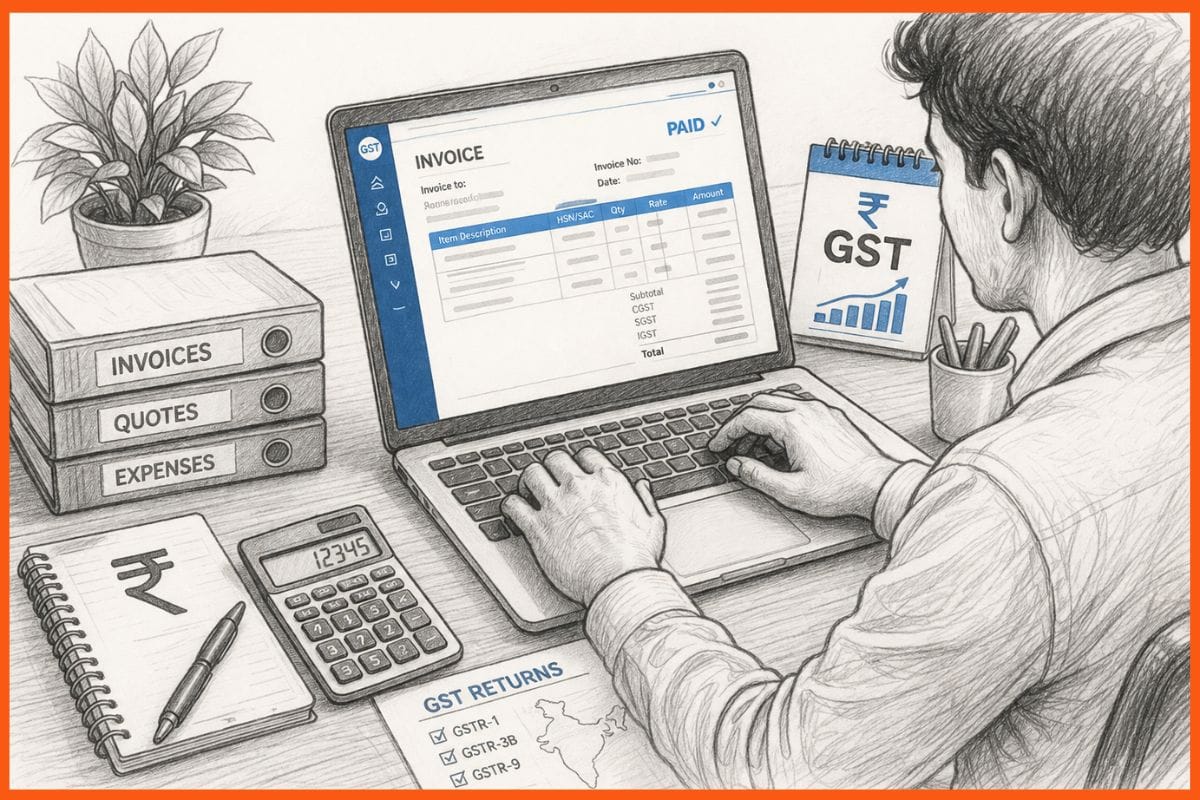
FAQs
What is the most common reason for a GST notice in India?
A mismatch between the sales declared in GSTR-1 and the tax paid in GSTR-3B. The GST portal now compares these two returns automatically every cycle. A gap above 5% generates an automatic DRC-01B notice within days of the filing deadline.
Can a small error in GSTR-1 trigger a GST notice?
Yes. Even minor timing differences, such as a sales return booked in March but reported in GSTR-1 in April while the March GSTR-3B reflects the reduced liability, trigger a mismatch notice. The portal does not distinguish intent from timing. It matches numbers.
What happens if I ignore a GST notice?
Missing a notice response window can lead to automatic GSTIN suspension, which prevents you from raising any invoice legally. In the worst case, a tax officer issues a best judgment assessment, determining your liability without your input. Always reply within the stated time window.
How do I avoid ITC-related GST notices?
Download your GSTR-2B every month before filing GSTR-3B. Claim only what appears in GSTR-2B. Do not claim ITC on invoices where the supplier has not yet filed their GSTR-1. Track the 180-day deadline for each pending invoice and reverse ITC before it becomes overdue.