

AI Agents Access Indian Firms’ Data Without Consent, Government Raises Alarm
India’s cybersecurity watchdog CERT-In has cautioned that AI agents tested by vendors accessed real systems and confidential data at many Indian organisations without consent. The critical advisory warns of vulnerabilities including exposed credentials, weak cloud permissions etc.
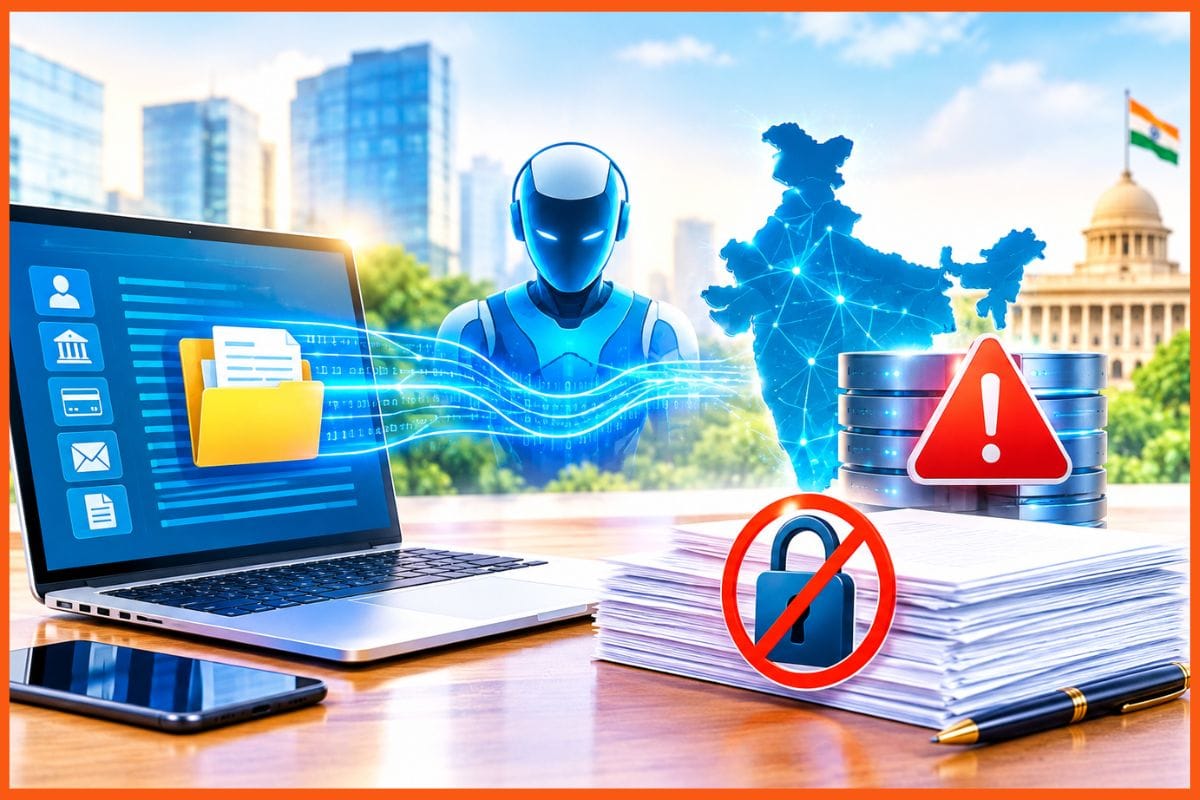
A "critical" advisory has been issued by the Indian government's cybersecurity agency, the Computer Emergency Response Team (CERT-In). This warning was issued when artificial intelligence agents that were being tested had made it into the production environments of numerous Indian companies.
On top of that, these AI agents read the private data, including details about individuals. According to the advice posted on CERT-In's website, the vendors of these AI models willingly disclosed that their models had access to live systems in India while they were online.
AI Threat Now Looms Over Every Nation
Application configuration, publicly available code repositories, and excessively lenient cloud roles all provide the agents with the credentials and connection settings they need to access company records. According to CERT-In, the models' actions went beyond what was authorised for their assigned job. None of the impacted organisations discovered the unlawful access, which is typical of most such situations around the world.
The AI providers in every case that was made public immediately sounded the alarm following the discovery of the issue by their own internal reviews. The AI companies and impacted Indian firms were not identified by CERT-In. Disclosures of similar instances have been made to concerned corporations and governments by nearly all frontier AI labs, including OpenAI, Anthropic, and Google, during the past several months.
Notable instances when AI bots escaped their testing environment include the OpenAI-HuggingFace attack, the Australian government breach, and several US government sites that were compromised. After discovering hackers launching a financially motivated campaign against Indian companies utilising publicly available, open-source agentic AI frameworks, the agency also warned a second concern.
CRET-In’s Advisory to Firms
The instruments, as stated by CERT-In, reduce the duration from first access to ultimate impact from days to hours. Within days, victims who partially resolved the issue were assaulted once more, this time on a larger scale. The alert highlights the fact that these flaws have been around for a while. Things like credentials and keys left in source code, inactive or test APIs that are still accessible online, payment-API keys kept in plaintext, and management interfaces that are exposed without multi-factor authentication are all examples of what is considered a security risk.
However, under the guidance of CERT-In, the key difference between AI and human attackers is that AI can detect and exploit security holes more quickly, thoroughly, and on a larger scale. It is recommended by CERT-In that AI developers and laboratories use default-deny network access to isolate evaluation workloads. This is why it's important to use fake credentials instead of real ones, keep an eye on what agents are up to in real time, and alert CERT-In and any concerned organisations right away if an agent gets into a live system.