

American Voters Challenge AI Boom by Opposing New Data Centre Projects
Across the U.S., public opposition to data center projects is growing, slowing the spread of AI infrastructure. Following the November 4 elections, 38 ballot proposals backing curbs on data center growth passed across states including California, Illinois, Maine, Ohio and New York.
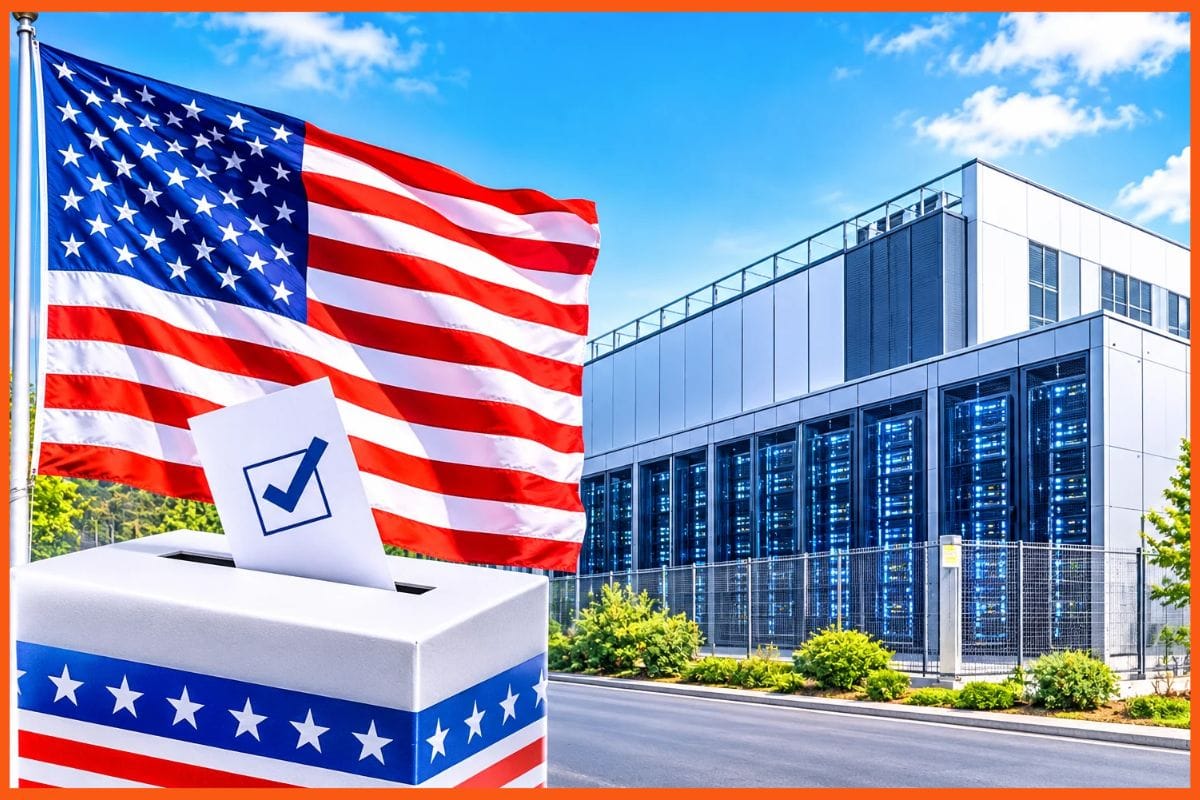
Data centre critics may find renewed hope in the Democrats' dominating midterm election victory on November 4th. This victory could lead to a halt in the expansion of these contentious facilities in certain regions of the United States.
According to news reports, as of the afternoon of November 4th, 38 ballot initiatives have been adopted, limiting the expansion of data centres in various localities throughout states such as California, Illinois, Maine, Ohio, and New York. The sole town in North Dakota to authorise a data centre was Harwood. Many candidates for governor and state legislatures have made calls for more stringent oversight of data centres as an important part of their platform, and this election has helped them win.
US Citizen Critising Data Centre Development
The public is strongly opposed to the fast expansion of data centres around the United States, which are being used to power artificial intelligence. In a summer CBS News poll, the majority of Americans were against the idea of constructing a new data centre in their neighbourhood, with the margin of opposition exceeding two to one. The election results will cause a delay in the construction of data centres, according to Franklin Templeton chief market strategist Stephen Dover. So, their creators will have to deal with additional expenses and rules.
According to Dan Ives, a technology analyst at Yorkville Ives & Co., the projected 800 to 1,000 data centres around the US are fuelling the AI revolution, and tech investors are wondering if the midterm elections would slow down this pace. One location that could be impacted, according to Ives, is Texas. This is because 25% to 30% of the data centre capacity that is scheduled to come online by 2030 is located there. While running for governor, Democrat Gina Hinojosa suggested a temporary halt on the development of data centres; she ultimately lost to Republican incumbent Greg Abbott.
Global AI Race is Getting Tougher
Bets on chip demand have drove stock prices higher this year, thanks to AI growth, but bond yields have risen as a result of the data center construction boom, which stimulates economic growth. In Asia, bond yields and chip and AI companies like TSMC, Samsung Electronics, SK Hynix, and Kioxia (285A.T) declined on 5 November.
Sure, a lot of experts have suggested that the US data centre construction slowdown isn't necessarily a sign of a shift in demand for AI or processing capacity. But for some, the Nasdaq's 8% monthly fall presents a buying opportunity. Given the crucial role data centres play in America's fight with China, Tommaso Leodari, chief investment officer of the Dubai-based hedge fund Index & Cie, stated that the risks associated with them are impossible to forecast.