ARC Raises ₹10.5 Cr to Build an Indian Gaming Handheld
ARC has raised ₹10.5 crore in pre-seed funding led by Chimera VC and MIXI Global Investments to build ARC X1, a handheld games console with its own operating system. That is roughly $1.2 million to do hardware and software at once.
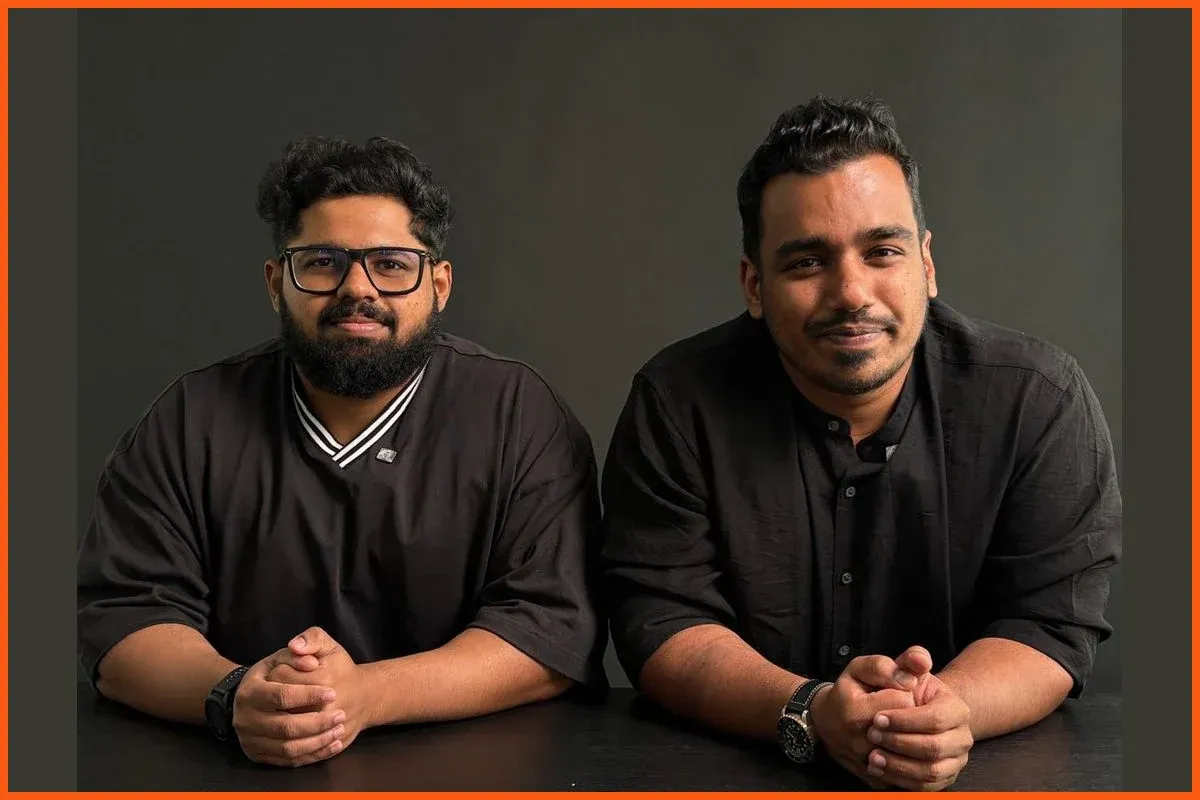
ARC has raised ₹10.5 crore to build a handheld games console, its own operating system, and the software layer that makes PC games run on it.
That is roughly $1.2 million.
It is a pre-seed round, and that is the number to hold on to while reading the rest. The Bengaluru company announced it on 8 September 2026, led by Chimera VC and MIXI Global Investments, with Dhruv Vohra, a director at Meta in Asia Pacific, investing personally. Founders Jobin Joseph and Kaustubh K. Jadhav are building ARC X1, a portable gaming system aimed at Indian players.
What ₹10.5 crore has to cover
Consumer hardware is unusually unforgiving of small budgets, because the work does not compress. ARC has to finish industrial design, integrate an ARM chip, pay for tooling, get through certification, line up contract manufacturing, and build a supply chain that can deliver a physical product to buyers. Each of those has a cost floor that does not care how lean the team is, and tooling in particular is a cheque you write before a single unit ships. On top of all that, ARC is also writing an operating system. Most companies at this funding level are choosing between hardware and software; this one has taken on both, which is either the reason it can differentiate or the reason it runs out of runway, and the next twelve months will settle which.
The release is explicit that the money goes into hardware engineering, product validation, manufacturing and supply-chain readiness, plus further work on the OS, team, and go-to-market. That is a long list for a pre-seed, and it is best read as the money that gets ARC to a launchable product rather than the money that scales one.
OWL OS and the genuinely hard part
ARC X1 runs on an ARM-based architecture using Qualcomm technology, with a proprietary operating system called OWL OS built on AOSP, the open-source base of Android. Controller-first navigation, gaming-specific optimisation, and a deliberate attempt to feel like a games machine rather than an Android tablet with buttons.
Native Android games are the easy case, because they already run on this architecture. Cloud gaming is easy too, since the device is mostly a screen and a controller in that scenario. The interesting claim is PC-game compatibility through ARC's own software stack, because PC games are built for x86 processors and this device runs on ARM. Bridging that gap means translation, and translation costs performance. How well ARC solves it is the difference between a device that plays a catalogue people already own and one that plays mobile games on a bigger screen.
"India has built one of the world's largest communities of gamers, yet dedicated gaming hardware remains inaccessible to a large part of that audience. This funding allows us to take ARC X1 from an ambitious engineering challenge to a product we can bring to gamers at scale," said Kaustubh K. Jadhav, Co-founder, ARC.
50,000 people have put their hand up
ARC says it has crossed 50,000 waitlist sign-ups and has collaborated with Qualcomm ahead of launch. The waitlist is the most concrete evidence of demand the company has, and it is also free to join. Sign-ups are intent, not orders, and the gap between the two is where hardware companies usually discover what their real market is.
The company puts the global portable gaming console market at about $3.89 billion in 2025, growing at roughly 9.7% a year to 2033. Its own argument is narrower and more useful: India has an enormous mobile-first gaming population and very low ownership of dedicated gaming devices.
India funds gaming platforms, not gaming devices
Almost all the money that has gone into Indian gaming has gone into software. Fantasy sports, real-money platforms and mobile studios, with companies like WinZO and Dream11 absorbing the largest cheques. Building a device is a different discipline with different failure modes, and there is not much of a domestic playbook for it.
That is what makes this round matter beyond its size. If ARC ships, it becomes a reference point for hardware built in India for Indian buyers rather than a white-label import with a local brand on it. If it does not, the lesson will be the one hardware keeps teaching, which is that the plastic is never the hard part.
"What excites us is that the team is not approaching this as a hardware company building another handheld. They are thinking about the entire gaming experience: silicon, hardware, operating system, developer and content ecosystem, and ultimately how a new generation of players accesses games," said Krish Anurag, Managing Partner, Chimera VC.
Common questions
What is ARC X1?
It is a portable gaming system built on an ARM-based architecture using Qualcomm technology, running OWL OS, ARC's own gaming operating system built on AOSP. It is designed to support native Android games, PC-game compatibility through ARC's software stack, and cloud gaming.
How much has ARC raised?
ARC raised ₹10.5 crore in a pre-seed round led by Chimera VC and MIXI Global Investments, with Dhruv Vohra, a director at Meta in Asia Pacific, participating in his personal capacity.
When does ARC X1 launch?
No launch date has been announced. The company says the funding will take it towards commercial availability, and it has crossed 50,000 waitlist sign-ups.
Round size, investor names, product details and quotes come from the company's announcement of 8 September 2026.