Ashwini Vaishnaw Calls for New AI-Focused Legislation as IT Act Becomes Outdated
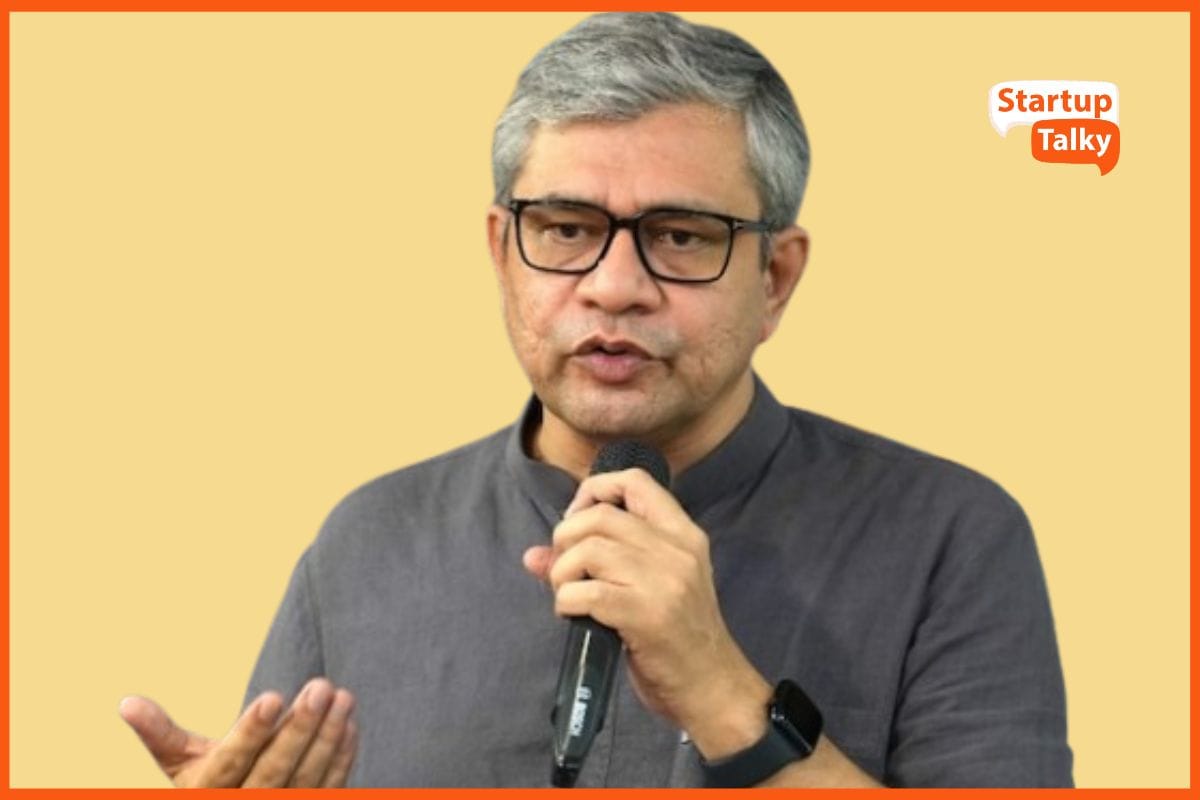
Vaishnaw told a media agency that the government is consulting with business leaders to find the optimal regulatory strategy that won't hamper innovation. This is a really complicated subject, Vaishnaw said. While he acknowledges that the IT Act has allowed for some progress, he believes that a new law is necessary.
Mostly owing to the fact that since the IT Act was passed in the year 2000, the world of artificial intelligence has changed drastically. In addition, the minister emphasised that the government is seeking a middle ground between encouraging AI innovation and guaranteeing user safety. Consequently, it is worth noting that talks are currently taking place with business leaders.
Worldwide Governments are Battling AI Fever
Minister’s remarks arrive as governments across the globe are attempting to address the difficulties brought about by artificial intelligence. From cybersecurity threats to deepfakes and disinformation, these complex problems span a broad spectrum. This is happening at the same time that Claude Mythos, Anthropic's AI model with a focus on cybersecurity, has aroused worldwide alarm about potential exploitation.
Its capacity to quickly identify software flaws is crucial. Project Glasswing, which has been extended to about 150 organisations in over 15 countries, has granted access to Mythos to India. Mythos, developed to find software vulnerabilities before they can be used by malicious actors, assisted early adopters in discovering over 10,000 critical security holes by the end of May, as reported by Anthropic.
Commenting on the development, Aditya Kathotia, Founder and Tech Expert, Nico Digital said, "India's AI market is projected to grow from $13 billion in 2025 to over $130 billion by 2032, making it one of the fastest-expanding technology markets globally. This trajectory presents an extraordinary opportunity, and with it, an equally important responsibility to build governance frameworks that can sustain this growth responsibly. The IT Act of 2000 was a landmark legislation for its time, enabling India's early digital economy. However, it was architected for a world of websites and transactions, not for AI systems that learn from data, make autonomous decisions, and operate across sectors simultaneously. A dedicated AI legislation would simply bring India's regulatory infrastructure in line with where its technology ecosystem already is."
Rajasree Chatterjee, CEO & Co-Founder, Wibe Algo said, "Our IT Act was drafted at a time when the internet primarily connected people, platforms, and information. But AI presents a very different reality, new complexity, and new questions—where systems can generate content, influence decisions, and increasingly act autonomously. That creates a challenging paradigm than the digital ecosystem the original legislation was designed to govern. The conversation today is not just about regulating technology but about the governance of decision-making systems themselves. Today, when we look at a modern AI-focused law, it is should be seen as a natural next step in India's digital journey. "
Indian Government Putting Strict Scanner on AI Content
Rules pertaining to AI-generated content have already been tightened by the Indian government. It updated its IT policies earlier this year to mandate that internet platforms detect and delete deepfakes and other AI-generated content. Platforms are now required to remove such content within three hours of a court or competent authority's order, according to the updated regulations.
In order for people to quickly identify AI-generated content, the government has also suggested required labels. Vaishnaw denied claims that the government was trying to censor legal content in response to a question about content takedown. Deepfakes and other forms of AI-generated disinformation are the exclusive targets of enforcement actions, he added.
Abhishek Agarwal, President, Judge India & Global Delivery, The Judge Group said, "The rapid advancement of artificial intelligence has created opportunities that were unimaginable just a few years ago. As AI becomes increasingly integrated into business operations, public services, healthcare, education, and governance, it is natural that the regulatory framework evolves alongside the technology."
"The IT Act played a foundational role in supporting India's digital journey, but AI introduces a new set of considerations that go beyond traditional digital transactions and online platforms. A dedicated AI-focused legislative framework can help provide greater clarity for businesses, encourage responsible innovation, and build trust among users and stakeholders," added Agarwal.
|
Some Interesting Facts of the Story |
|
1.Many countries are exploring AI-specific laws
rather than relying solely on existing digital regulations. 2.AI governance is increasingly being viewed as
critical infrastructure policy, similar to cybersecurity and data protection. 3.Deepfake technology has become one of the
fastest-growing regulatory concerns globally |
Anthropic Urges Temporary Halt to Global AI Development
Anthropic, an AI firm, proposed a worldwide pause from developing superintelligence on June 4, 2026. The newest models are starting to exhibit symptoms that they could get away from human control; thus, this step is necessary. The San Francisco-based firm that creates the Claude AI models stated in a research paper that it would probably be beneficial for there to be a global slowdown in cutting-edge AI development.
Additionally, it cautioned that competitors would swiftly catch up if even a single company halted operations. Having the power to temporarily halt or slow down frontier AI development is something the corporation thinks will be beneficial for the planet. This will allow study into social structures and alignment to progress at the same rate as technology.
|
Quick Shots |
|
•Ashwini Vaishnaw said India needs a new legal
framework for the AI era. •The government is consulting industry leaders to
develop AI regulations that balance innovation, safety, and accountability. •Vaishnaw emphasized the need for a regulatory
approach that does not hinder technological progress while protecting users. •The IT Act was enacted in 2000, long before
generative AI, large language models, and AI agents emerged. |