

BEML Plans Domestic Production of Tunnel-Boring Machines to Challenge China's Dominance
BEML Ltd. will soon begin making indigenous TBMs in the country to minimise dependence on Chinese imports and increase domestic manufacturing of infrastructure equipment. The corporation will first create smaller TBMs of 3.5 to 6.5 meters for hydropower, irrigation, water and metro projects.
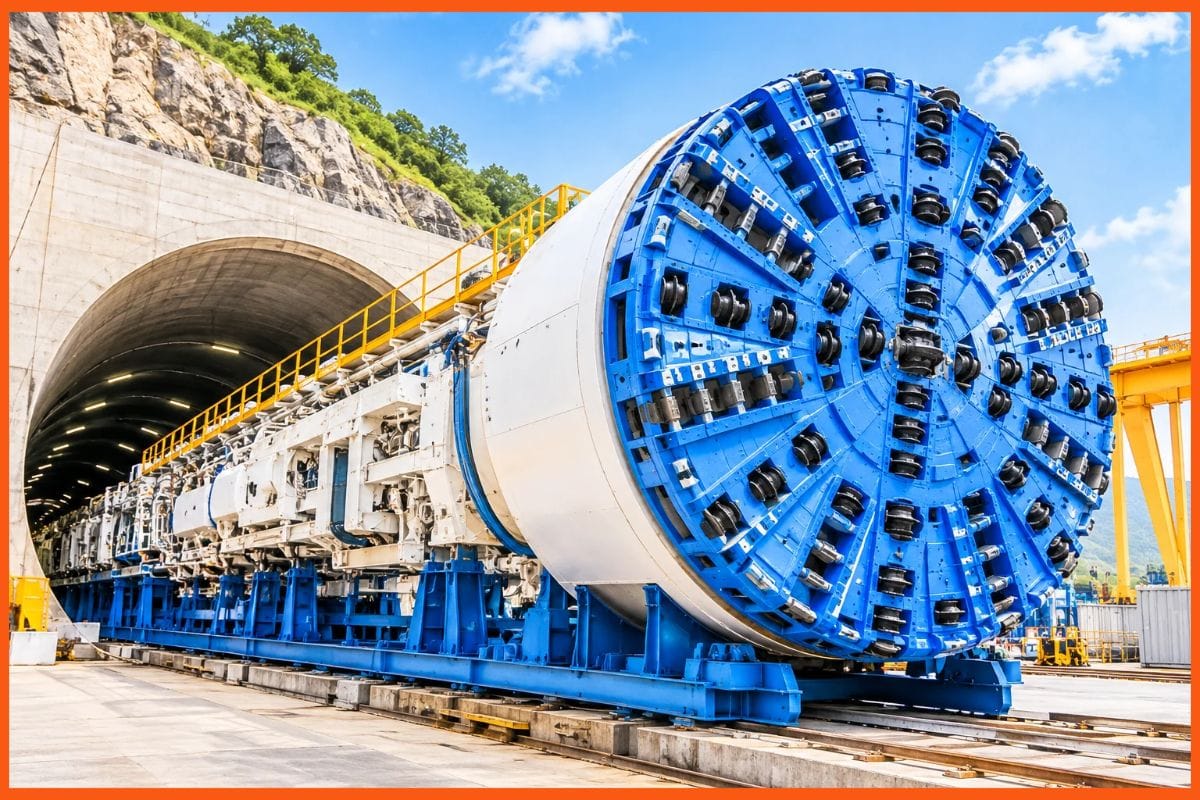
State-owned defence and engineering firm BEML Ltd. of India plans to create tunnel-boring equipment. This move is a gamble on the part of the company, which is banking on the fact that the country's rapidly expanding infrastructure would allow it to compete with global suppliers.
Managing Director and Chairman Shantanu Roy stated in an interview that the company intends to commence with smaller tunnel-boring machines (TBMs) utilised in hydropower, irrigation, water, and metro rail projects before progressing to larger machinery. This action is in line with India's larger strategy to decrease its dependency on imports, especially those from China. The South Asian country is investing more in its underground transit and infrastructure, making it one of the largest consumers of tunnelling machines.
BEML Gearing up For Mega Rollout of Tunnel-Boring Machines
Roy stated that BEML's preparations were already underway, even though China's recent crackdown on export regulations for specific types of construction equipment has highlighted India's reliance on foreign suppliers. According to Roy, the company has completed its research and is now prepared to implement the strategy. BEML, a manufacturer of rail cars, mining equipment, and military vehicles, has hired a consultant from around the world to help with their goal of being self-sufficient.
The biggest and most technically challenging machines won't be BEML's first focus; instead, they'll start with TBMs with diameters between 3.5 and 6.5 meters. Although they barely make up a fraction of the market, these TBMs see extensive usage in utility and urban transit projects. The cutter-heads of the TBMs working on the Mumbai segment of India's first bullet-train line are around 13.6 meters in diameter and were produced in China by Herrenknecht AG, a German company. According to Roy, BEML plans to stop assembling imported kits and instead focus on developing its own patented technologies.
He claimed it will be a technology developed in the country. In addition, Roy mentioned that the IP will be Indian. It will be interesting to watch if that aspiration turns into a home sector that can support itself financially. India has tried and tried to wean itself off of Chinese supply chains in key crucial areas. However, it has always met the same frustrating roadblock: increasing assembly capacity takes more time than establishing indigenous manufacturing ecosystems.
India’s Tunneling Machinery Market Expanding Exponentially
As India pours more money into its subterranean infrastructure, BEML predicts a bright future for the tunnelling machinery sector. Minister of Road Transport and Highways Nitin Gadkari has stated that the government intends to allocate a maximum of $9.6 billion for tunnelling projects within the next five years.
Nevertheless, indigenous production of construction equipment has been supported by politicians. Strategic railway and road projects across the Himalayan border between China and India are also driving demand, as these projects frequently necessitate considerable tunnelling due to the tough terrain.