ByteDance, Hollywood Trade Group Sign Pact to Strengthen AI Copyright Protections
ByteDance has struck an AI copyright agreement with the MPA in Hollywood to boost intellectual property safeguards for its Seedance video and Seedream image-generation models. The agreement comes after a cease-and-desist letter in Feb & complaints from Disney and other studios.
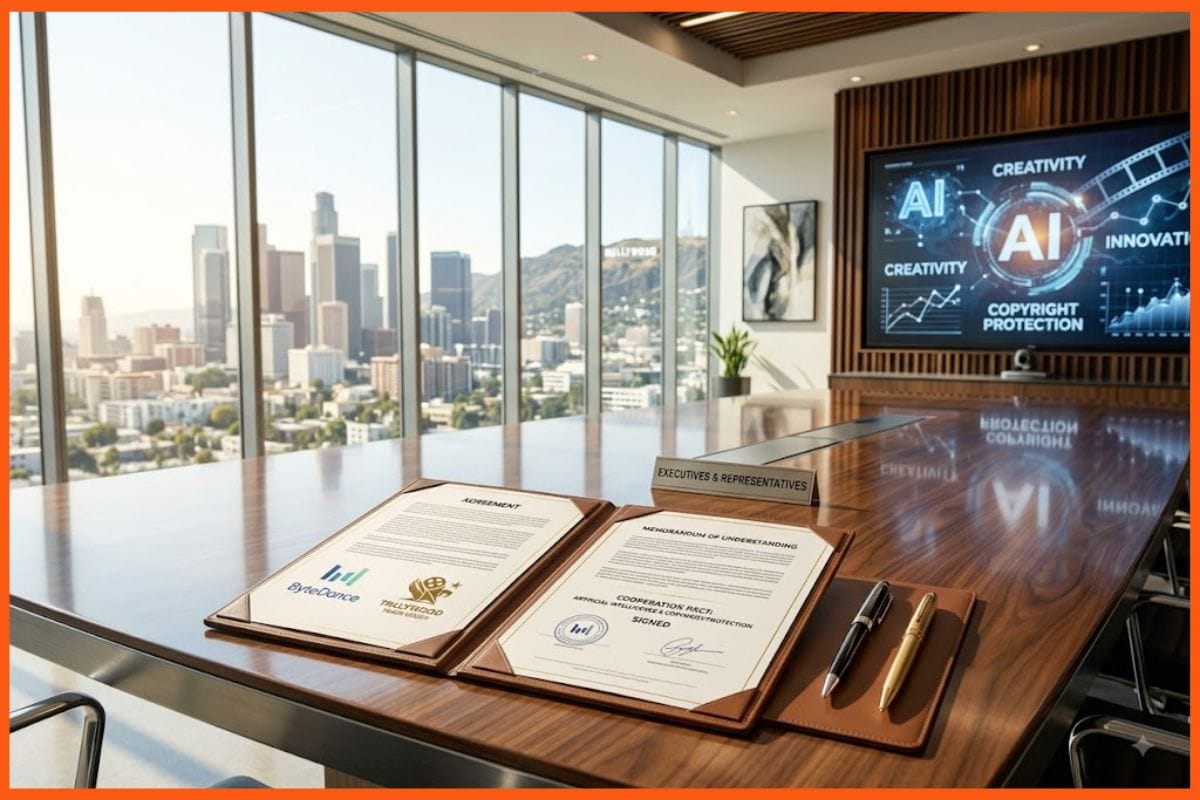
The Chinese business ByteDance's Seedance video and Seedream image-generation models will be better protected from copyright infringement thanks to an agreement that ByteDance and the Motion Picture Association inked on August 17. The development occurred months after the Hollywood trade group contested the tools' management of intellectual property.
This agreement is in response to the MPA's February cease-and-desist letter regarding these instruments. Back in February, Disney and other studios voiced their concerns about the AI capabilities and the possibility that they may illicitly create content using trademarked characters and celebrity likenesses.
ByteDance Enhances its Security Features
Stronger intellectual property protections are included in newer versions, according to ByteDance. One may find the models on sites like Dreamina, CapCut, and TikTok. Additionally, as AI develops, both parties have stated their intention to keep working on copyright protections. As part of its Seed AI range, ByteDance offers Seedance and Seedream in addition to its main language models.
Some have referred to Seedance 2.0 as a model that can convert text into video. In line with the MPA's larger position on AI, the transaction has been finalised. The organisation has expressed the view that developers of AI should negotiate licensing with rights holders while adhering to current copyright laws.
China May Tighten Global Access to its Leading AI Models
China is considering implementing new restrictions that would make it more difficult for foreign developers and businesses, particularly those in the US and India, to use its top-tier AI models. A media source states that Chinese officials have been in talks with prominent local AI companies for the last month over the possibility of restricting access to some of China's most advanced AI systems from outside the country.
The systems in question encompass forthcoming variants that have not yet been disclosed. There has been no finalisation of the idea, and it is still uncertain when the limits would be put into effect. There has been talk of Beijing implementing stricter controls over access to cutting-edge AI, similar to other vitally essential technologies.
Officials from the Chinese Ministry of Commerce allegedly met with executives from Alibaba, ByteDance, and startup Z.ai, among other prominent artificial intelligence businesses. Restrictions on access to China's most powerful AI models—including open-source and closed-source systems—by users outside of China were a central question.
There were rumours that officials also considered tightening regulations on who might invest in Chinese AI businesses. Further making it a crime to steal or leak AI technology under China's national security laws. The media report further implies that current and future AI models may be exempt from any further regulations. However, the media report fails to identify any particular AI models that may be subject to limitations. But if China chooses to restrict the export of its most advanced AI technology, it might impact some of the country's top frontier models.