Colgate Taps Bombay Shaving Company to Drive Palmolive’s Online D2C Growth
Colgate-Palmolive India has handed over Palmolive’s D2C and e-commerce business to Bombay Shaving Company in a bid to speed up the digital expansion of the personal care brand. The agreement leverages Colgate's strengths in product, supply chain and marketing, with BSC's digital-first know-how.
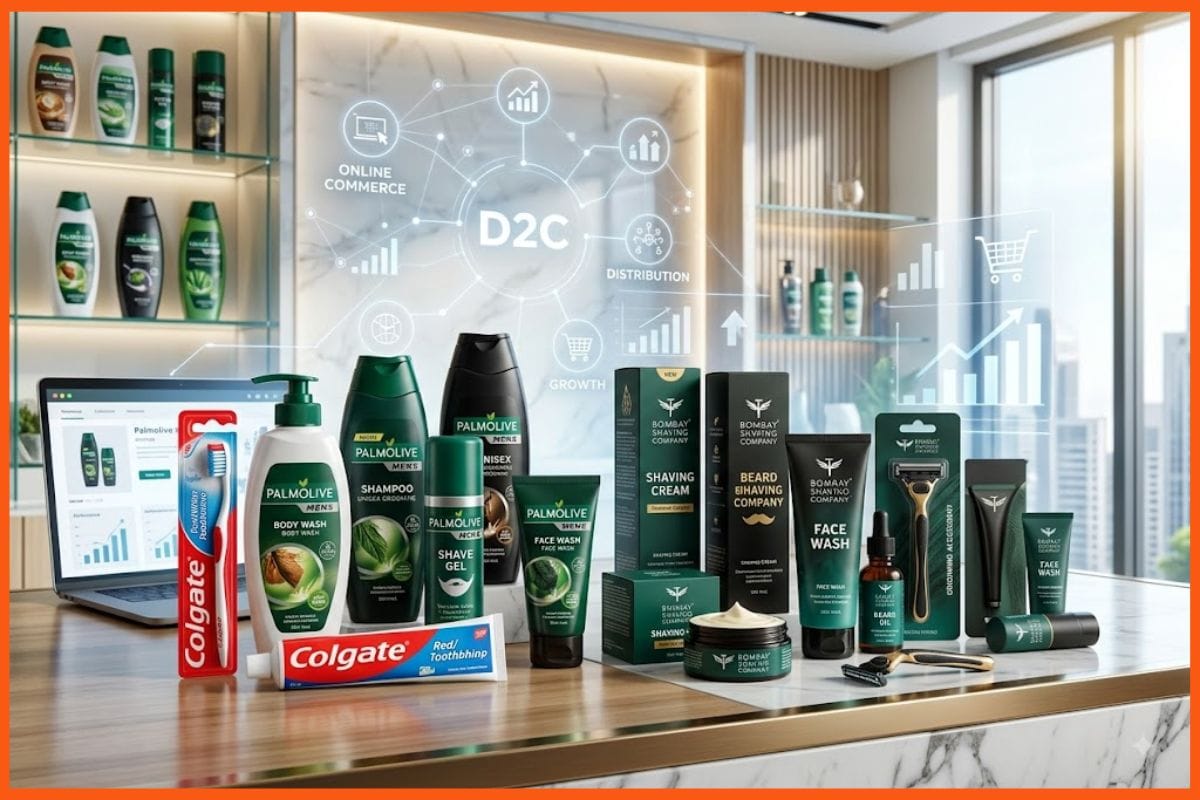
Bombay Shaving Company will be taking over Palmolive's direct-to-consumer (D2C) and e-commerce operations in India from Colgate-Palmolive. The move is part of a larger effort to turn around a failing personal care business and finally succeed in the digital-first market that the company has been unable to break through on its own. This trial brings together the direct-to-consumer knowledge of Bombay Shaving Company and the product, supply chain, and marketing prowess of Colgate.
This shift occurred as almost 60% of Colgate's advertising budget is already going toward digital channels. Managing Director and CEO of Colgate-Palmolive India Prabha Narasimhan admitted her unhappiness in this area during the company's Analyst Meet 2026. When it comes to Palmolive, the company has failed miserably, she added.
How BSC and Colgate-Palmolive’s Agreement will Work?
Management at Colgate-Palmolive, on the other hand, highlighted "green shoots", such as the company's leadership position in premier hand wash. Moreover, it was mentioned that Colgate was incorporating the digital learnings of Bombay Shaving Company into Palmolive in order to boost the brand's growth. The new deal extends beyond only utilising Bombay Shaving Company as an online consultant. It means the digital native firm will be in charge of Palmolive's D2C and e-commerce customer connections and advertising to consumers.
Nevertheless, Colgate maintains its supply chain, product quality, and innovative spirit. During the analyst Q&A, Narasimhan stated that the company now thinks they have a better grasp on how the whole D2C flywheel operates. Drawing lessons from Bombay Shaving's digital-first strategy isn't a flywheel for a company's solid knowledge. Colgate-Palmolive (India) Limited's Whole-time Director and CFO, Jacob Madukkakuzhy, made it clear that the "end-to-end" mission of Bombay Shaving Company only applies to direct-to-consumer and online sales. In the future, Colgate will still be in charge of both modern and conventional trade as well as advertising.
Colgate Focussing on D2C Business Model
The experiment is contextualised by the size of Colgate's digital operation. As media consumption habits shift, Narasimhan noted that digital now receives almost 60% of its advertising budget, with television receiving the remaining 40%. While Colgate would not reveal the exact percentage, Madukkakuzhy did say that e-commerce has contributed more than 10% to the company's bottom line. Why does Colgate seek to enhance its direct-to-consumer execution? Because of the channel's economics.
The company's Investor Day presentation highlights its impressive e-commerce growth, which is in the double digits. It also mentions that its margins are approximately 400 basis points better and that more than half of its online sales are of premium products. When compared to its overall market position, Colgate's e-commerce market share is almost 400 basis points higher. According to Narasimhan, e-commerce has several positive effects on growth, margin, premiumisation, and share, and rapid commerce only serves to amplify these trends.