
Musk vs OpenAI Turns Ugly: “Scam Altman” Jibe, $150Bn Lawsuit and Tweet War Intensify
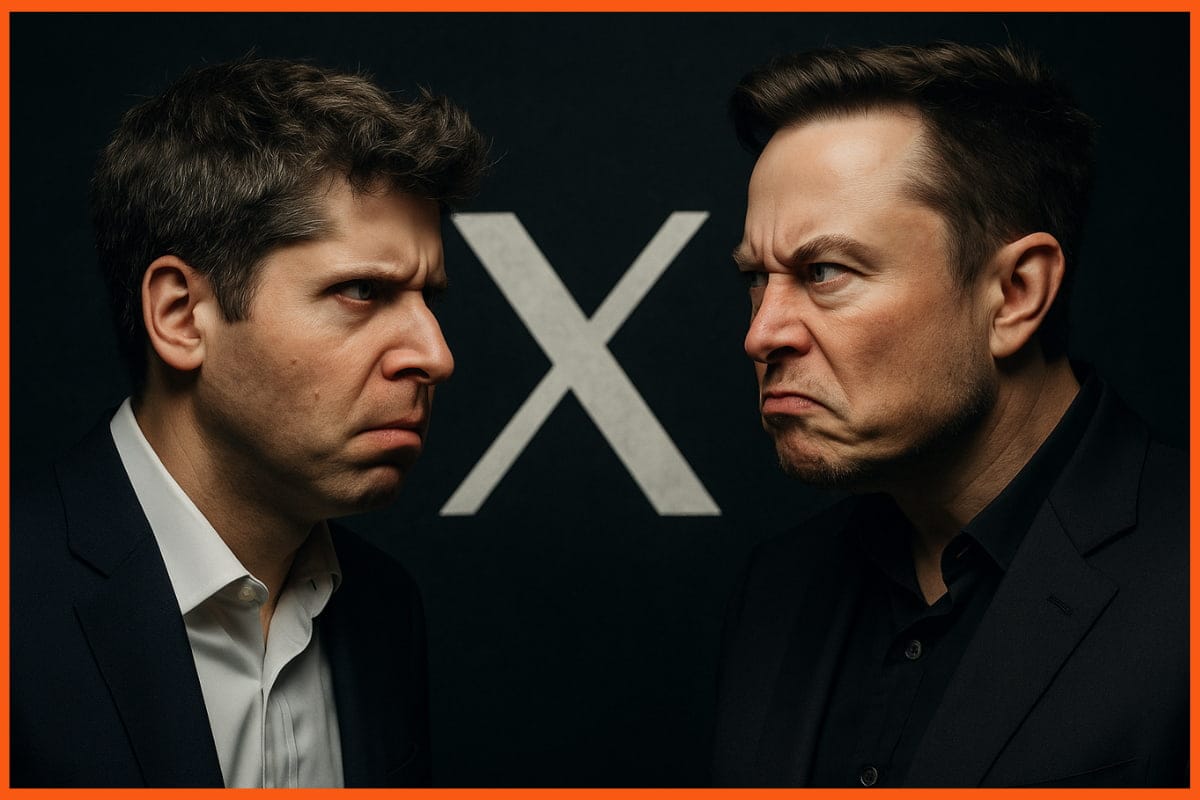
Elon Musk has called Sam Altman “Scam Altman” as his $150 billion lawsuit against OpenAI heads to trial. The clash now spans courtrooms and social media, raising key questions about AI control, corporate power, and the future of open versus commercial models.
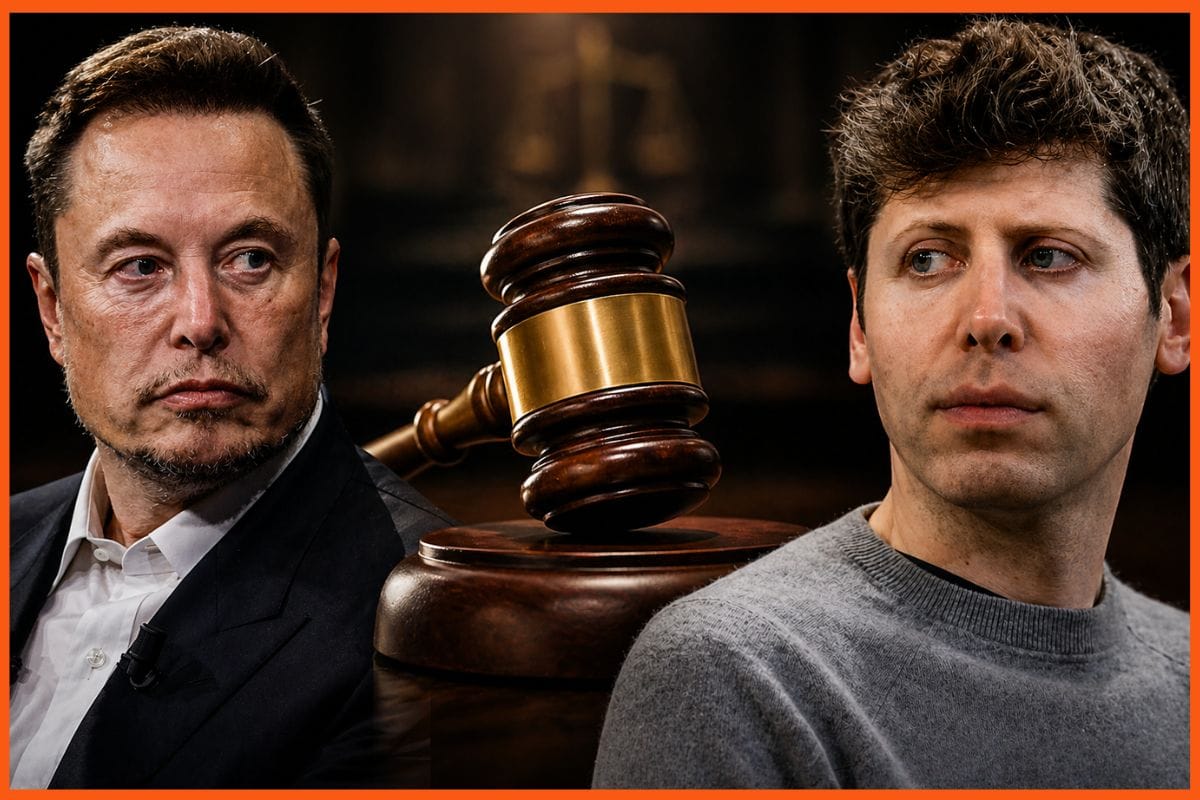
The feud between Elon Musk and Sam Altman has entered a far more aggressive phase, spilling beyond courtrooms into public attacks, with Musk now openly calling Altman “Scam Altman.”
What began as a disagreement over artificial intelligence’s future has evolved into a multi-layered conflict involving legal claims, personal accusations, and strategic rivalry. At its core, this is no longer just about OpenAI’s founding mission, it is about who controls the future of AI and under what terms.
What Triggered the Latest Escalation
The latest flashpoint came through Musk’s posts on X, where he mocked Altman and Greg Brockman while accusing OpenAI of misusing what he described as a “charity.” By labelling Altman “Scam Altman,” Musk shifted the tone of the conflict from ideological disagreement to a far more personal and reputational attack.
This public escalation matters. It signals that the battle is no longer confined to legal arguments, it is now being fought in the court of public opinion, where perception could influence everything from investor confidence to regulatory scrutiny.
Scam Altman and Greg Stockman stole a charity. Full stop.
— Elon Musk (@elonmusk) April 27, 2026
Greg got tens of billions of stock for himself and Scam got dozens of OpenAI side deals with a piece of the action for himself, Y Combinator style. After this lawsuit, Scam will also be awarded tens of billions in stock… https://t.co/R27ZeG9nNR
Inside the Courtroom: What Musk Is Arguing
The trial, which began in April 2026 in California, centres on Musk’s claim that OpenAI abandoned its original non-profit mission of building AI for the benefit of humanity. He argues that the organisation’s transition to a capped-profit model and its deep partnership with Microsoft fundamentally altered its purpose.
Musk is seeking massive financial damages, reportedly up to $150 billion, and has called for the removal of Altman and Brockman from leadership. He has also pushed for OpenAI to return to its original structure, framing the issue as a breach of trust rather than just a business decision.
OpenAI’s Defence: Evolution, Not Betrayal
OpenAI has rejected Musk’s claims, arguing that the shift to a hybrid structure was necessary to sustain the enormous costs of advanced AI development. The company maintains that Musk’s early financial contributions were donations and that he was aware of, and at times supportive of, structural changes.
More importantly, OpenAI has framed the lawsuit as being influenced by competition, particularly after Musk launched xAI. From this perspective, the case is less about principle and more about positioning in a rapidly intensifying AI race.
The “Scam Altman” Remark and Credibility Angle
The tone of the conflict has become sharper after Elon Musk referred to Sam Altman as “Scam Altman” in posts on X, along with mocking Greg Brockman.
This shows that the fight is no longer just about OpenAI’s structure or mission. It has now become more personal and public. Musk has moved from questioning the company’s direction to openly criticising its leadership.
By doing this, he is not only fighting in court but also shaping how people see OpenAI and its founders.
The Underreported Layer: Internal Changes at OpenAI
The controversy is unfolding against the backdrop of notable internal shifts at OpenAI, including leadership changes and executive exits over the past two years. While such churn is not unusual for a fast-scaling technology company, it adds context to Musk’s broader argument that the organisation has moved away from its original identity.
At the same time, these changes can also be interpreted as signs of rapid growth and restructuring in response to unprecedented global demand for AI systems.
Not Just Ideology: A Direct Business Rivalry
The presence of xAI complicates Musk’s position. He is no longer just a co-founder raising concerns, he is also a direct competitor building alternative AI systems.
This transforms the dispute into something larger: a founder fallout intertwined with a market battle. OpenAI’s rise, powered by products like ChatGPT and its partnership with Microsoft, has placed it at the centre of the AI ecosystem, directly overlapping with Musk’s ambitions.
What’s Really at Stake
The financial scale of the case, ranging from $130 billion to $150 billion, makes it one of the most consequential legal battles in tech. However, the deeper implications go far beyond money.
The outcome could influence how AI companies are structured, how much control investors and partners can exert, and whether future AI systems are developed in open or closed ecosystems.
Why This Matters for India
For India’s growing AI ecosystem, the case is more than a distant Silicon Valley dispute. It could shape how startups approach AI development, whether by building on open-source models or relying on proprietary platforms.
It may also influence regulatory thinking, as policymakers evaluate questions around transparency, control, and the concentration of power in AI technologies.
Final Take
This is no longer just a disagreement between Elon Musk and Sam Altman. It is a defining moment in the evolution of artificial intelligence, from an idealistic research movement to a capital-intensive global industry.
The courtroom will decide the legal outcome. But the larger question will remain unresolved:
Will AI be shaped as a shared global resource, or controlled by a handful of powerful players?
 Adepu Bindu