Elon Musk’s Tesla Restricts Employee AI Tool Spending to INR 19,000 a Week
The use of artificial intelligence technologies by Tesla employees is now limited to $200 per week (about INR 19,000), with management consent needed for any expenditure beyond this. This is a change from the company's previous strategy of encouraging broad use of AI.
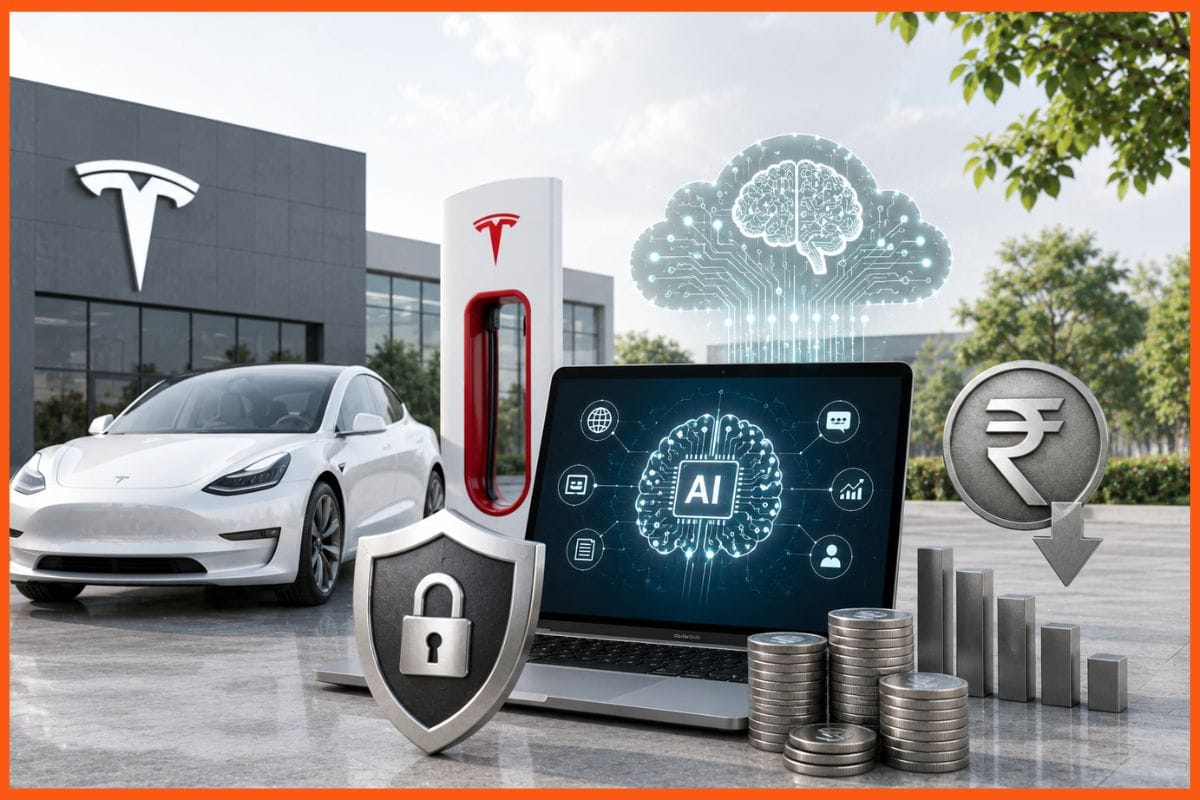
Staff members have been directed by Tesla to reduce expenditure on AI software. That is why, from July 6, a weekly cap of $200 will be enforced. This goes against the company's recent efforts to promote the widespread use of AI among the workforce. Further indicating a more extensive transformation in the manner in which businesses are addressing the increasing expenses associated with generative AI.
The new regulation states that employees need management consent to spend more than $200 (about INR 19,046) every week. Some software engineers allegedly spent hundreds of dollars weekly on AI tokens (use-based units that determine the cost of interacting with AI models) before the restriction was put in place.
Tesla’s Stance on Usage of AI
A significant reversal is indicated by the new limitations. Tesla had been using an internal platform called Bottle Rocket to consolidate staff's access to AI for the previous six months. This platform provides models from Cursor, xAI, Anthropic, and OpenAI. As an additional incentive for staff to make more use of AI, several groups have instituted dashboards that monitor token utilisation.
Heavy users are creating considerable charges for AI, suggesting that the plan was successful beyond expectations. An attempt to rein in those quickly rising costs is now reflected in the most recent directive. Elon Musk, CEO of Tesla, established the artificial intelligence startup xAI, and one striking feature of the policy is that beta versions of their goods are exempt from the $200 expenditure cap.
Because of the exemption, workers who need more AI will be more likely to use Grok and Cursor's Composer model rather than other platforms. Elon Musk has been heavily advertising AI-related products related to his other businesses. Following xAI's partnership with Cursor, he had earlier urged Tesla staff to use Composer. At the same time, reports indicate that SpaceX is getting ready to pay almost $60 billion to acquire Anysphere, the parent company of Cursor.
Many Big Firm Putting Cap on AI Usage
Reports indicate that there is internal opposition to the new policy. Despite Tesla's best attempts to promote its in-house ecosystem, numerous engineers reportedly still prefer Anthropic's Claude over Grok. The spending constraints have arrived at a crucial juncture for Tesla, whose story of long-term growth is becoming more and more focused on AI. While sales of electric vehicles have been relatively stable over the previous two years, Musk has maintained that the success of the company's autonomous Robotaxis and Optimus humanoid robot will determine its fate.
Given this context, challenges regarding the economics of deploying AI at scale across autonomous car fleets and vast numbers of robots may arise from stricter controls over very low AI operational costs. The decision by Tesla is indicative of a broader trend in the IT industry as corporations re-evaluate the rising costs of artificial intelligence. There has been a shift in the industry's focus from "tokenmaxxing" (the practice of measuring employee productivity by maximising AI utilisation) to more cost discipline.
A number of major corporations have implemented comparable regulations. After using up its entire AI budget for 2026 by April, Uber allegedly instituted a $1,500 monthly cap. As the costs of AI usage have become more apparent due to token-based pricing, companies like Meta, Amazon, and Walmart have instituted spending limitations or pushed its staff towards more affordable AI models.