
Eternal Unveils Dark.AI, its Privacy-Focused AI Assistant
Eternal, the parent company of Zomato and Blinkit, wants to internationally debut its privacy-focused AI helper Dark.AI by the end of 2026. Founder Deepinder Goyal said the platform is for customers who want to have private talks, do sensitive research and make secret requests.
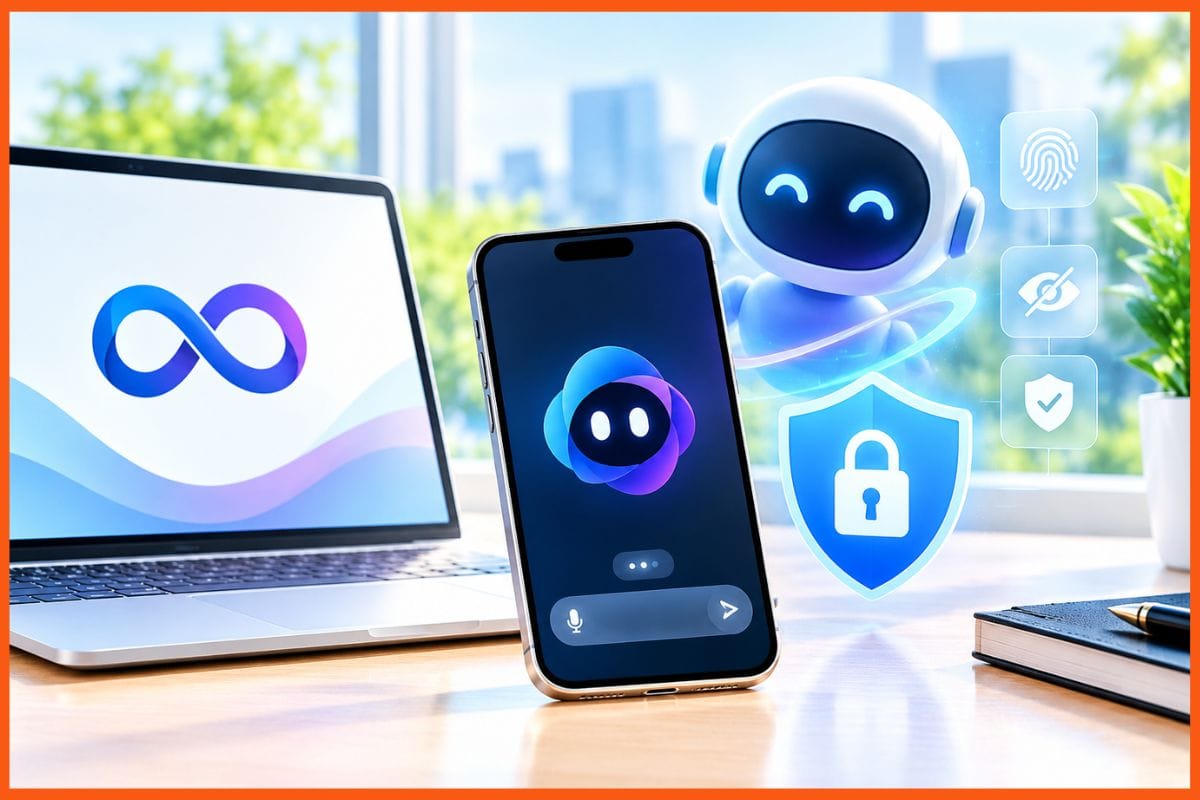
Zomato and Blinkit's parent company, Eternal, plans to roll out its Dark.AI privacy-focused AI platform worldwide by the year's end 2026. According to the company's Q2FY27 shareholders' letter, Eternal founder Deepinder Goyal stated that the platform is being built for users who wish to ask delicate questions, do secretive research, and talk about private ideas with AI in a safe environment.
According to Goyal, dark was created for power users like governments, businesses, researchers, and entrepreneurs that value anonymity for competitive reasons. The company has optimised its models to provide customers with the highest quality responses it has ever seen from an LLM, all while protecting their privacy. Dark is set to be released worldwide, ideally in 2026, according to Goyal.
How Dark will Operate?
According to the shareholders' letter, Dark will utilise Eternal's own infrastructure to run AI models that have been fine-tuned for the frontier. In addition, it has an encrypted memory management layer that users may control and end-to-end encryption. Goyal assured users that the platform is built in a way that prevents users from snooping on user interactions. Speaking about how AI will affect Eternal's own operations, Goyal stated that agents of AI don't really threaten Zomato and Blinkit too much.
In addition, he pointed out that the two companies have an advantage over platforms that mainly handle transactions due to their fulfilling infrastructure. Goyal addressed worries that AI agents could replace humans as the go-to interface for online shopping by saying that different industries faced different risks of disintermediation. Zomato and Blinkit are in a stronger position to fulfil orders than District, Eternal's going-out platform that handles restaurant search, reservations, and event tickets, which is facing medium-to-high risk.
Food Delivery Vs Quick Commerce a Long Debate
Goyal stated that customers aren't primarily seeking to complete a purchase when they order meals; rather, they are driven by discovery as they peruse menus and photographs. Zomato customers often peruse 12 menus and over 100 food images before placing an order, with over 65% of app opens being exploratory, according to the company's internal consumer studies. According to Goyal, the current story is oversimplified: platforms that don't adapt will be disconnected from one another, and agents will become the default interface for commerce.
The fact that users are spending their time placing their orders is actually a feature, not a bug, he expanded. Restaurants, delivery services, inventory management systems, and payment processors must all work together in real time, according to Goyal, for fast commerce and food delivery to be possible. Businesses that mainly collect current supply are thus easier to break down than these. According to Goyal, removing intermediaries becomes easier the further away a transaction is from real-time, multi-party coordination.