Google Hit with New Copyright Lawsuit Over Gemini AI Model Training
Big publishers like Hachette, Cengage, Elsevier and author Scott Turow have filed a fresh copyright case against Google, accusing the company of using millions of copyrighted books without authorisation to train its Gemini AI models.
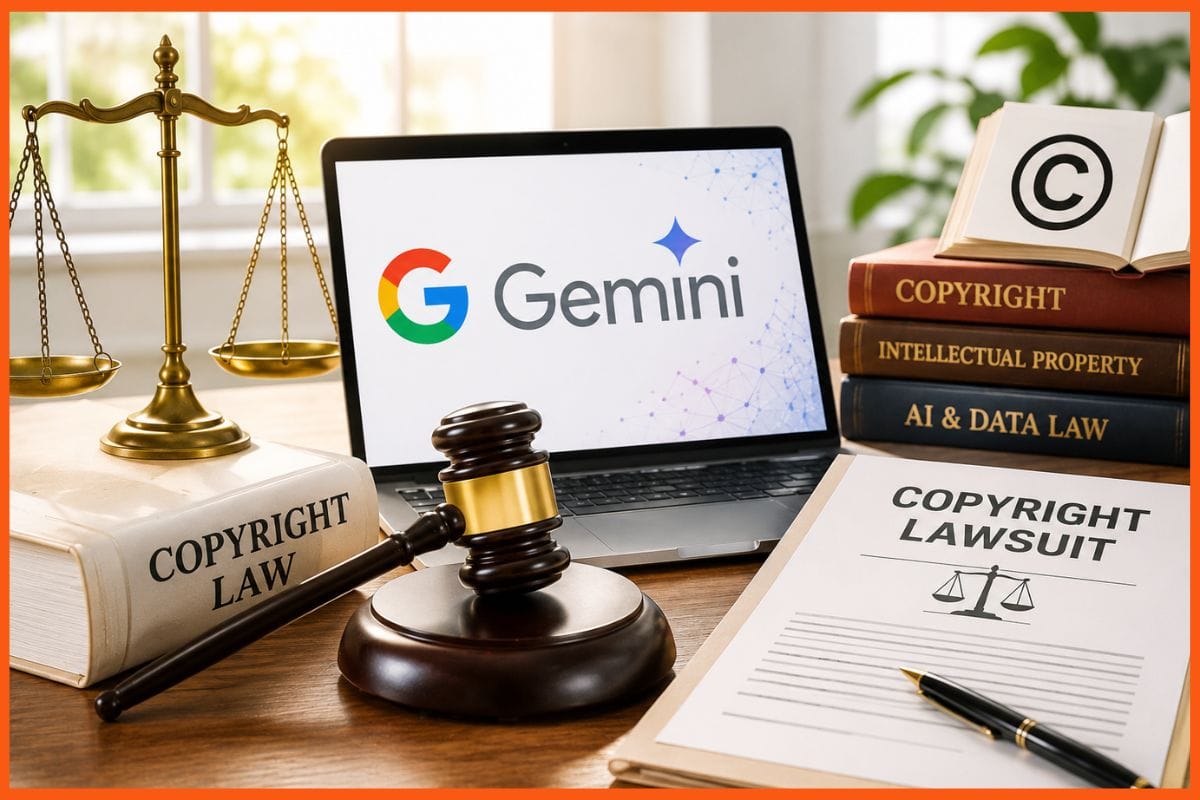
A courtroom could be the site of the next AI revolution. After being charged by a consortium of publishers and best-selling author Scott Turow, Google is now embroiled in a new copyright dispute. The Gemini AI models developed by Google have come under fire for allegedly skimming millions of copyrighted publications.
Hachette Book Group, Cengage Learning, Elsevier, Scott Turow, and his publishing company S.C.R.I.B.E. have all joined forces to file a proposed class action lawsuit in a New York federal court. These businesses claimed that in order to build its AI systems, Google had downloaded copyrighted literature illegally. Claiming class action status, the complainants want an order to stop the alleged behaviour and are demanding damages that have not been determined.
Specifics of Lawsuit on Google
In violation of the copyright, Google allegedly duplicated millions of works that were initially made available to Google Books and other services for specific, authorised uses. The corporate allegedly used the content for training its Gemini big language models later on without the writers' or publishers' consent, according to the lawsuit. Additionally, the lawsuit claims that Gemini now creates AI-generated content that rivals writers' original creations.
As a result, they are worried about how generative AI will affect the publishing sector financially. Also, according to the publishers, Gemini can crank out novels faster and on a larger scale than any human writer could. The authors' unique voices and expressive preferences are imitated in these publications. When it comes to copyrighted information used for model training, AI developers are facing a growing number of legal obstacles, and this current filing is just the latest one.
Turow and the same group of publishers sued Meta in May, also alleging that the firm engaged in deceptive techniques when teaching its AI. This case is the latest in a string of landmark decisions that have started to define the bounds within which artificial intelligence research and development can operate in the US.
Lawsuit Getting Popular Among AI Firms
Anthropic settled claims that it had plagiarised books in order to train its Claude AI model with many authors for $1.5 billion in September, following approval by a US court. Separately, the court determined that other uses incorporating purportedly pirated content did not enjoy the same protection, even if AI training could be considered fair use due to its transformational nature. Last year, Meta achieved partial success in court when a federal judge in San Francisco determined that the company's use of copyrighted content was considered fair use.
The writers involved in the action were Ta-Nehisi Coates, comedian Sarah Silverman, and others. Since courts are still trying to figure out if using copyrighted content to train generative AI models is within the bounds of current copyright law, tensions have been rising between the publishing sector and AI developers. This recent lawsuit highlights that conflict. The result of these court disputes may determine how AI and IP are regulated in the future, as businesses strive to develop ever more advanced AI systems.