Google Unveils Project Suncatcher to Explore AI Computing in Space
Google is constructing a prototype satellite for Project Suncatcher, its first in-space test of AI processing infrastructure in orbit. The satellite will transport Google’s Tensor Processing Units, or TPUs, into low Earth orbit to see how they cope with radiation, heat and the stresses of launch.
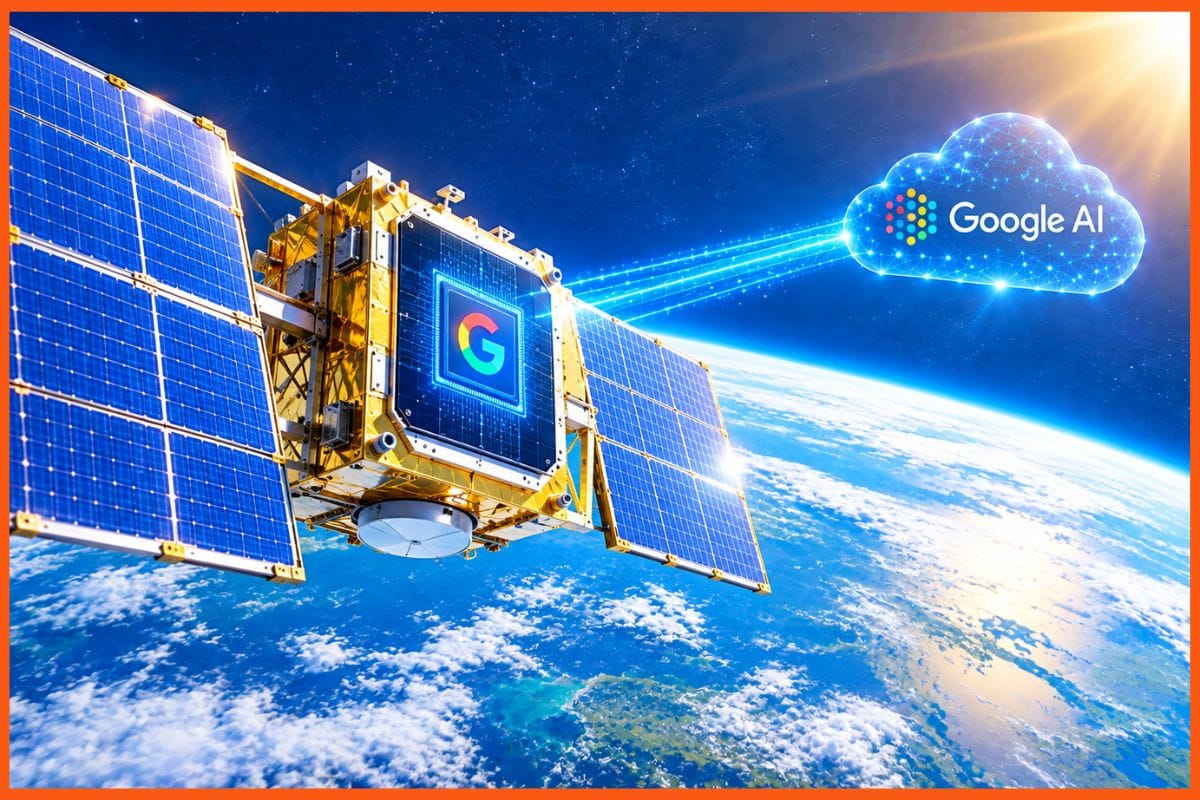
On September 24th, Google, a subsidiary of Alphabet, said that next week it will launch a prototype satellite as part of its first in-orbit test of Project Suncatcher. As a scientific endeavour, Project Suncatcher investigates the possibility of locating large-scale artificial intelligence computing infrastructure in space.
Mission hardware will be tested against launch pressures, radiation, and high temperatures by deploying a satellite carrying Google Tensor Processing Units into low Earth orbit. Planet Labs and SpaceX have scheduled this project for the forthcoming launch of the Transporter-18 rideshare vehicle. According to Google, they ran AI workloads on their TPUs at a UC Davis lab, but they needed to do orbital testing to see how the hardware did in the actual world.
Project Suncatcher Operations and Viability
Combining heat pipes with radiators, the company plans to assess its architecture for cooling power-intensive electronics in space, an environment where traditional airflow cooling is not an option. However, due to high launch costs, engineering limitations, and bottlenecks in satellite production, experts have stated that the concept will not be commercially viable for at least another few years. Instead of demonstrating an operating orbiting data center, Google stated that the primary goal of the first Suncatcher mission is to collect data while in orbit and pinpoint possible sites of failure.
Two satellites will be launched in 2027 to evaluate the high-bandwidth laser links that will be required to join future computer clusters. There are a number of businesses investigating the feasibility of putting data centers in low Earth orbit, including Google, SpaceX, and Starcloud. Launched into low Earth orbit, Google's satellite will be propelled by the company's own Tensor Processing Units (TPUs). Although the TPU was successful in Google's internal tests, the company claims that cooling data centers in orbit would be the most difficult task. Google noted in the corporate blog post that TPUs produce a lot of heat from a tiny space, which might lead to chips overheating.
OpenAI, Google and Anthropic in Talks
A representative from Open AI revealed to a news outlet on September 15 that the company has been in talks with other AI firms, such as Anthropic and Google, regarding potential collaboration to resolve safety issues.
According to the spokesperson, talks have been going on ever since Google DeepMind chair Demis Hassabis proposed a U.S.-led "Standards Body" in July. In an essay he published on X, Hassabis proposed a public-private partnership or self-regulatory body similar to the Financial Industry Regulatory Authority, which would be overseen by the federal government.
Despite their intense rivalry, OpenAI, Anthropic, and Google have all been under intense pressure to resolve growing concerns about the security and safety of artificial intelligence in the past several weeks. Hassabis and OpenAI's Sam Altman applauded Anthropic CEO Dario Amodei's call on 12 September for AI businesses to cut down the rate at which they improve their most advanced models.