
Government Makes Caller Name Display Mandatory from November 1 to Curb Fraud
Starting November 1, 2026, India’s Department of Telecommunications (DoT) will compel CNAP to display callers’ names in addition to phone numbers. The technology, which will be initially available on 4G and newer networks, would identify domestic callers with the use of telecom subscriber records.
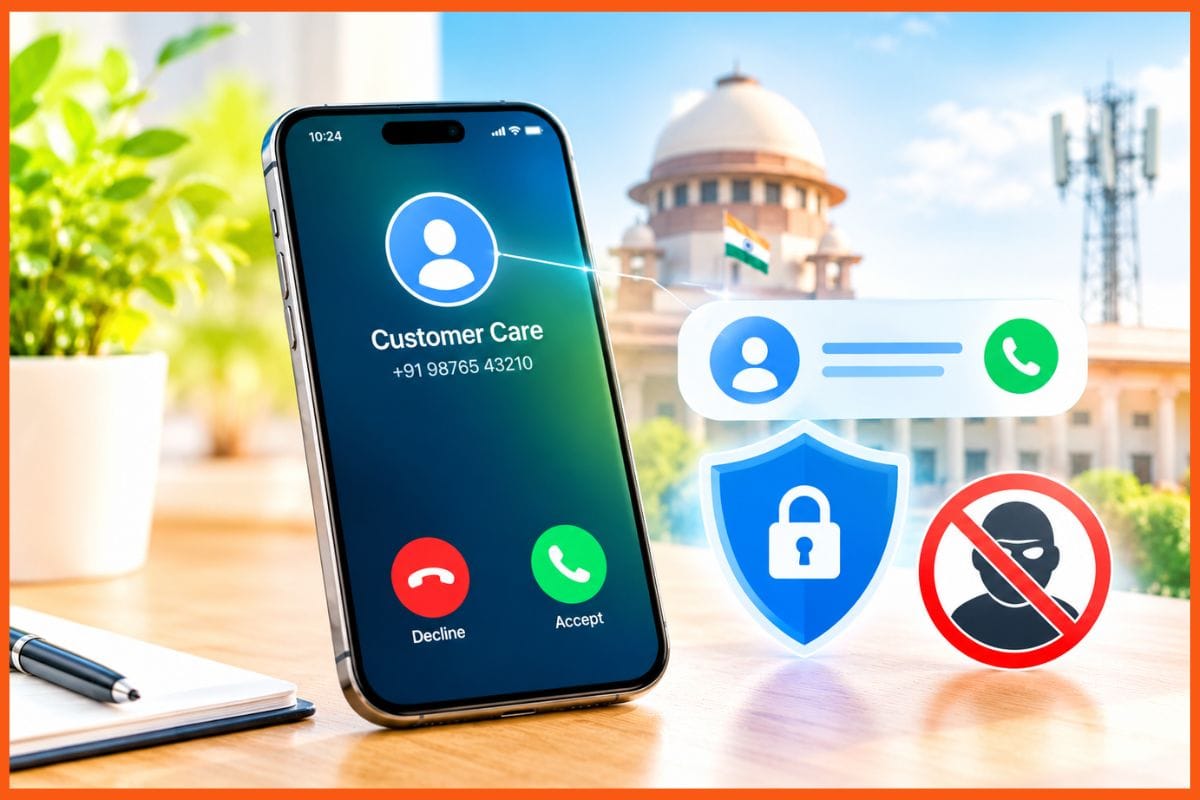
In order to comply with a directive from the DoT, telecom carriers are required to implement Calling Name Presentation (CNAP) beginning November 1, 2026. Users don't need to register individually for the service to show the caller's name on the receiver's phone. At launch, it will only function with 4G and next-gen networks. Nevertheless, its implementation on 2G, 3G, and landline networks will be examined independently.
The number and name of the caller will be displayed on the receiver's screen whenever a call is received. The recipient's name will show up on the screen if they have the number saved in their contacts. When a domestic number is not stored, the name that appears in the subscriber records of the caller's telecom operator will be shown. There will be a change in procedure for international calls. 'International Call' will be shown instead of the caller's name if the recipient's contacts do not have the number saved. This rule is applicable to international calls made from or to India or any other country.
Entire Ecosystem Behind Tele Identification System
In order to process the call, the system will consult the operator's database. A database must be set up, run, and maintained by each operator. When users enter their given telecommunication identifiers into this database, it will be associated with their calling name identification. Terminating telecom service providers will access this database and display the recipient's name when a call reaches their network.
All telecom service providers with authorisation or licenses to offer access services are required to follow the directions issued by the DoT. Starting on November 1, 2026, the department has ordered them to roll out the service to all of their service areas. User opt-in for the calling line identification restriction (CLIR) facility is exempt from the rules under current standards. There will be no display of these users' calling name identities.
New Registration Process
Both the subscriber data record and the customer application form must have the desired name recorded for new connections. Original paperwork proving registration under the intended name must be submitted by applicants. A customer's application will be accompanied by authentic copies of these documents by the telecom operator. Operators need to set up a system where companies can request to have their preferred names recorded for existing connections.
Assuming the application has passed the necessary steps, the subscriber's data record can have the name changed. In addition to retaining an accurate copy of the paperwork, telecom operators are required to do due diligence. Following a comparison with the originals, it is possible to demonstrate registration under the chosen name. To prevent any degradation in telecom service quality due to the launch of the service, the DoT has mandated certain protections for all communications.
As part of a security-by-design strategy, operators should check that the query-response method does not save the identity of the calling party after the conversation ends. In addition, they need to make sure that their connection architecture, databases, and networks can quickly and efficiently respond to requests for calling name identities and get the requested data.