

Govt Tightens Cybersecurity Rules, Orders SIM Binding for WhatsApp and Telegram from Jan 1
India’s government intends to bring in SIM-binding laws for WhatsApp, Telegram and other phone-number-based messaging apps from Jan 1, 2027, to reduce cyber fraud and misuse of mobile numbers. The proposed framework requires that the user keeps the registered SIM or eSIM active to continue access.
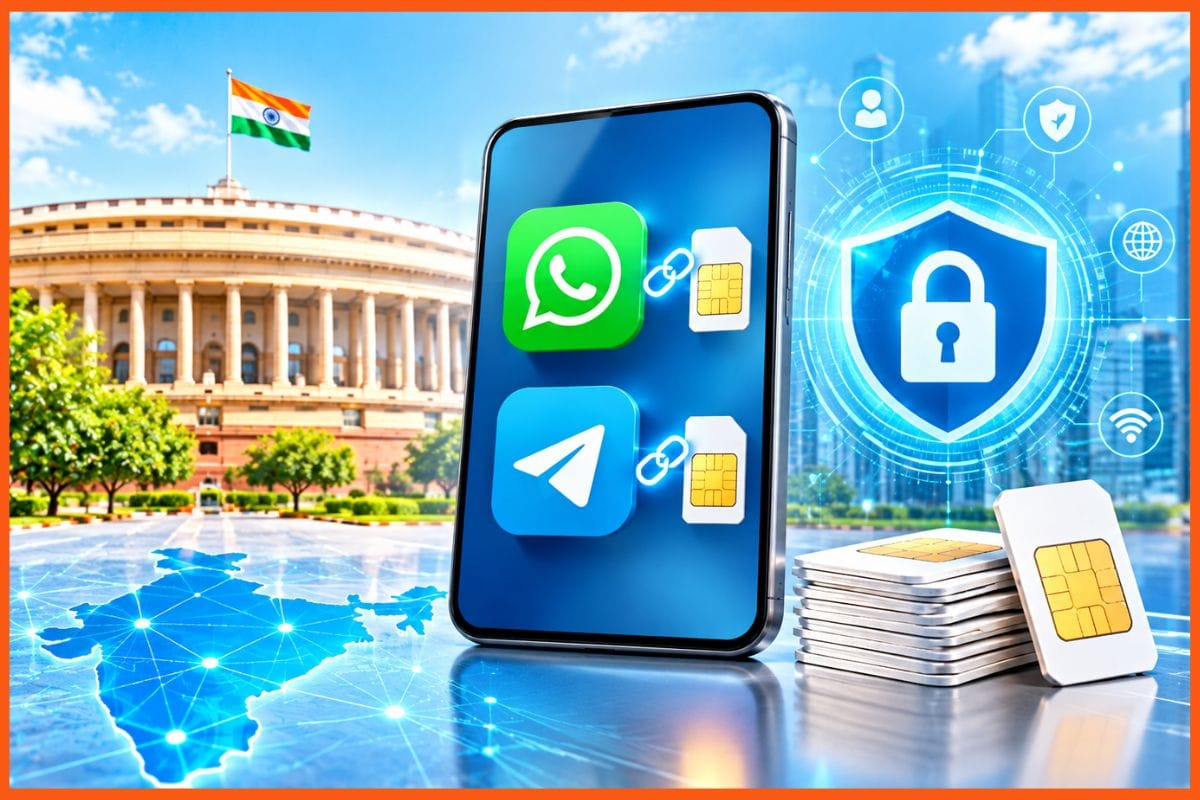
As of January 1, 2027, users of messaging applications like WhatsApp and Telegram will be required by the government's proposed SIM-binding regulations to maintain registered SIM cards active in their apps. In order for messaging platforms to comply with the legislation, their services must only function when a valid SIM card associated with the account is in the device.
Messaging platforms are required to incorporate SIM-binding standards by the Department of Telecommunications (DoT) by December 31, 2026. The goal of this initiative is to reduce instances of cyber fraud and the abuse of mobile phone numbers in India.
Specifics of Government’s New Framework
Users may find that they are unable to access their messaging accounts starting next year if they delete, deactivate, or replace the SIM card associated with the account. Message applications in India would be required by the new rules to confirm that the mobile number used for registration is associated with a functional SIM card or eSIM card. In practice, if a person removes the SIM card that was used to create an account, they might no longer have access to it forever.
Until the same number is restored through a valid SIM card or eSIM profile, the app may halt functioning if the registered SIM is removed, replaced, or becomes inactive. Cybercrime, phishing, and so-called digital arrest scams are all targets of the government's decision. The Department of Telecom (DoT) reports that criminals have used Indian mobile numbers to open messaging accounts after buying SIM cards and subsequently using such accounts from outside of India.
Officials hope that by making it more difficult to use Indian phone numbers for international fraud, a stronger connection between messaging accounts and active SIM cards would be put in place. One of the main reasons for the government's decision to strengthen rules is the substantial financial harm that Indian consumers have endured as a result of cyber crime.
Still a Blurry Picture of Framework
The regulations are likely to apply to messaging systems like WhatsApp and Telegram that employ phone numbers for user registration and identification. The SIM-binding regulation may not apply to Snapchat, according to reports. Reports indicate that the platform had not replied to government communications when the matter was assessed; therefore, the status of the signal is still uncertain. Up until this point, no evidence has been found that indicates WhatsApp would no longer be compatible with certain versions of Android or iPhone starting from January 1, 2027.
The suggested limitations are not related to operating systems or device brands, but rather to SIM verification and account authentication. Users who use WhatsApp on several devices may be most affected by the changes if they keep the registered SIM card in a separate phone. For people who use Wi-Fi mostly and seldom utilise cell services, or who remove the SIM after account setup is complete, it is an alarming call. It is important for users with dual-SIM devices to have their connected phone number active and in compliance with platform standards for messaging accounts.