
India Considers Stricter Liability Rules for Social Media Platforms
The Indian government is exploring revisions to Section 79 of the IT Act, 2000, which might weaken the legal immunity that social media companies now have for content created by users and amplified by their recommendation algorithms.
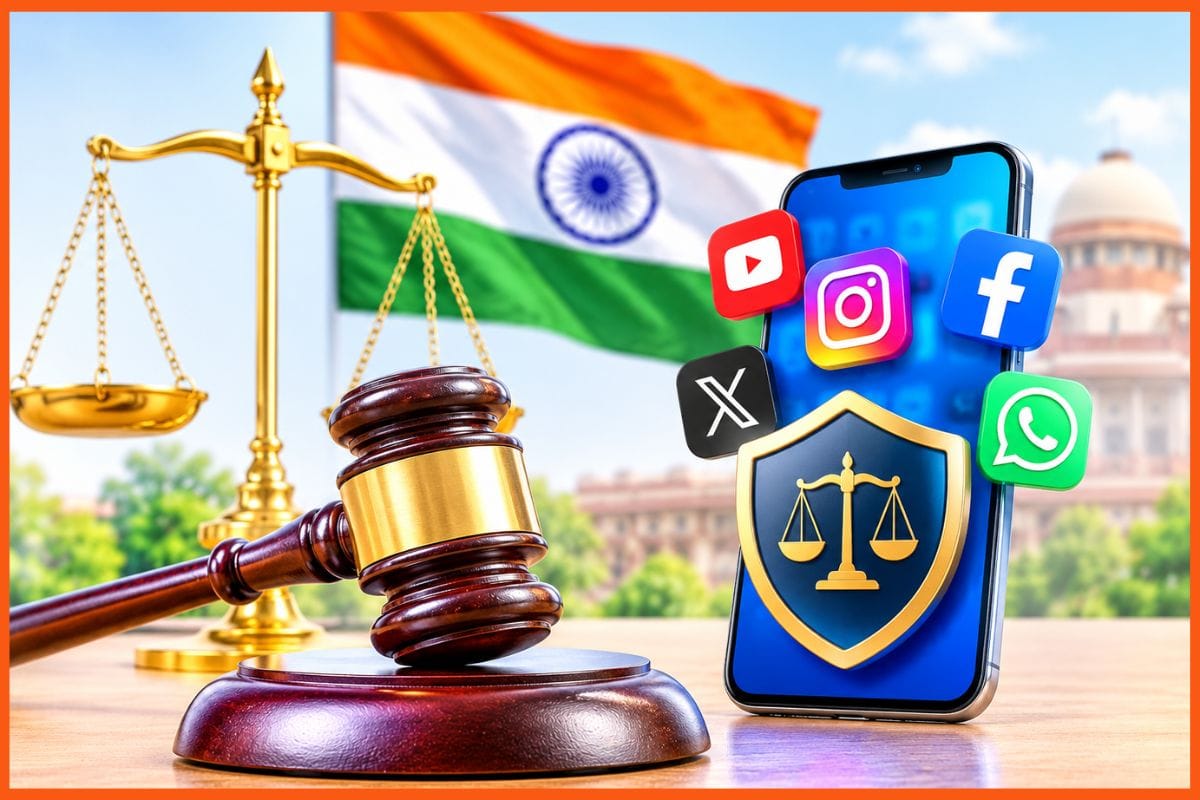
When algorithms decide what users view, recommend, or are suppressed, the Indian government is considering whether social media firms should keep enjoying broad legal protection for user-generated content. Such discussions may result in revisions to Section 79 of the IT Act of 2000. This tweak could make platforms more liable for content that gets circulated through their recommendation algorithms.
The question is whether a platform that manipulates a post's reach may be considered similar to a neutral third party that merely relays data between users. For the most part, social media platforms do not produce the content that users see on their platforms. But their algorithms select which posts and videos show up in feeds and whose accounts get more views.
How Tweak in Sect. 79 Could be a Game-Changer?
The information, data, or communication of third parties hosted or transferred over an intermediary's platform is legally shielded from liability under Section 79. To qualify for this protection, the intermediary must not do any of the following: start the transmission, choose the receiver, or alter the data in transit. The intermediaries must also follow the regulations set down by the government and do their due diligence. The platform may lose its protective status if it encourages, facilitates, or abets an illegal activity related to the content.
Failure to remove illegal material following receipt of a government notice or court order can also result in the loss of the exemption. How these factors relate to social media sites that rely on algorithmic algorithms to decide what users see is at the heart of the suggested rethink. Currently, platforms can claim that users are the true creators of material and that their only responsibility is to serve as an intermediary for its distribution.
The government is currently investigating whether platforms should be subject to different legal protections as a result of such intervention. An official told a news outlet that the suggested strategy would only exempt platforms that allow peer-to-peer chatting and do not interfere with the content transferred from one user to another.
Algorithms May Cause Deeper Trouble to Social Media Firms
Algorithms are used by the majority of major social media platforms to customise feeds and suggest content. A user's interactions, viewing habits, and the material type they engage with are all considered by these systems. Displaying content that users are more inclined to engage with is the main goal. This grants platforms the ability to manage the transfer of content.
If the recommendation algorithm discovers a post from an account with a small following, that account's readership can grow substantially. If the algorithm doesn't think the post is worth sharing, it might not get much attention at all. When material is dangerous or illegal, the difference becomes important. The question of whether a platform should be held liable for the actions of its algorithms arises when such algorithms encourage abusive posts, spread deepfakes to huge audiences, or suggest misleading videos.