India Plans Ethanol-Based Cooking Fuel Rollout Under New Policy
The Government of India is in the process of formulating a strategy for introduction of ethanol based cooking fuel as a cleaner alternative for households, restaurants and commercial kitchens. The drive, led by the Ministry, intends to extend ethanol use beyond E20 petrol
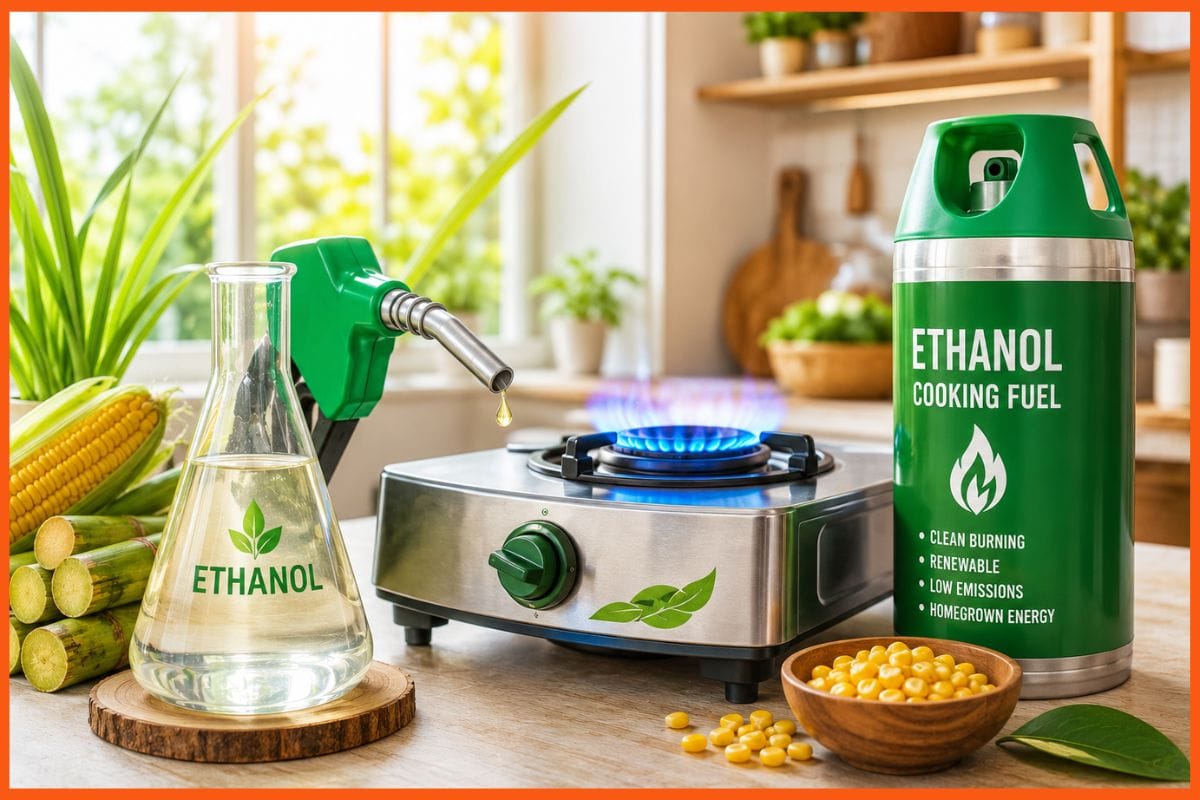
The government is now looking at the Indian kitchen as a potential new market for ethanol, following its experiment with petrol blends. In order to promote ethanol as a mainstream cooking fuel alongside LPG, the Ministry of Petroleum and Natural Gas is now working on a policy framework.
This change is being made as India seeks to find new uses for its excess ethanol production outside of the transportation industry. The plan does not call for ethanol to immediately replace LPG. On the contrary, it has the potential to become a household, restaurant, and commercial kitchen cleaner alternative fuel.
Govt Aims to Make Energy Sector More Indigenous
In an effort to lessen reliance on foreign crude oil and provide financial assistance to farmers, the government has recently promoted the use of ethanol as an additive to petrol. The Indian government claims that the country's domestic ethanol production ecosystem is strong now that E20, a petrol mixture with 20% ethanol, is available nationally. On the other hand, production capacity has been steadily increasing, and experts predict that the nation may soon be able to produce more ethanol than the transportation sector can consume on its own.
As a result, lawmakers are reportedly looking into alternative demand channels, such as cooking fuel. Adding ethanol to already-existing LPG cylinders is not the point of the plan. In its place, it envisions fuel tanks and stoves engineered to work with ethanol. Minister of Road Transport Nitin Gadkari unveiled a homegrown ethanol stove in May. Therefore, the assertion is that it can generate a pure blue flame that is comparable to that of LPG while utilising ethanol as a fuel. It has been reported that in order to prepare for the commercial introduction of such stoves, the government is currently reviewing regulations, safety protocols, storage needs, and distribution networks.
Ethanol a Complementary Fuel
Rather than seeing ethanol as a substitute for LPG, sources say the government is looking at it as a supplementary fuel. Ujjwala and other long-standing infrastructure projects have allowed LPG to establish a vast distribution network. Those in the know predict that institutional kitchens, businesses, street sellers, and homes open to new technologies will be the first to employ ethanol cooking.
A more extensive rollout is likely to occur over time. Due to ethanol's unique combustion characteristics, burners and fuel storage systems developed specifically for it are required. Manufacturers have begun demonstrating these stoves, but regulatory clearances and safety regulations will determine their large-scale commercial availability. If supplied at competitive pricing, ethanol, according to certain industry stakeholders, might lower cooking costs. The government's pricing strategy, the cost of producing and distributing ethanol, taxes, and stove costs will all have an impact on the ultimate economics.