

India, US Join Forces to Protect AI Supply Chains from China Amid Nvidia Dispute
India has joined a US-led effort to protect global AI supply chains and decrease dependence on China amid concerns over exports of advanced chips from Nvidia. India, along with eight other countries, has signed the San Francisco Declaration on the Secure Foundations of Enduring Prosperity.
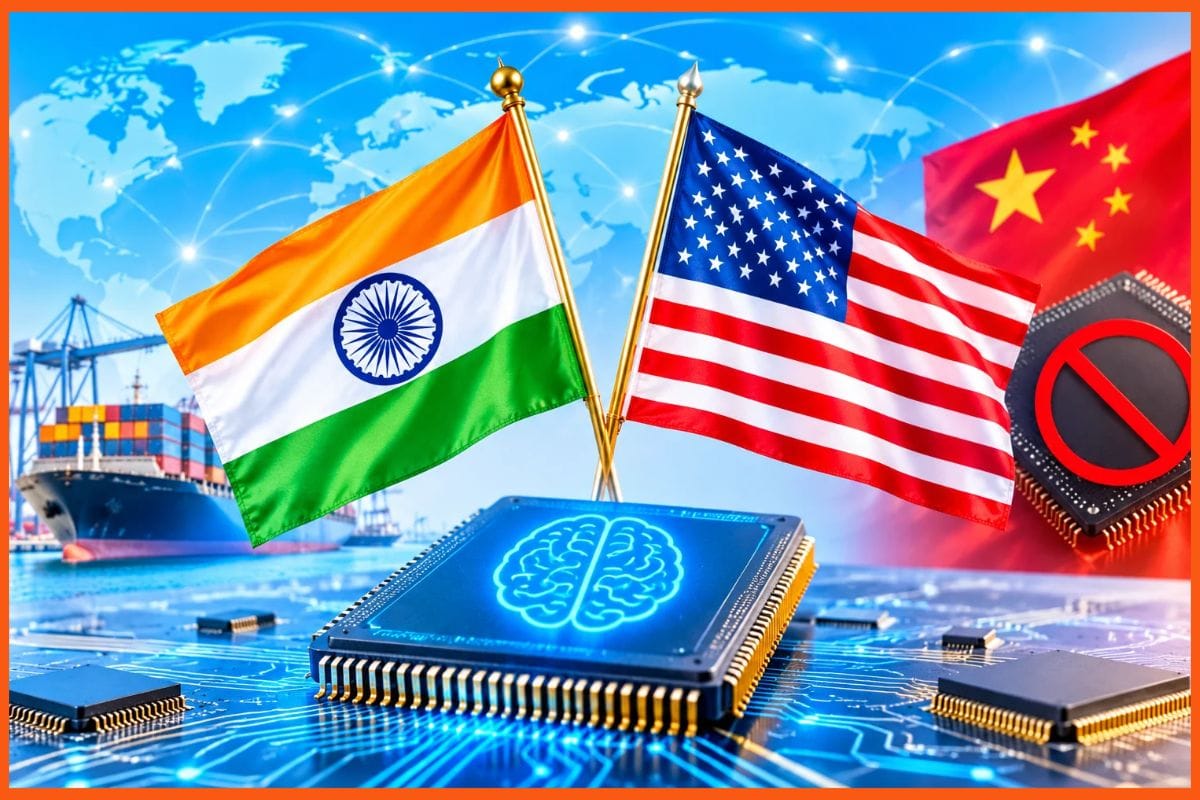
As part of a US-led effort to safeguard vital AI infrastructure and supply chains against Chinese interference, India has joined forces with the US. The United States, Japan, Australia, Israel, the United Kingdom, South Korea, India, Qatar, and the United Arab Emirates have all signed the San Francisco Declaration on the Secure Foundations of Enduring Prosperity.
Next week, the European Commission, the Netherlands, Sweden, and Germany are anticipated to become members of the pact. The deal is a response to rising US concerns about China's access to cutting-edge AI technology, especially from Nvidia.
Trump Cracking on Chinese Involvement in AI Sector
Reportedly, US President Donald Trump has directed a crackdown on businesses that are believed to have illegally exported Nvidia's high-tech processors to China. Given that this agreement came just days after Jensen Huang confessed to an extramarital affair with an alleged Chinese agent (known as Alice Huang), the timing of the report takes on greater significance. For this reason, Huang resigned as CEO of Nvidia.
This announcement heralds a further chapter in Pax Silica, an American-led effort that began in December 2025 to strengthen AI supply chains and lessen their reliance on chokepoints controlled by China. All parts of the artificial intelligence (AI) ecosystem, from data centers and energy infrastructure to semiconductors and vital minerals, are part of the effort. The fact that AI supply chains span across nations is a cause for concern. It is not uncommon for a chip to go through three countries' worth of design, manufacturing, and shipping processes. This makes it hard for any one authority to ensure the safety of the technology.
Why India is so Keen in Joining Forces?
In terms of the global technological supply chain, the deal may help India's standing. Particularly considering the current efforts to enhance domestic technological skills, build out an AI infrastructure, and increase semiconductor manufacture in the country. India's involvement coincides with a strengthening of cooperation between New Delhi and Washington about vital technology. There was an official joining of Pax Silica by India at the India AI Impact Summit in February 2026. Opportunities for Indian enterprises to join trusted supply chains, receive investments, and work with international IT companies may arise as a result of the cooperation.
Just because a country is a part of the programme doesn't mean it will start making chips at home or stop relying on technology from other countries. In order to achieve its AI goals, India must first improve its industrial capacity, gain access to essential minerals, and construct the necessary infrastructure.
While speaking to a media house, Jacob Helberg, Economic Affairs Undersecretary of the United States, stated that the proposal would set up a shared approach to protecting essential technologies. The fact that the Pax Silica partners have committed to viewing the security of those technologies and their supporting infrastructure as a collective duty is what makes the San Francisco Declaration historic, according to Helberg.