Kareena Kapoor Khan Invests in Fizzy Goblet, Deepening 10-Year Partnership as Brand Targets ₹100 Crore Revenue
Kareena Kapoor Khan has made a strategic investment in footwear brand Fizzy Goblet, expanding her decade-long association from ambassador to investor. The move comes as the homegrown brand targets ₹100 crore in revenue and accelerates its India and global expansion.
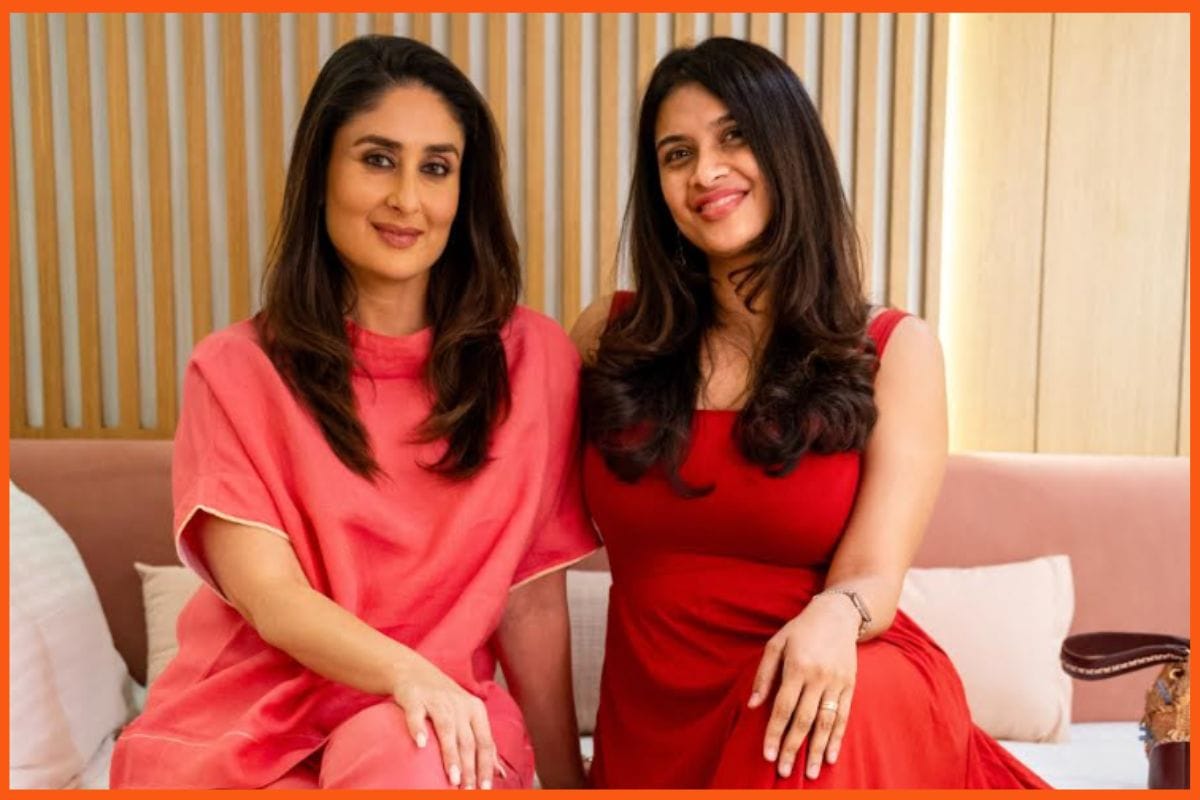
Fizzy Goblet, the Noida-based handcrafted footwear brand founded by Laksheeta Govil with ₹1 lakh borrowed from her parents, has secured a strategic investment from actor Kareena Kapoor Khan — formalising a relationship that began organically in 2014, twelve years before she signed a cheque. The brand is currently running at a revenue run-rate of roughly ₹60 crore and is targeting ₹100 crore+ in the next fiscal year, up from ₹36.9 crore in FY2024-25. All of that revenue flows exclusively through Fizzy Goblet's own website and company-owned stores — no marketplaces, no franchisees, no exceptions.
The investment amount has not been disclosed publicly. A first initiative under the elevated partnership is expected to be announced in July 2026.
From Borrowed ₹1 Lakh to a ₹182 Crore Valuation
Govil's origin story is, frankly, one of the cleaner founder narratives in Indian D2C: she launched the brand after a Pearl Academy design degree and stints at Puma and Lecoanet Hemant, borrowed ₹1 lakh from her parents, repaid it after an early exhibition, and stayed bootstrapped for years before raising institutional capital. Accel led the brand's first institutional round — a $1.41 million seed in August 2024 — which valued Fizzy Goblet at approximately ₹182 crore ($21.7 million) as of September 2024, according to Tracxn data. Total equity raised across two rounds stands at $2.21 million.
The financial picture is more complicated underneath. Revenue has compounded at 31% over three years and 28% over five years, which is the story Govil and her investors are rightly proud of. But FY2024-25 also produced a net loss of ₹3.8 crore on revenue of ₹36.9 crore, a significant step-up from a ₹63.9 lakh loss the prior year. Total expenses hit ₹40.7 crore against ₹36.9 crore in revenue. The brand carries zero debt, which matters, but the losses are widening as it funds store expansion and headcount.
Fiscal Year | Revenue (₹ Cr) | Net Profit/Loss (₹ Cr) | Employee Expenses (₹ Cr) |
|---|---|---|---|
FY2020-21 | 10.5 | +0.23 | 1.3 |
FY2021-22 | 16.3 | +0.007 | 2.0 |
FY2022-23 | 31.4 | -0.18 | 4.1 |
FY2023-24 | 33.1 | -0.64 | 5.7 |
FY2024-25 | 36.9 | -3.8 | 7.3 |
The pattern is textbook growth-phase spending: inventory nearly doubled from ₹4.6 crore to ₹8.2 crore between FY24 and FY25, and other operating expenses (rent, salaries) rose from ₹33.5 crore to ₹40.2 crore as the store count expanded. Getting to ₹100 crore without proportionally widening losses is the real test ahead.
16 Stores, Zero Marketplaces: The Distribution Bet That Defines the Brand
When Kareena first appeared in a Fizzy Goblet campaign in April 2022, the brand had four stores. It now has 16. That quadrupling of retail presence has happened entirely through company-owned and operated locations — in cities including Hyderabad, Bengaluru (Phoenix Mall of Asia), Mohali, and Mumbai — with no third-party retail and no presence on Myntra, Nykaa Fashion, or Amazon.
That is a deliberate margin and brand-control decision, and it is worth understanding what it costs. Fizzy Goblet leaves significant top-of-funnel discovery on the table by refusing marketplace listings. The payoff is unit economics that do not get eroded by platform commissions and a customer relationship the brand owns entirely. With 86 employees as of February 2026 and 16 stores, the revenue-per-employee figure at the ₹60 crore run-rate would be roughly ₹70 lakh — reasonable for a premium handcrafted brand but not exceptional. The path to ₹100 crore likely requires more stores or a significant jump in average order value, not just organic traffic growth.
"It is my vision to make Fizzy Goblet the first globally recognisable Indian footwear and accessories brand. Having Kareena on board as a strategic partner is the first major step on that journey." — Laksheeta Govil, Founder, Fizzy Goblet
What Kareena Actually Brings — and What Changes
Kareena Kapoor Khan's role shifts in three ways with this deal:
- From ambassador to investor: She has moved from a paid endorsement arrangement (in place since April 2022) to an equity stake, aligning her financial interest with the brand's long-term outcomes.
- Design participation: She will now be involved in the design selection process, not just front-facing campaigns — a meaningful operational role if it shapes product decisions.
- International push: She is expected to drive awareness in global markets, where Indian craft-led footwear (juttis, kolhapuris) is starting to gain traction among diaspora and design-forward consumers.
Kareena's statement — "I believe deeply that India's design abilities and history have so much to offer to the world, and Fizzy Goblet embodies that" — is the kind of line that sounds like PR until you notice she has been wearing the product since 2014, two years before most people had heard of the brand. That's a decade of organic association before any formal deal. In a market full of celebrity-brand tie-ups that last one campaign cycle, the timeline here is genuinely unusual.
A Crowded Field, but Fizzy Goblet Holds Its Ground
Tracxn ranks Fizzy Goblet fifth among 122 competitors in the Indian handcrafted and D2C footwear segment. Its closest funded rivals include Yoho ($7.73 million raised, Series A), Tresmode ($3.79 million), and Monrow ($2.87 million). Fizzy Goblet's $2.21 million in total equity is the lowest among the top four by funding — which, paired with its 31% three-year revenue CAGR and zero-debt balance sheet, suggests the capital efficiency argument is real.
The brand has also moved beyond its jutti-and-kolhapuri roots. Its current catalogue spans women's workwear, loafers, heels, sneakers, comfort sliders, holiday styles, bags, potlis, and totes — all designed and manufactured in India. A collaboration with TOMS in July 2024 and an earlier capsule drop with Puma in October 2022 signal that larger global brands see Fizzy Goblet as a credible co-creation partner, not just a local curiosity.
Whether Kareena's investment accelerates the international ambition or primarily deepens domestic brand equity will become clearer when the first initiative under the partnership drops later this month. At ₹60 crore in run-rate revenue and a ₹182 crore valuation, the brand is priced for growth it has not yet delivered. The Accel backing and now a celebrity co-investor buy time — but the losses need to stabilise before the ₹100 crore target becomes a story about profitability, not just scale.
Frequently Asked Questions
Who founded Fizzy Goblet and when?
Laksheeta Govil founded Fizzy Goblet in 2014 in Noida, starting with ₹1 lakh borrowed from her parents. The legal entity, Patchwork Pattern Private Limited, was incorporated in April 2018.
How much has Fizzy Goblet raised, and who are its investors?
The brand has raised $2.21 million across two rounds. Accel led the August 2024 seed round of $1.41 million. Earlier angel investors include Jonathan Dobson, Andrew Liam Draycott, and Robert James Campbell Easton. Kareena Kapoor Khan's investment amount has not been disclosed.
Does Fizzy Goblet sell on Myntra or Amazon?
No. The brand sells exclusively through its own website and company-owned stores. It has no marketplace listings and no franchise outlets — a deliberate choice to protect margins and customer relationships.