L&T Plans India Rare-Earth Magnet Plant as it Takes on China’s Dominance
Larsen & Toubro (L&T) aims to manufacture rare earth magnets in India as the government looks to minimise dependence on China, the world’s largest producer. L&T is likely to seek a INR 72.8 billion incentive package and perhaps join hands with a technology specialist.
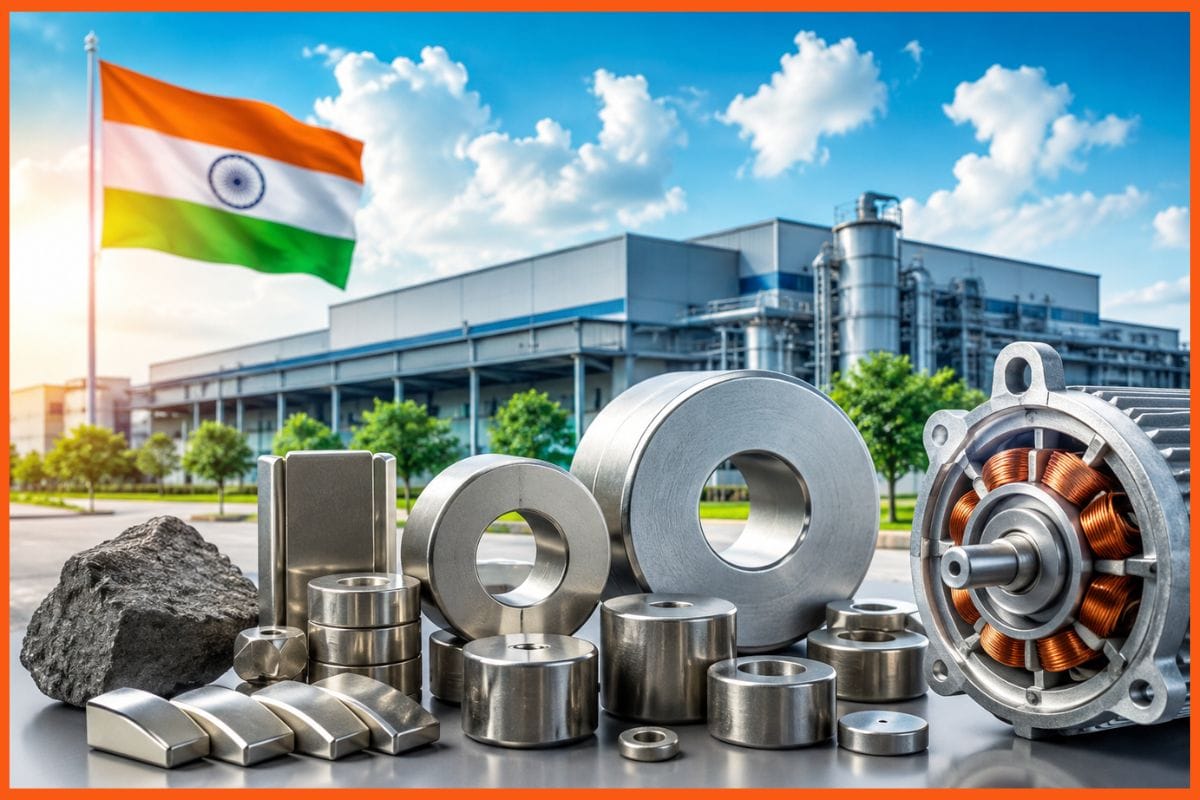
The Indian government is trying to shift the country off of its reliance on China as a source of rare-earth magnets, and L&T is plotting to join them in this effort. India will soon be home to rare-earth magnet production for Larsen & Toubro Ltd. The engineering powerhouse is riding high on a wave of support from the government to diversify its supply chain away from imports and break free of China's monopoly on a vital industrial component.
The business juggernaut is gearing up to submit an application for the incentive program for these magnets, which is worth INR 72.8 billion ($764 million). In order to enter a field renowned for precise engineering, L&T will have to find a technological partner that possesses the requisite knowledge.
L&T Entering a Mega Business Sector
The biggest infrastructure corporation in India, L&T, would be expanding its commercial operations beyond its usual domains of construction, heavy engineering, and industrial projects if this were to happen. The proposal is also in line with its intention to invest in electric car motors that use rare-earth permanent magnets. The government's plan to establish a local supply chain for rare-earth permanent magnets, which China limited exports of in April of last year, is in line with L&T's prospective foray into the market.
Roughly 90% of the world's rare earth magnet production comes from China. Various electronics, wind turbines, and industrial robots all make use of magnets, in addition to electric car motors. In order to increase magnet production, India last year authorized a seven-year program that includes sales-linked incentives worth INR 64.5 billion and capital subsidies worth INR 7.5 billion. With the help of around five businesses, the nation plans to build a domestic capacity of 6,000 metric tons per year.
Why it’s a Vital Move for L&T?
L&T intends to produce next-generation electric automobile traction motors in-house, and its bid to produce rare-earth magnets will bolster this endeavour. During last month's results call, the engineering firm announced a partnership with EVR Motors, an Israeli startup, for this project.
L&T added that its EPS Mobility division has received its first commercial order to provide 500,000 motors to a two-wheeler producer over a span of three years, but it did not disclose the identity of the customer. The government is banking on the incentives to entice domestic and international magnet manufacturers to set up shop in the country. As a result, India will rely less on Chinese suppliers, who have profited from government subsidies and economies of scale.
L&T’s Ups and Downs in Business
This shift in strategy demonstrates a desire for expansion, but it occurs while the corporation is dealing with complicated financial pressures. L&T declared a net profit of INR 41 billion, an increase of 14% year-on-year, in its most recent first-quarter results for the fiscal year 2027.
The company's services division delivered consistent results, lending validity to this claim. But the corporation has also pointed to problems with margins. For its primary projects this fiscal year, L&T has predicted a margin of 7.8 to 8.3%. As a result, worldwide supply chain interruptions and inflation, especially in the West Asia region, are putting pressure on the company, even though revenues are growing.