Mercedes-Benz Clarifies E20 Compatibility Across Entire BS VI Petrol Car Lineup
With the revived debate on ethanol blended petrol, Mercedes-Benz India has assured consumers that all its BS VI petrol vehicles are entirely compatible with E20 gasoline. The manufacturer said its approved vehicles promise safety, reliability and performance on E20 fuel.
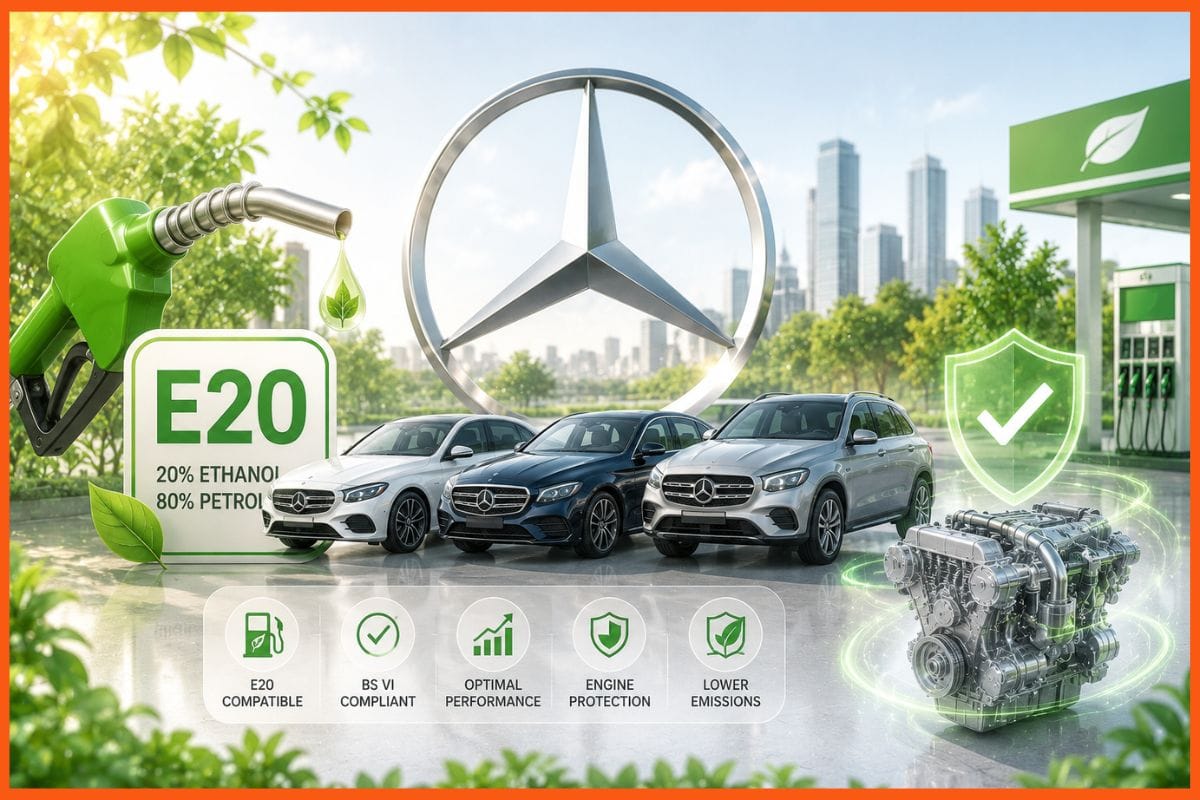
It has been confirmed by Mercedes-Benz India that all of their petrol BS VI vehicles are completely compatible with E20 petrol. In addition, the effects of ethanol-blended fuel on car performance and fuel efficiency were once again the subject of public discussion following the release of a video that went popular on social media. The premium automaker emphasised that the security of its customers, the dependability of its vehicles, and their performance are its top concerns.
In addition, the company went on to say that all Mercedes-Benz petrol BS VI vehicles have certification proving they are materially compatible with E20 gasoline. All Mercedes-Benz petrol BS VI vehicles are approved to run on E20 fuel and are materially compatible with it, according to the company's recommendation. Reiterating its dedication to sustainable mobility, it further reassured customers that its technical staff are always accessible to answer any questions about fuel compatibility.
Customer Advisory pic.twitter.com/RxuTYl6Phz
— Mercedes-Benz India (@MercedesBenzInd) July 12, 2026
Mercedes Blending Perfectly with E20 Fuel
In keeping with its long-standing stance on ethanol-blended gasoline, Mercedes-Benz India has issued the most recent recommendation. The most recent S-Class Hybrid, among others, may run on E25 petrol, according to Managing Director and CEO Santosh Iyer, who previously stated that all of the company's newer petrol vehicles are entirely compatible with E20 fuel. According to his statement, Mercedes-Benz had not had any major technical problems using E20 fuel. The public's increasing concern about fuel compatibility, engine durability, and mileage has led to an increase in inquiries sent to the company's dealerships.
Simultaneously, the business has begged the government to take baby steps before boosting ethanol blends beyond 20%. Mercedes-Benz has stated that while newer models can run on E20 petrol, there needs to be sufficient protection for India's huge fleet of older vehicles before the nation switches to higher ethanol blends like E25. During the transition, the business suggests keeping a variety of petrol grades accessible at petrol stations so drivers may choose the one that works best for their cars.
Why India’s is Pushing for Ethanol Blending?
To increase domestic ethanol production, decrease carbon emissions, and lessen reliance on imported crude oil, the Indian government has been pushing for ethanol blending. India accelerated its objective of attaining 20% ethanol blending in petrol from 2030 to the 2025-26 ethanol supply year. Consequently, E20 is now being used nationwide as the standard gasoline. Professionals in the car business have long insisted that E20 fuel-certified vehicles are the most suitable for the increased ethanol mix.
Additionally, they point out that ethanol has lower energy content than regular petrol; therefore, it's reasonable to expect it to have lower fuel economy when compared to pure petrol. However, automobiles engineered to run on E20 fuel have not exhibited extensive engine damage in industry testing. It is nonetheless recommended that owners of older vehicles consult their manuals before utilizing higher ethanol blends, according to manufacturers.