Meta Revises Employee Tracking Program with New Pause Feature Amid Privacy Concerns
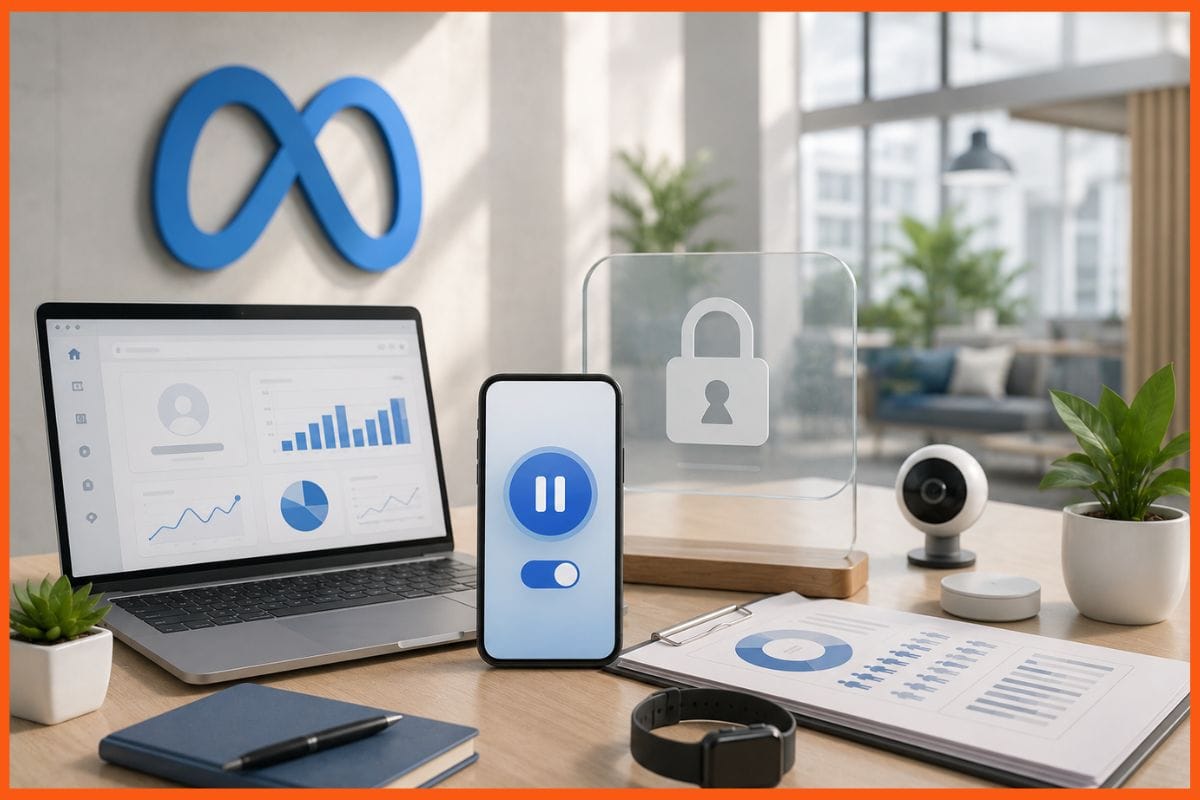
Some aspects of Meta Platforms' contentious employee surveillance policy are being relaxed. Workers are granted exemptions, and the decision to temporarily cease tracking is made after weeks of internal debate. A new feature has been added to the company's AI training monitoring software. Employees can now pause the system for up to 30 minutes to handle personal concerns.
Plus, there are several conditions under which employees can choose to not participate in the plan at all. Since its launch in April, the initiative has not undergone any substantial revisions prior to these modifications. Meta is training its own AI systems, and this program is a component of that effort. The software records how workers use computers, such as when they click, type, and navigate, so that AI agents can learn from real-world examples.
Why Meta Decided to Add This Feature?
Staff members' increasing dissatisfaction with the program prompted the policy changes. Reportedly, employees had concerns over data-gathering practices, employee privacy on company devices, etc. In the past few weeks, there has been a rise in internal resistance. Dissatisfied staff members took to business forums and other forms of internal communication to vent their frustrations. According to reports, there was a lot of internal discussion concerning AI-driven workplace surveillance.
Vice President Stephane Kasriel of Meta's Superintelligence Labs addressed employee feedback by acknowledging worries about privacy, battery life, and the ability to regulate data collecting. The corporation stated that the new rules were put in place to provide employees more freedom while also reassuring them that the programme's privacy protections are strong.
Only some types of workers will be able to get complete exemptions from the monitoring program under the new framework. Employees dealing with sensitive material, those working remotely who face bandwidth limits, and those who fulfil other authorised exemption criteria fall within this category.
|
Some Interesting Facts of
the Story |
|
1.The program reflects a broader industry
trend where companies are using human workflows to train AI agents capable of
automating office tasks. 2.The debate mirrors concerns raised around
workplace surveillance technologies used by employers globally since the rise
of remote and hybrid work. 3.Privacy concerns around AI training data
are becoming a major issue across the technology industry, especially when
behavioral data from real users or employees is involved. |
Zuckerberg AI Push for Meta’s Future Expansions
This controversy has arisen just when Meta's CEO, Mark Zuckerberg, is pouring a lot more money into AI. Capital expenditures connected to artificial intelligence are expected to cost the corporation between $115 billion and $135 billion this year. This move is being made in an effort to construct what Zuckerberg has called "personal super intelligence" more quickly.
Zuckerberg assured analysts earlier this year that Meta will keep pouring resources into the infrastructure needed to train sophisticated AI models and provide AI solutions to companies and users. With these investments, Meta will join the ranks of the biggest AI investors in the business, which is becoming increasingly competitive among the big tech giants.
Organisations are facing an increasing struggle as they try to speed up AI innovation while keeping employees' trust, and the most recent policy revisions are a prime example of this. The topics of privacy, permission, and workplace openness will undoubtedly continue to get attention as companies depend on behavioural data to train complex AI systems.
|
Quick Shots |
|
•Meta has added a 30-minute pause feature
to its employee tracking program following internal backlash over privacy
concerns. •The monitoring software is used to collect
workplace interaction data to help train Meta’s AI systems and digital
agents. •Employees can temporarily stop tracking to
handle personal matters without being monitored. •Meta has also introduced exemptions for
certain employee groups, including staff handling sensitive information and
some remote workers. |